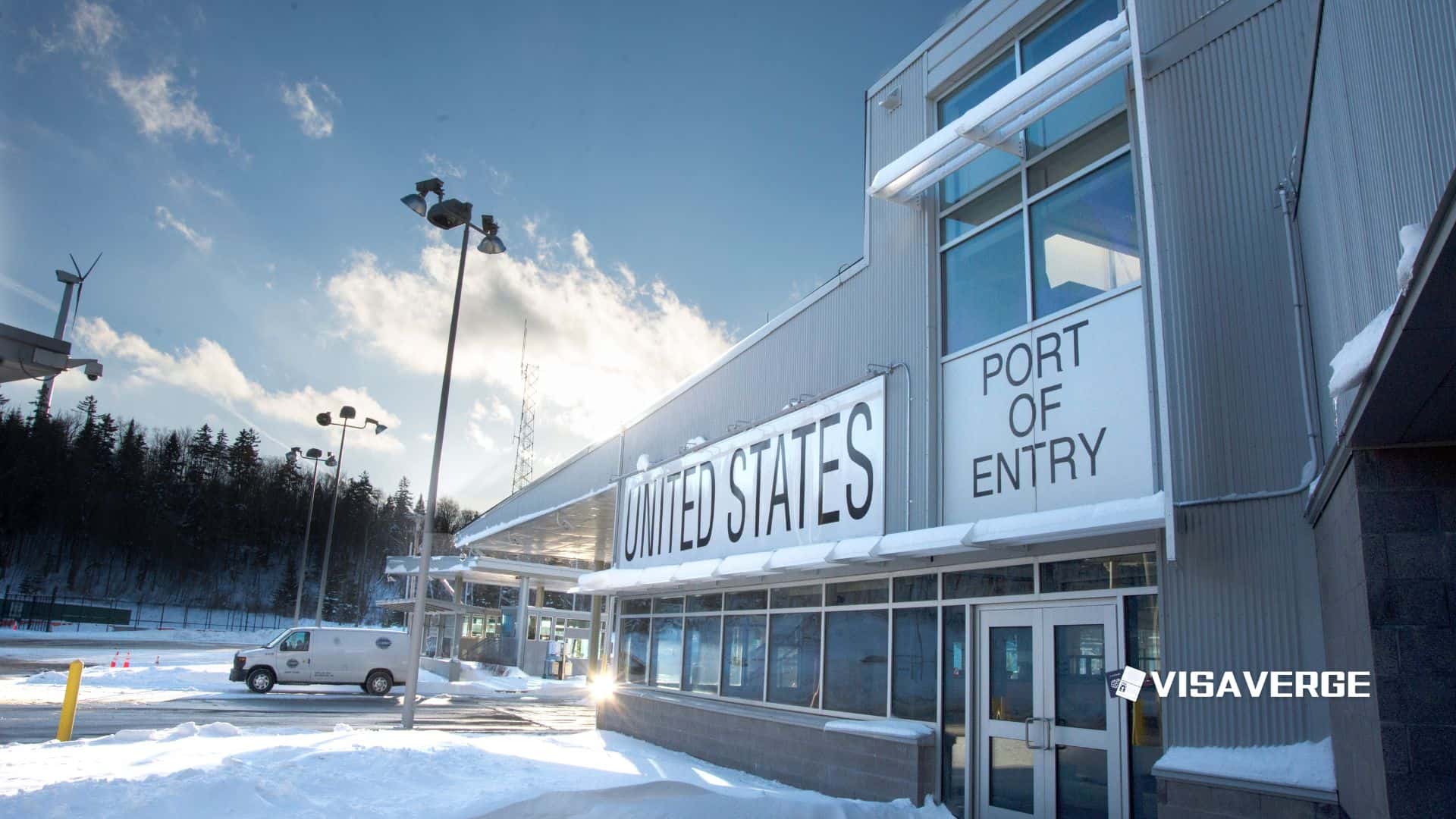
A Khalsa Vox report warned that President Donald Trump’s H-1B Restrictions could erode trust between the United States and India. It argued that treating foreign professionals as economic liabilities risks weakening the goodwill behind bilateral relations.
The report described the Indian American community, numbering over four million, as one of the relationship’s strongest foundations. Indian nationals accounted for nearly two-thirds of H-1B approvals in 2024, it said. The report’s concern reaches beyond visa holders to companies and families.
It also made a broader economic argument. The United States had built technological strength by drawing skilled people to its research institutions and businesses, the report said, warning that tighter entry rules could undercut that appeal.
Secretary of State Marco Rubio offered a different rationale in an interview with India Today TV. He acknowledged that the changes affect Indians seeking U.S. jobs and American businesses looking to hire them, but said they are not aimed at India.
“It's not one that's built on India. It's not one that's focused on India,” Rubio said. “It happens to impact Indians that want to come to the United States and work and that our businesses are trying to bring in, but it's not geared towards India. It is global”
November 2026 Final Action Dates
India China ROW EB-1 Feb 01, 2023 Aug 01, 2023 ▲31d Current EB-2 Nov 01, 2013 Oct 01, 2021 Apr 01, 2025 ▲90d EB-3 Jan 22, 2014 ▲21d Jan 22, 2022 ▲14d Jun 15, 2024 ▲31d F-1 Jan 22, 2021 ▲366d Jan 22, 2021 ▲366d Jan 22, 2021 ▲366d F-2A Oct 22, 2026 ▲30d Oct 22, 2026 ▲30d Oct 22, 2026 ▲30d
Rubio said business-related immigration programs had faced fraud and abuse, and that the administration was trying to address those problems. U.S. Ambassador to India Sergio Gor backed that explanation, saying, “America First, it doesn't mean America alone.”
The PERM freeze reaches eight companies but targets a green-card step
A separate action announced earlier in October 2026 froze new and pending applications under the permanent labor certification program, known as PERM, for eight technology companies. Labor Secretary Keith Sonderling said he was suspending some of the world’s largest IT outsourcing firms from the program.
The companies named were Microsoft, Infosys, Tata Consultancy Services, Cognizant, Wipro, HCL, Capgemini and Adobe. The freeze concerns permanent employment certification, not the H-1B visa itself.
PERM is the first required step for an employer seeking to sponsor an H-1B holder for an employment-based green card. Employers using the process must show that hiring an overseas worker would not adversely affect American wages or job opportunities.
The $100,000 payment rule applies to specific petition categories
A separate presidential proclamation, issued September 19, 2025, imposed an additional payment for certain petitions. Its coverage turns on a beneficiary’s location and the type of petition requested.
| Petition or beneficiary | How the proclamation applies |
|---|---|
| Beneficiary outside the United States without a valid H-1B visa | Covered petitions require an additional $100,000 payment |
| Petition requesting consular notification, port of entry notification or pre-flight inspection for a person in the United States | Covered by the payment requirement |
| Previously issued, currently valid H-1B visa or petition submitted before the cutoff | Not covered |
The proclamation, titled “Restriction on Entry of Certain Nonimmigrant Workers,” covers qualifying petitions filed at or after 12:01 a.m. Eastern on September 21, 2025. It exempts previously issued and currently valid visas and petitions filed before that time.
The court record has since altered the status of agency guidance for the payment. On June 8, 2026, the U.S. District Court for the District of Massachusetts vacated that guidance in State of California v. Mullin, 1:25-cv-13829.
The Department of Homeland Security strongly disagreed and sought a stay pending appeal. On July 24, 2026, the First Circuit denied the government’s motion. DHS said it would comply with the court’s order while considering next steps, and said it still plans to collect the payment if the order is later lifted. USCIS has posted information about the requirement and litigation.
Hiring data suggest limited PERM use, while workers describe stalled plans
Nasscom, the trade association for India’s $300bn (£226bn) technology industry, says Indian companies have reduced their reliance on H-1B visas and expanded local hiring. It said relatively few employees move from H-1B status to permanent residency through PERM.
Wipro says more than 80% of its U.S. workforce is locally hired. Tata Consultancy Services said PERM applications were in single digits over the last two years, while Microsoft has filed H-1B petitions mostly to retain existing employees rather than bring in new workers.
PERM Tracker figures showed TCS filings falling to two in 2025-26, from 513 the previous year and 1,804 the year before. The figures included no records for Infosys or Wipro in 2025-26. Microsoft was identified as the largest PERM filer.
HDFC Securities assessed the business effect as minimal, because PERM-linked jobs make up only a small share of technology firms’ revenue, even if higher-paid American workers replace them. The BBC said emails to all eight companies went unanswered.
A U.S.-based senior executive at one of the firms said the restrictions would “not break the business,” but described the personal impact as more “intense.” Some workers have lived in the United States for years while their green-card cases remain stalled, the executive said, adding that children who grew up there may resist a move back to India.
Poorvi Chothani, founder and managing partner of immigration law firm LawQuest, said many people borrowed heavily to study and build careers in the United States. As rules tighten, she said, they have fewer options and less ability to absorb the strain.
Vance's language drew an official rebuke as India weighed the clampdown
Vice President JD Vance called foreign H-1B professionals “foreign indentured servants” while discussing the company suspensions. He later described his rhetoric as “imperfect.” Vance claimed Microsoft retrenched 6,000 American workers in 2025 while employing 6,300 others on H-1B visas and nearly 3,000 green-card holders.
India’s Ministry of External Affairs called the phrase “unwarranted” and “deeply offensive,” citing its colonial connotations. The ministry said the steps “do not advance both countries' shared ambitions,” and described Indian professionals as skilled contributors to the U.S. economy and innovation.
Commerce Minister Piyush Goyal took the opposite view of the clampdown’s likely effect on India. He called it “absolutely good for the Indian economy,” arguing it could reverse brain drain, encourage skilled workers to stay in India and spur domestic start-ups and Global Capability Centres.
Earlier in October 2026, President Trump conferred the U.S. National Medal of Technology and Innovation on Microsoft CEO Satya Nadella, who is of Indian origin. The award came amid the dispute over restrictions affecting technology workers.
Ashraf says repeated restrictions could fray a people-to-people connection
Former Indian ambassador Javed Ashraf warned that repeated U.S. actions affecting Indian students, H-1B holders and green-card applicants could rupture what he called the “social bridge” between the countries. He said that connection linked India’s educated, aspirational middle class with innovation and opportunity in the United States.
Ashraf said the relationship could feel the effects in coming years. He also argued that Indian restraint may have been misunderstood in Washington, adding, “Clearly, the Trump administration is in no mood to relent.”
The diplomatic stakes extend beyond work visas. Defence cooperation has expanded, technology ties have deepened, and the countries increasingly share a vision for stability in the Indo-Pacific amid competition with China.
Researchers at Stop AAPI Hate reported a sharp rise in anti-South Asian online sentiment since the 2024 U.S. election, with Indian immigrants and H-1B visa holders frequently targeted. That concern accompanies Ashraf’s warning about the social connection between the two countries.