- Approximately 2,000 passengers stayed overnight at Hong Kong International Airport following major typhoon disruptions.
- Airlines canceled 400 flights over the weekend, triggering a massive rescheduling effort on Monday.
- The Airport Authority utilized three runways overnight to clear the backlog after storm warnings were lifted.
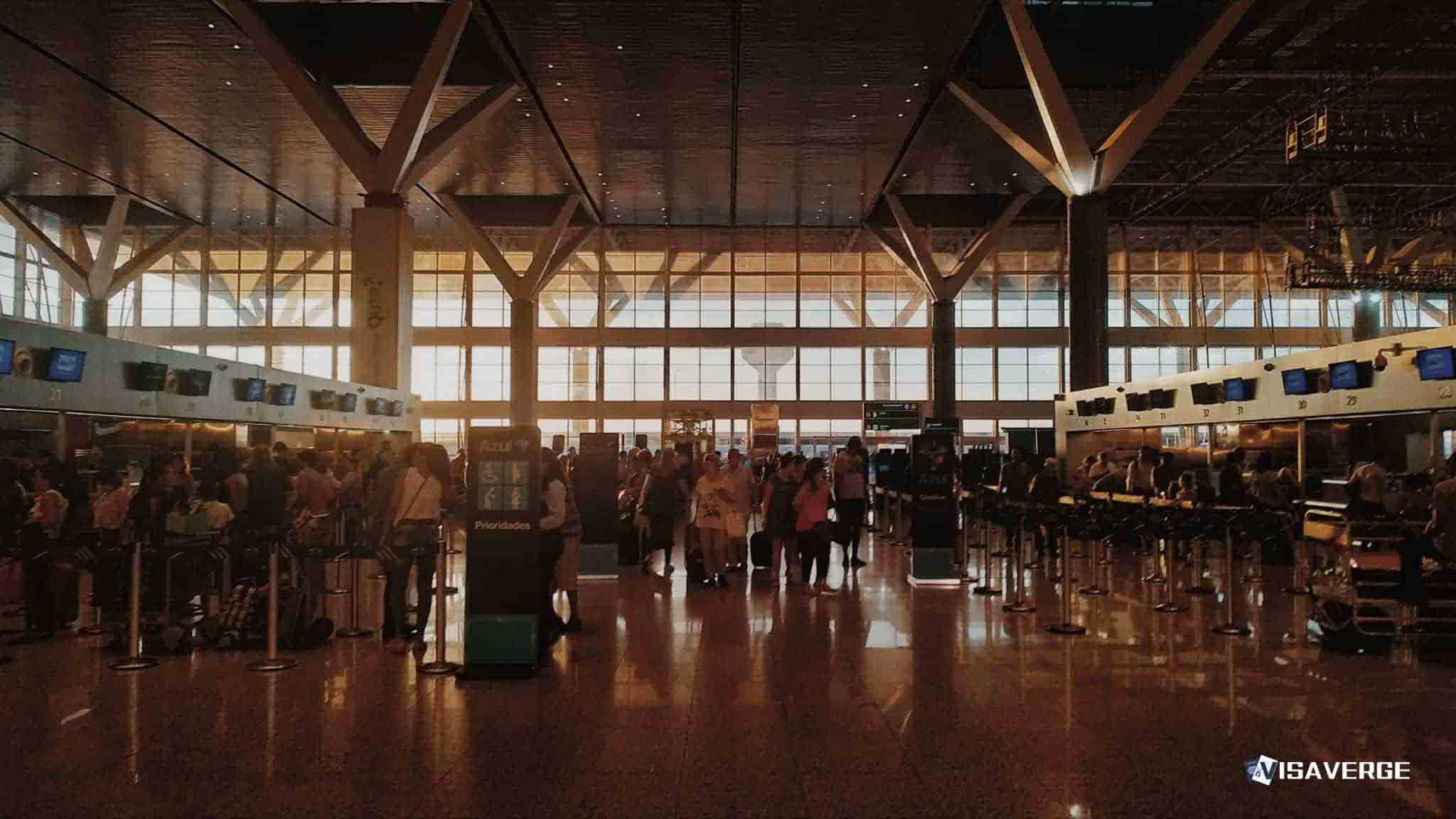
About 2,000 passengers spent the night inside Hong Kong International Airport after Typhoon Noul halted flights, with many sleeping on benches, luggage trolleys or makeshift beds made from spare clothing.
The disruption continued into Monday. At 12:45 p.m., 12 departing flights originally scheduled for Sunday had moved to Monday, while at least eight Monday departures and eight arrivals had been canceled to reduce congestion.
The Airport Authority Hong Kong said it had activated the Flight Rescheduling Control System so airlines could restore flights in an orderly way once weather conditions permitted. The authority told passengers to wait for confirmation from their airlines before going to the airport.
The airport began returning to normal after all typhoon warnings were canceled Sunday evening. Queues formed at check-in counters, but dozens of travelers remained at the terminals after spending a second night on airport seats.
Yeung Tat-wing, the Airport Authority’s director of service delivery, said the airport expected to handle 675 flights on Sunday, even after 350 cancellations. The airport planned to use all three runways overnight if needed to clear the backlog.
“The airport would be exceptionally busy in the evening and overnight. To clear the backlog and fully restore normal operations by Monday morning, all three runways may operate overnight if necessary.”
Yeung made the comment at an Airport Authority briefing on July 26. Earlier, Steven Yiu, the authority’s acting chief executive, said airlines were still meeting about affected passengers and expected to begin sending notifications that afternoon.
“Most airlines are still in meetings, but I believe they will start notifying affected passengers this afternoon, so there's no need for anyone to worry. We’ll hold another press conference at the airport tomorrow morning, when we will provide more specific details.”
The authority reported 29 canceled departures and 20 canceled arrivals on Saturday. Across the weekend, about 400 flights were canceled, including the 350 Sunday cancellations.
Passengers found seats, food and blankets, but hotels became unaffordable
Airport teams opened a temporary waiting area with 600 additional seats and mobile-device charging stations. Around 100 staff members handed out water, food, blankets and dining vouchers.
Some passengers still spent hours waiting at transfer desks. One traveler from Shanghai, bound for San Francisco, said the disruption lasted more than 10 hours and included a five-hour wait at a transfer desk.
Nearby hotels offered rooms at prices between HK$2,000 and HK$3,000 per night, equivalent to US$255–$385. Travelers said those rates were too expensive to make an overnight hotel stay practical.
Xing Tai, who was traveling home to Beijing, said her Saturday flight was canceled. She remained at the airport for a full 24 hours.
A group of 17 children on a study tour to Munich through Turkey faced repeated schedule changes. Their tour guide said the changes were difficult for the children.
“It keeps changing back and forth. it isn't easy for them. If we have to keep waiting, I think it would be too exhausting for them.”
The airport’s taxi queue system issued about 1,800 numbers overnight. At the busiest point, nearly 400 people waited for taxis, with an average wait of about one hour.
The storm produced Hong Kong’s first No. 8 and No. 9 signals of 2026
The storm triggered Hong Kong’s first No. 8 and No. 9 signals of the year. It made landfall near Huizhou in Guangdong province at about 3:50 a.m. Sunday.
Maximum sustained winds reached 162 km/h, or about 100 mph. The storm passed within 80 km of Hong Kong, making it the third-closest typhoon to approach the territory this century, after Saola in 2023 and Hato/Wipha in 2017/2025.
The storm also prompted widespread evacuations in mainland China. More than 801,000 people relocated in Guangdong province alone.
The Hospital Authority reported 21 injuries across the territory during the typhoon period. The total included nine males and 12 females.
Heavy showers and squally thunderstorms could continue because of a strong southwesterly airstream. That weather risk added uncertainty as airlines worked through the remaining schedule.
Airlines kept working through a rolling Monday backlog
The authority’s rescheduling system was designed to coordinate flights after weather conditions improved, but the recovery required airlines to adjust both delayed weekend services and Monday’s planned schedule.
By Monday afternoon, passengers faced orderly lines rather than a complete shutdown. The airport still had to process flights moved forward from Sunday while canceling some Monday services to make room for the recovery operation.
The authority’s Sunday plan called for operations to resume gradually after 6:00 p.m. Yeung said the three-runway operation could continue overnight if necessary. That timetable put pressure on airlines to notify passengers quickly as new departure slots became available.
The airport support measures remained focused on people waiting inside the terminals. Staff distributed basic supplies, while the temporary seating area added capacity for passengers who could not leave or secure rooms nearby.
Passengers whose flights were canceled faced a separate problem after leaving the terminal. Taxi demand peaked at nearly 400 people, and hotel prices reached HK$3,000 per night.
The recovery continued Monday morning, with travelers still waiting for airline decisions and the airport managing the backlog flight by flight. Heavy showers and thunderstorms were forecast to remain possible as the airlines cleared the final disrupted services.