- Thousands marched in Ceuta demanding Prime Minister Sánchez’s resignation over the migration crisis.
- An estimated eighty thousand people entered the enclave from Morocco in just forty-eight hours.
- International pressure is mounting as Washington and EU members criticize Spain’s border security policies.
Thousands of residents marched through Ceuta on Sunday under the slogan “Ceuta does not surrender,” calling for the resignation of Spanish Prime Minister Pedro Sánchez over a migration crisis that has overwhelmed the enclave. The demonstration brought together the city’s Christian, Muslim, Jewish, and Hindu communities.
Organizers accused the central government of “abandonment” after tens of thousands of people entered from Morocco between July 30 and July 31. Residents said security conditions had become “unbearable” as local services and infrastructure struggled to cope with the arrivals.
Free toolUSCIS Receipt Number Decoder
Religious leaders used the march to press Madrid for “solutions, commitment, and responsibility.” The protest crossed political and religious lines as anger grew over what organizers described as a lack of support from mainland Spain.
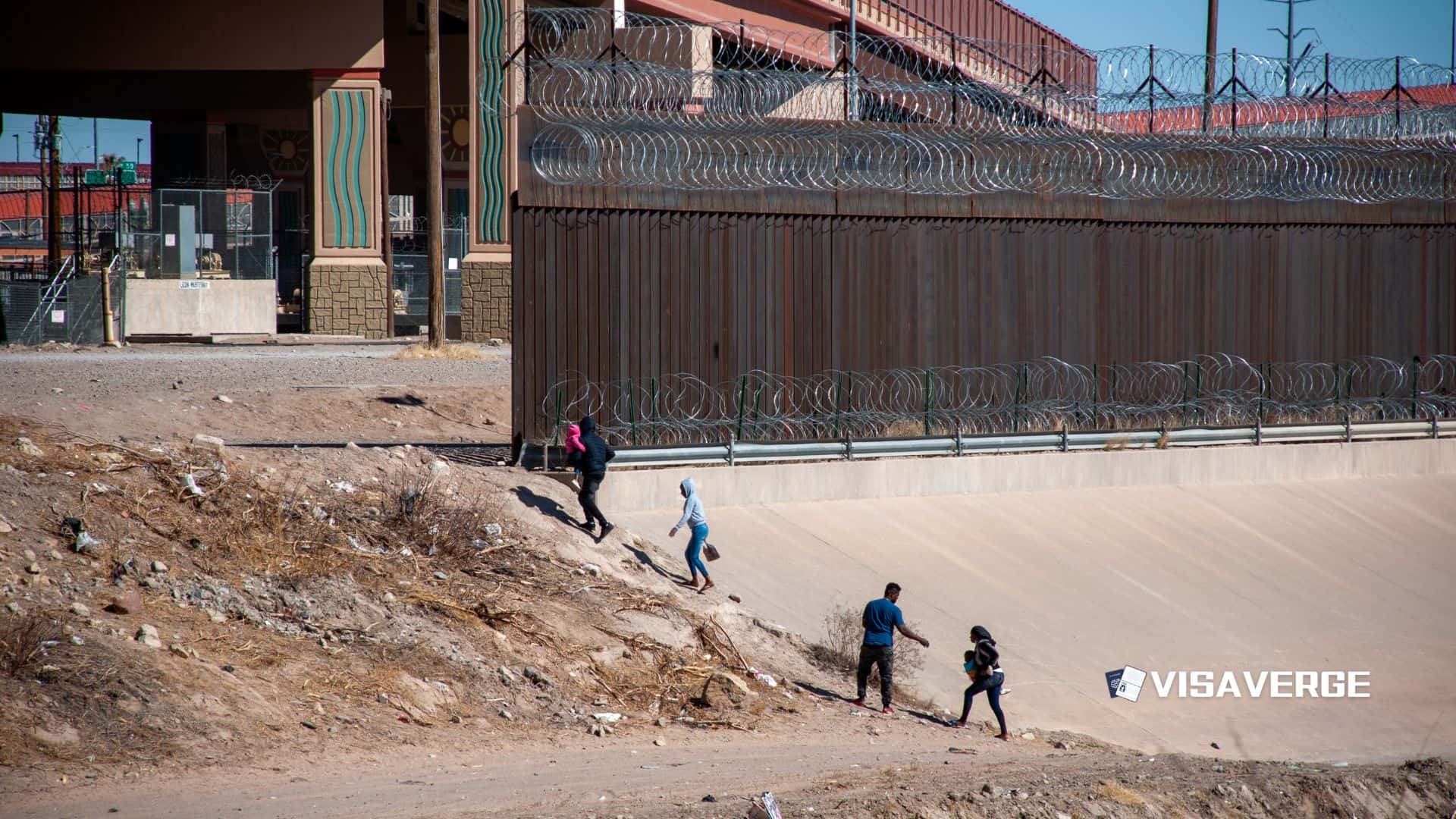
The arrivals created Ceuta’s largest single-event border breach, surpassing the episode in May 2021. An estimated 72,000 to 80,000 people, mainly young men from Morocco and sub-Saharan Africa, crossed by swimming around breakwaters or storming border fences.
The numbers changed the scale of the enclave overnight. Ceuta has an estimated population of approximately 85,000. At least 88 to 141 people died in drownings or stampedes during the crossings, according to official reports.
Returns reduced the influx, but children and other migrants remained stranded
Spanish authorities said they had returned approximately 70,000 people to Morocco by August 3 through “close coordination” with Moroccan authorities. Thousands of unaccompanied minors remained in local facilities that were already under pressure.
More than 800 children were reportedly stranded in reception centers designed for 600. Other migrants slept outdoors or in repurposed warehouses after failing to return across the border.
The local response system had buckled. Social services and security infrastructure “collapsed” under the weight of the arrivals, according to accounts from the enclave, leaving residents fearful and demanding a larger mainland response.
| Measure | Reported figure or date |
|---|---|
| People entering Ceuta | 72,000 to 80,000 |
| Crossing period | July 30 to July 31, 2026 |
| Ceuta’s population | Approximately 85,000 |
| Reported deaths | At least 88 to 141 |
| Returns to Morocco by August 3 | Approximately 70,000 |
| Children in reception centers | Over 800, in facilities designed for 600 |
Critics blamed April’s regularization program for adding pressure
Opponents linked the surge to a “regularization” program launched in April 2026. The policy allowed undocumented migrants to apply for residency and work permits, and critics argued that it became a pull factor for the mass movement.
EU leaders from 22 member states also criticized the government’s handling of the border breach. Italy and Denmark led a coalition that sent Spain a letter rebuking its response.
The dispute widened beyond Ceuta. Italy temporarily suspended Schengen rights for travelers from Spain on August 1, creating what critics called a “Schengen war” inside the European Union.
The breach also damaged relations between Morocco and Spain. Spanish intelligence suggested that Moroccan border controls had “mysteriously relaxed” after diplomatic friction between the two countries, intensifying suspicion about how the crossings developed.
Washington warned travelers and condemned Spain’s border response
The United States raised its travel advisory for Ceuta to Level 3: Reconsider Travel on August 1. The State Department warned that “the massive and uncontrolled arrival of migrants. may lead to unpredictable and dangerous security situations.”
State Department spokesperson Tommy Pigott said on August 6 that Washington backed Spain’s claim to Ceuta and Melilla while blaming the Spanish government for failing to control the border.
“The United States unequivocally supports Spain's sovereignty over Ceuta and Melilla. The invasion of tens of thousands of migrants into Ceuta is a direct consequence of the Spanish government's refusal to defend their sovereignty, secure their borders, and protect their people.”
Pigott’s department had described the mass entry on July 31 as an “egregious violation” of sovereignty and human rights. It also attributed the crisis to the Sánchez administration’s “deliberate efforts to enable and facilitate mass illegal migration into Europe.”
President Donald Trump used similar language during a White House briefing on July 31, calling the event an “invasion.”
“The catastrophe that took place was like an invasion of a country by hundreds of thousands of people. They [Spain] don't know what to do.”
The protest left the central government facing pressure on several fronts: residents demanding accountability, European governments challenging Spain’s position within Schengen, and Washington openly criticizing its border policy. In Ceuta, the religious communities that organized Sunday’s march kept their demand focused on Madrid’s response to the people still housed, stranded, or sleeping outside after the crossings.