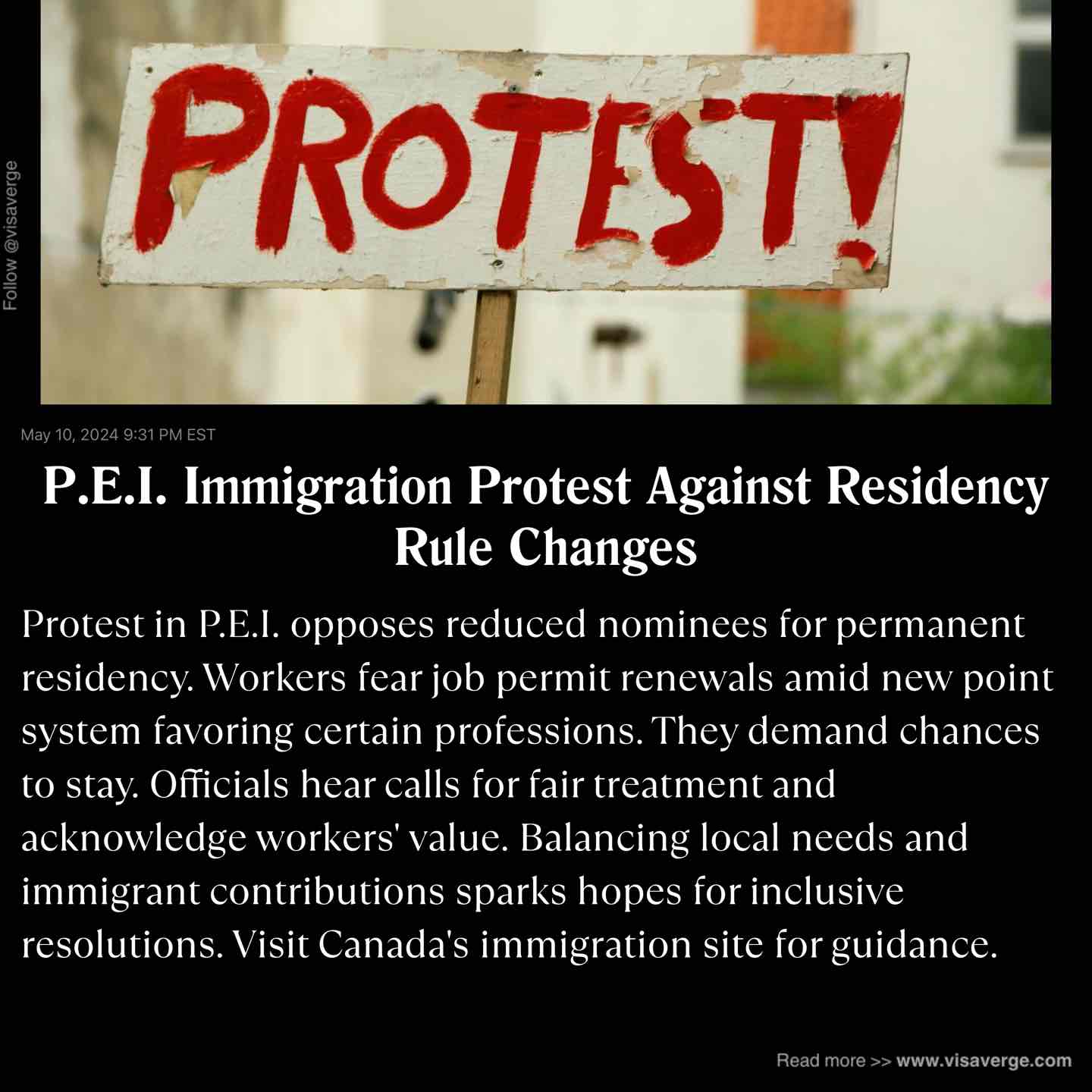
What Prompted the P.E.I. Immigration Protest?
On a brisk day in downtown Charlottetown, a group of determined workers gathered to voice their concerns over recent adjustments to Prince Edward Island’s (P.E.I.) immigration policies. These changes are chiefly tied to the Provincial Nominee Program (PNP), which plays a crucial role in nominating individuals from other countries for permanent residency in Canada. In February, the P.E.I. government announced a reduction by 25 percent in the number of nominees they will accept in 2024. This decision was influenced by the pressures on local resources, specifically the healthcare system and housing market.

Rupinder Pal Singh, one of the demonstrators, expressed a sentiment that resonated with many at the protest: “I want to be here for the rest of my life. But we just need a chance,” he said. This poignant statement underscores the protesters’ desire not just for job opportunities, but for a chance to build a lasting home on the island.
How Are the Immigration Stream Changes Impacting Workers?
The primary concern among the protestors revolves around their ability to renew their work permits under the new regulations. Previously, individuals could look forward to eventual permanent residency after working full-time in P.E.I. for more than six months. However, with the introduction of a points system in July last year, the stakes have been noticeably raised. “Now, more than 65 points are needed to be able to apply,” explained Jaspreet Singh, another protester who feels particularly threatened by these changes.
For younger workers like 22-year-old Singh, accumulating enough points becomes a daunting task. Factors such as age and specific job roles now play a pivotal role in qualifying for permanent residency. Singh, who works as an internet tech sales representative—a job categorized under TEER 2 in the National Employment Classification (NOC)—feels sidelined by a system that now prioritizes certain professions like healthcare and construction.
What Does this Mean for Workers Whose Permits are Expiring?
The immediate repercussion of not fitting into the newly preferred categories is the non-renewal of work permits. Navpreet Navpreet, a customer service representative in tech, shared her distressing outlook: “We have to go back home after spending five years here. It would be a waste of our life,” emphasizing the desperation many feel at the prospect of leaving a community they’ve grown to consider home. This sentiment was echoed by others at the protest who find themselves stuck in their current roles with no clear path to extend their stay as their work permits near expiration.
What Are the Protesters’ Demands?
The protesters are not asking for a lowering of the points required but are pleading for an opportunity to continue their contributions to the island’s economy and community. “We want to be part of P.E.I. progress, we want to be here, we want to create P.E.I. our new home,” vocalized Rupinder Pal Singh passionately. Their demands are simple: recognition of their contributions and a fair chance to renew their permits.
What Has Been the Official Response?
The protest caught the attention of Charlottetown-West Royalty MLA Gord McNeilly, who was the first government official to respond. He acknowledged the issues raised by the protesters: “All they want is to be treated equally,” he said, suggesting that the province should have considered grandfathering in workers who were already present before the changes. MLA McNeilly stressed that while it’s crucial to attract workers in sectors like healthcare and construction, it should not undermine those who have already been contributing to the province.
What Can Be Expected Moving Forward?
The changes to the PNP and the reaction from the workforce highlight a critical balancing act between managing local resource pressures and honoring the contributions of immigrant workers. As the situation develops, many are hopeful for a resolution that considers the needs of all parties involved. Workers like Jaspreet Singh are especially anxious, looking for responses from high governmental figures, including federal Immigration Minister Marc Miller or even the prime minister.
For further details on how to navigate P.E.I.’s Provincial Nominee Program and other immigration services, you can visit Canada’s official immigration and citizenship website.
This story from Charlottetown reflects broader themes of migration, community, and economy—issues that places around the world grapple with as they strive to manage demographic shifts responsibly and humanely.
Learn Today:
- Provincial Nominee Program (PNP):
The Provincial Nominee Program is a Canadian immigration pathway that allows provinces and territories to nominate individuals for permanent residency based on specific criteria set by each region. -
Work Permit:
A work permit is a legal document issued by a government that allows individuals from other countries to work in that country for a specific period of time. It is typically tied to a specific job or employer. -
Points System:
A points system is a method used by some immigration programs to assess and select candidates for immigration based on factors such as education, work experience, language proficiency, age, and other criteria. Applicants need to score a certain number of points to be eligible for immigration. -
National Occupational Classification (NOC):
The National Occupational Classification is a systematic classification structure used by Canada to group and describe jobs based on the type of work performed. It helps in categorizing and organizing occupations for various purposes, including immigration programs. -
Grandfathering:
Grandfathering is a term used in immigration to refer to the practice of allowing certain individuals who were already present in a country or part of a program before new rules or changes were implemented to be exempt from those changes or to be treated differently to avoid negative impacts on them.
This Article In A Nutshell:
Recent changes to P.E.I.’s Provincial Nominee Program sparked an immigration protest due to reduced nominee intake by 25% in 2024, impacting workers’ permit renewals. Concerns include the new points system favoring certain occupations. The demand: a fair chance to stay and contribute. Officials are urged to balance resources and immigrants’ value.
— By VisaVerge.com
Read More:
- Analyzing the Talent Mismatch in Canadian Immigration: Explore the issues around recruiting misaligned talent through Canadian immigration policies.
-
Discussion on Potential Immigration Cuts in Canada: Get insights from the latest ministers’ meeting on possible reductions in Canada’s immigration numbers.
-
Canada’s Strategy to Transition Temporary Residents to Permanent Status: Learn about new plans aimed at enabling temporary residents in Canada to achieve permanent status.
-
Extension of Work Permits for 6,700 Workers in Manitoba: Find out more about the extension of work permits affecting thousands of workers in Manitoba, Canada.
-
Rise in Applications for Gaza Visa Program in Canada: Read about the increasing number of applications for the Gaza visa program and its implications for Canadian immigration.