Australia’s Department of Home Affairs began expanding biometric requirements for visa applicants in India on October 26, 2026, requiring some new applicants to submit fingerprints and a facial image.
The change covers applications lodged from the start date onward. Earlier applications and visas already granted are not affected.

Not every applicant will be asked to provide biometrics. The department will notify people who are selected and send instructions on what to do next.
The Australian High Commission in India announced the change in a media release. It said applicants “may be required to provide biometrics, including fingerprints and a facial image” during the visa process.
Those instructions will also explain whether the person must attend a collection centre or can use the Australian Immi App. Applicants are advised to wait for the department’s official notice before arranging either option.
Earlier applications and granted visas remain outside the expansion
Free toolVisa Photo Requirements Checker Online| Application or visa status | Effect of the expansion |
|---|---|
| Application lodged before the change | Not covered by the new requirement |
| Visa already granted | Not affected |
| New application selected by the department | Biometrics may be required |
The department determines whether collection is needed and which details the applicant must provide. A request is not automatic for every person applying from India.
The department will tell selected applicants how to provide their details
Applicants will generally receive notice by email, either from the department or through an authorised agent. The notification sets out the required action. Applicants should follow the instructions in that letter rather than booking a service before receiving it.
Some people may be directed to one of 16 Australian Biometrics Collection Centres in India. VFS Global operates those centres. Others may qualify to submit their information through the Australian Immi App, depending on their circumstances.
The app option has a specific eligibility condition. Applicants who previously gave biometrics at an Australian Biometrics Collection Centre and hold a valid passport may be able to use it without charge.
Applicants who need an in-person appointment should take the valid travel document connected to their application, usually their passport. Without it, VFS will generally be unable to collect the details. The centre charges a service fee, but the government’s guidance does not set out an amount here.
People applying from outside Australia ordinarily attend a collection centre in person or use the app if eligible. In some cases, the nearest centre may be in another country, requiring travel across a border.
The collection covers fingerprints and a facial image under migration law
Australia’s Migration Act 1958 and Migration Regulations 1994 allow the department to require personal identifiers. Those identifiers include a face image and fingerprints.
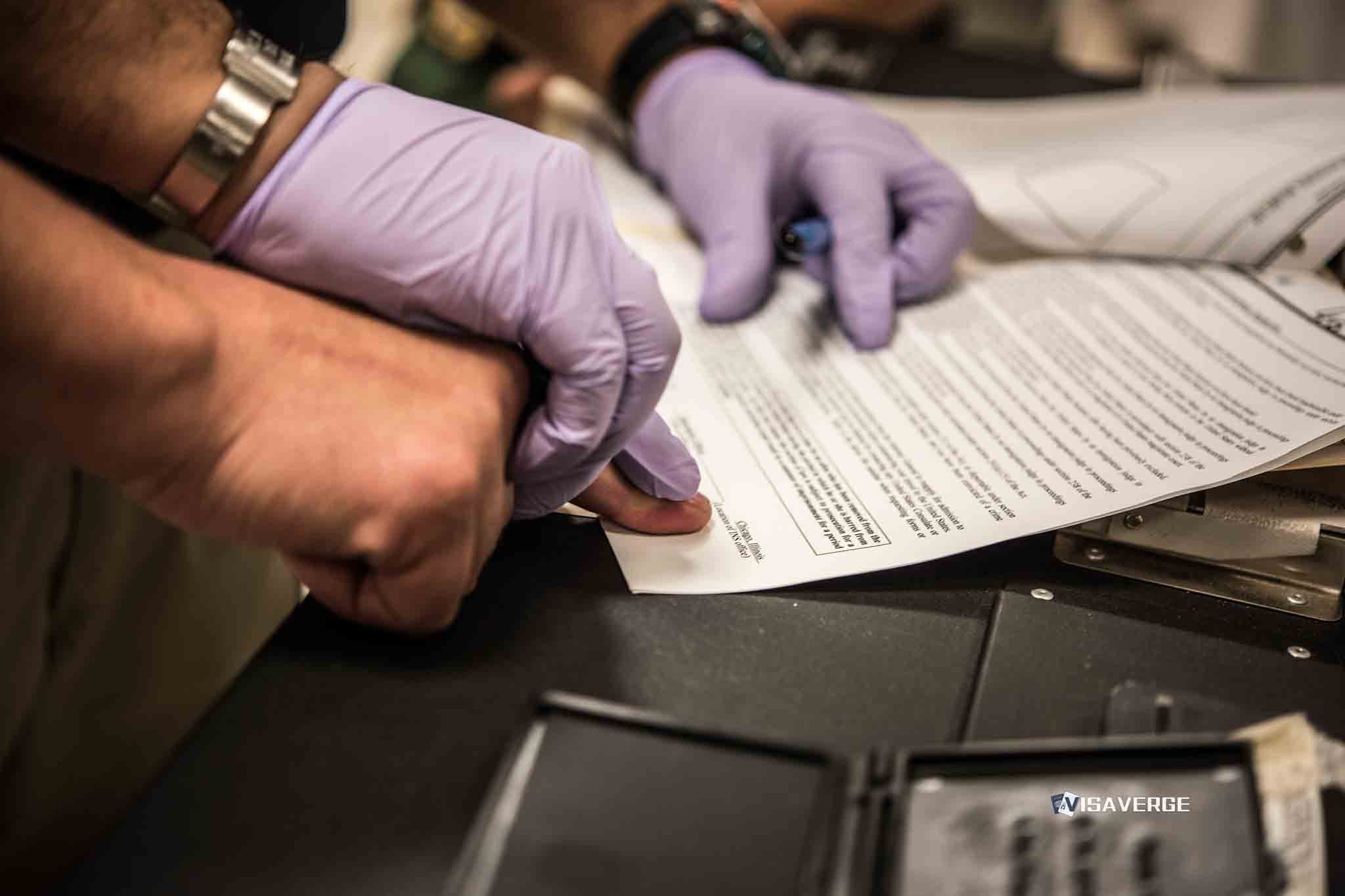
At a centre, staff use a digital camera to capture the face and a scanner to record all 10 fingertips. The face image must show the face clearly from below the chin to above the eyebrows, including the cheeks and ears.
A person wearing glasses or a religious head covering may be asked to remove it for collection. If that happens, collection can take place in private or with a staff member of the same gender.
Applicants with a temporary injury affecting their face or fingertips are advised to wait for it to heal. If waiting is not possible, they can send a written request for more time, explain the reason and upload the request to ImmiAccount.
The department uses biometric records to confirm identity and guard against identity fraud. It may compare stored information with biometrics collected later, including on entry to Australia or in a subsequent visa application.
The government says prompt collection should not slow processing
The government says biometrics help verify identity, protect applicants from misuse of their identities and reduce fraud. Australia already collects biometrics in nearly 60 countries; adding India brings its collection arrangements closer to practices used elsewhere.
The High Commission said the change is intended to support secure and trusted processing as more people travel between Australia and India to visit, study, work and build connections. It also pointed to the app as a digital option for eligible applicants.
The department says collection is not expected to adversely affect processing times if people complete the requirement promptly. Its instructions tell applicants to wait for the official biometric requirement letter before making an appointment or trying the app.
Biometric information is to be handled under Australian legislation and applicable local laws. The government says personal information will be processed and transmitted through encrypted channels, with privacy and data-protection safeguards.
Optional services offered by providers do not affect how quickly the department processes an application or the decision on it. Applicants should rely on the department’s instructions and official websites when arranging collection.
Injuries can require a delay or a written request for more time
Applicants who submitted an offshore application requiring biometrics but are now in Australia must tell the relevant office in the country where they applied. They may still have to travel offshore to provide the information at a collection centre.
Biometrics can also be collected again when a person enters Australia or applies for another visa, allowing the department to check identity against stored records.