- Migrants set fire to mattresses at Mexico’s Siglo XXI facility after facing deportation orders on August second.
- The Tapachula station is severely overcrowded, housing over three thousand people in a facility built for nine hundred sixty.
- Security forces detained two individuals following the disturbance as Mexico manages thousands of non-Mexican deportees from the United States.
Cuban migrants set fire to mattresses and furniture at the Siglo XXI facility in Tapachula, Chiapas, after learning they faced deportation, prompting Mexican authorities to deploy federal forces early Sunday.
The disturbance began at approximately midnight between August 1 and August 2. About 40 migrants took part, primarily people from Cuba and Venezuela who had recently been moved from central Mexico to the southern border for removal.
Free toolUSCIS Receipt Number Decoder
The Mexican National Migration Institute said the incident ended without fatalities or serious injuries. The agency said the Guardia Nacional and the Mexican Army formed a security perimeter around the facility.
Two people went to judicial authorities. Officials accused them of involvement in starting the fire.
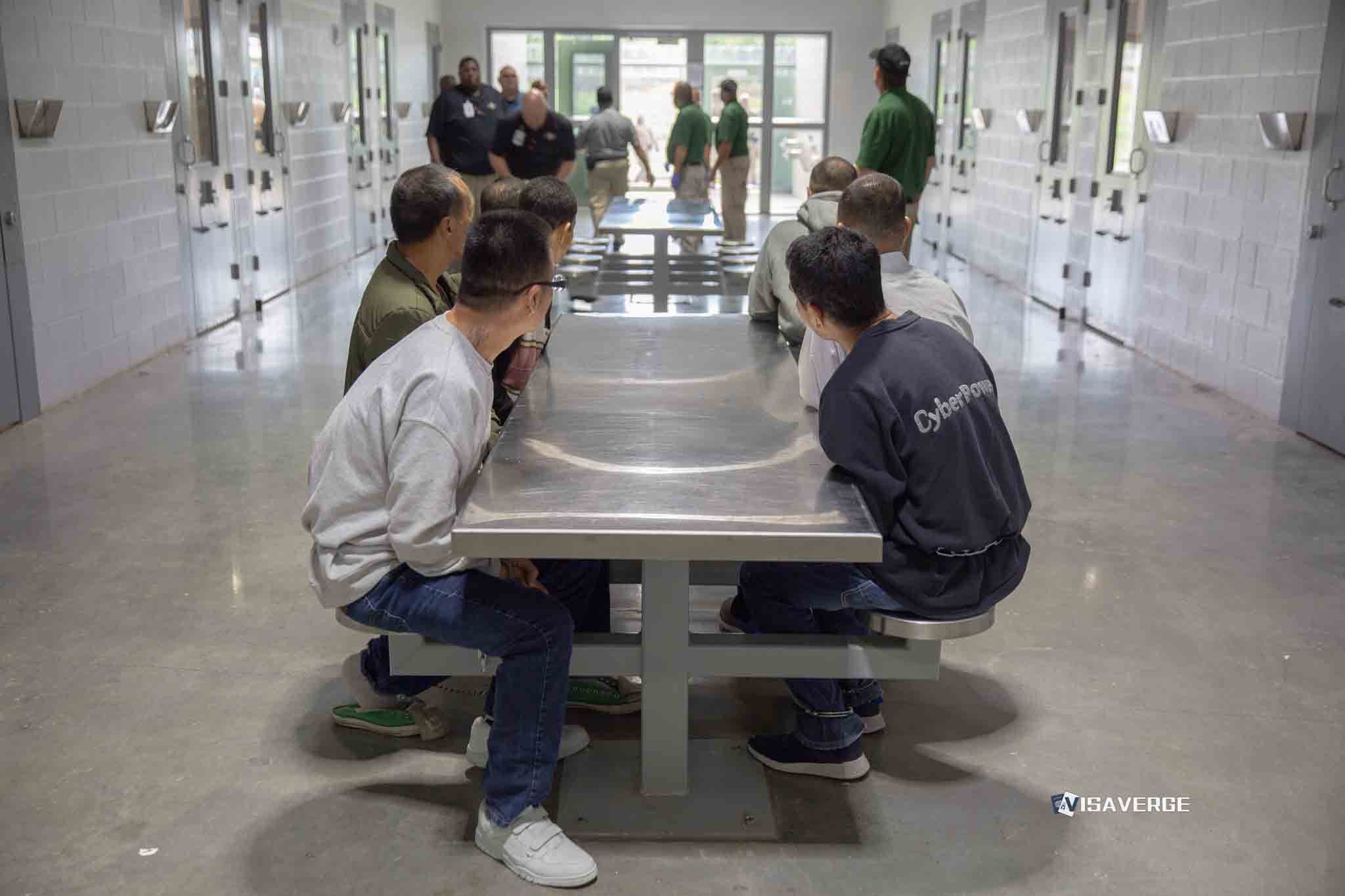
Mexico’s Siglo XXI facility, also known as the 21st Century Chiapas station, was built for 960 people. Reports have frequently placed its population above 3,000, while protesters have described conditions as “prison-like.”
President Claudia Sheinbaum addressed the pressure on Mexico Sunday. She said the country continues to act as a “humanitarian country” while managing the arrival of thousands of non-Mexican deportees from the United States.
A crowded facility received people moved south for removal
The migrants involved had been transported from central Mexico to Tapachula before the disturbance. Most were Cuban and Venezuelan nationals.
The movement brought people facing removal to a station already operating far above its planned capacity. That gap has shaped conditions inside the facility.
A 2026 Human Rights Watch report, Casting Us Aside to Die, estimated that approximately 4,353 Cubans were sent from the United States to Mexico between January 2025 and March 2026. The figure covers the wider period, not only the people involved in Sunday’s fire.
Some affected Cubans had lived in the United States for decades. Some had spent more than 40 years there before humanitarian parole was revoked under the “Making America Safe Again” initiative.
U.S. policy put parole holders under a departure order
The incident unfolded in Mexico but reflects a broader U.S. enforcement policy defended by DHS Secretary Kristi Noem and the administration. That policy includes mass removal efforts and third-country transfers.
A related DHS statement from the March 21, 2025/2026 policy cycle said:
“Parole is inherently temporary, and parole alone is not an underlying basis for obtaining any immigration status. Those without a lawful basis to stay in the U.S. must depart.”
The statement describes the government’s position on humanitarian parole. It does not identify the individual migrants involved in the Tapachula disturbance.
Mexico has also filed criminal complaints in the United States concerning the deaths of Mexican nationals in Immigration and Customs Enforcement custody. Those complaints add diplomatic pressure as the two countries manage removal arrangements.
Tapachula leaves arrivals exposed after transfer
Local advocates have described Tapachula as an “open-air prison.” Arrivals may lack housing, work permits and legal recourse while they remain in the city.
Those conditions can leave people vulnerable to organized crime. The fire therefore followed a transfer process that left migrants in a crowded border facility, rather than ending their uncertainty.
The Mexican migration institute’s response focused first on control of the building. Federal forces secured the perimeter, while prosecutors received the two people accused of helping start the blaze.
The incident also marks the first major riot described under the Sheinbaum administration’s cooperation with the renewed U.S. mass-removal strategy. The president’s Sunday remarks placed the event within Mexico’s wider effort to manage non-Mexican arrivals from the United States.
Officials now face the question of what happens to the remaining migrants after the station returns to control. The facility’s stated capacity remains 960 people, compared with reported populations exceeding 3,000.
This article provides general information and is not legal advice. Consult a qualified immigration attorney about your specific case.