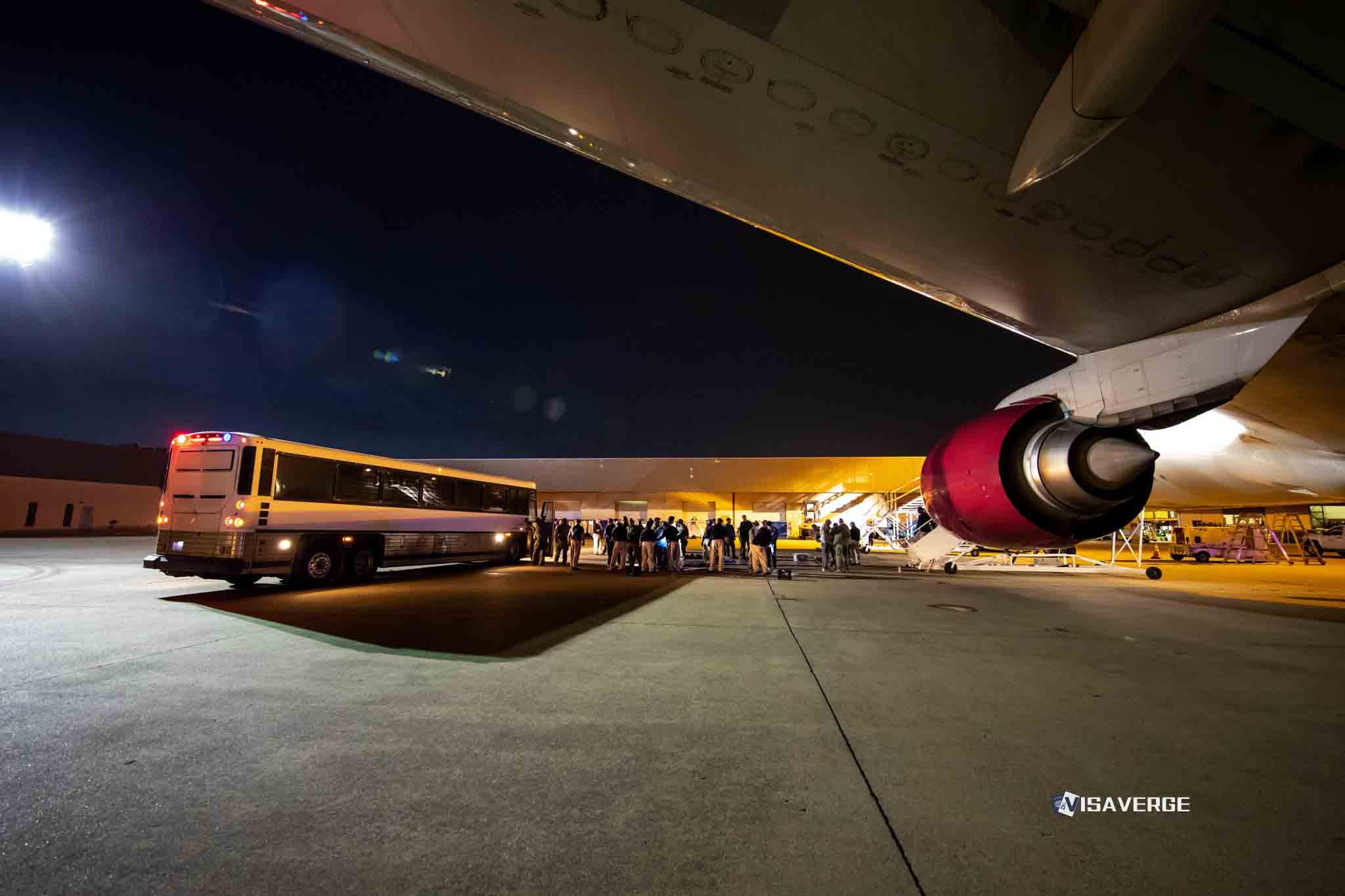
- The United States has expanded removal operations for Mexican nationals using transit stops in Guatemala and Honduras.
- Mexico’s Foreign Ministry rejected the practice, stating no agreement exists for deporting its citizens through third countries.
- DHS officials use the distant routes to deter re-entry attempts by placing deportees farther from the border.
The U.S. has expanded removals of Mexican nationals through Guatemala and Honduras, using transit stops that send people onward to Mexico instead of returning them directly. Guatemala’s President Bernardo Arévalo said on August 20, 2026 that about 2,300 Mexicans had arrived there this year as “transit” returnees.
The transfers accelerated in the spring. A separate tally put the Guatemalan total at 2,284 through August 21, while Honduras had received at least dozens of Mexican nationals.

Two flights carrying 82 Mexican nationals arrived in San Pedro Sula on August 13 and 15. Another group of 35 arrived on August 20.
The administration’s approach places deportees farther from the U.S.-Mexico border they might otherwise use to try returning. Two Department of Homeland Security officials described deterrence as an objective, saying the added distance can make re-entry harder.
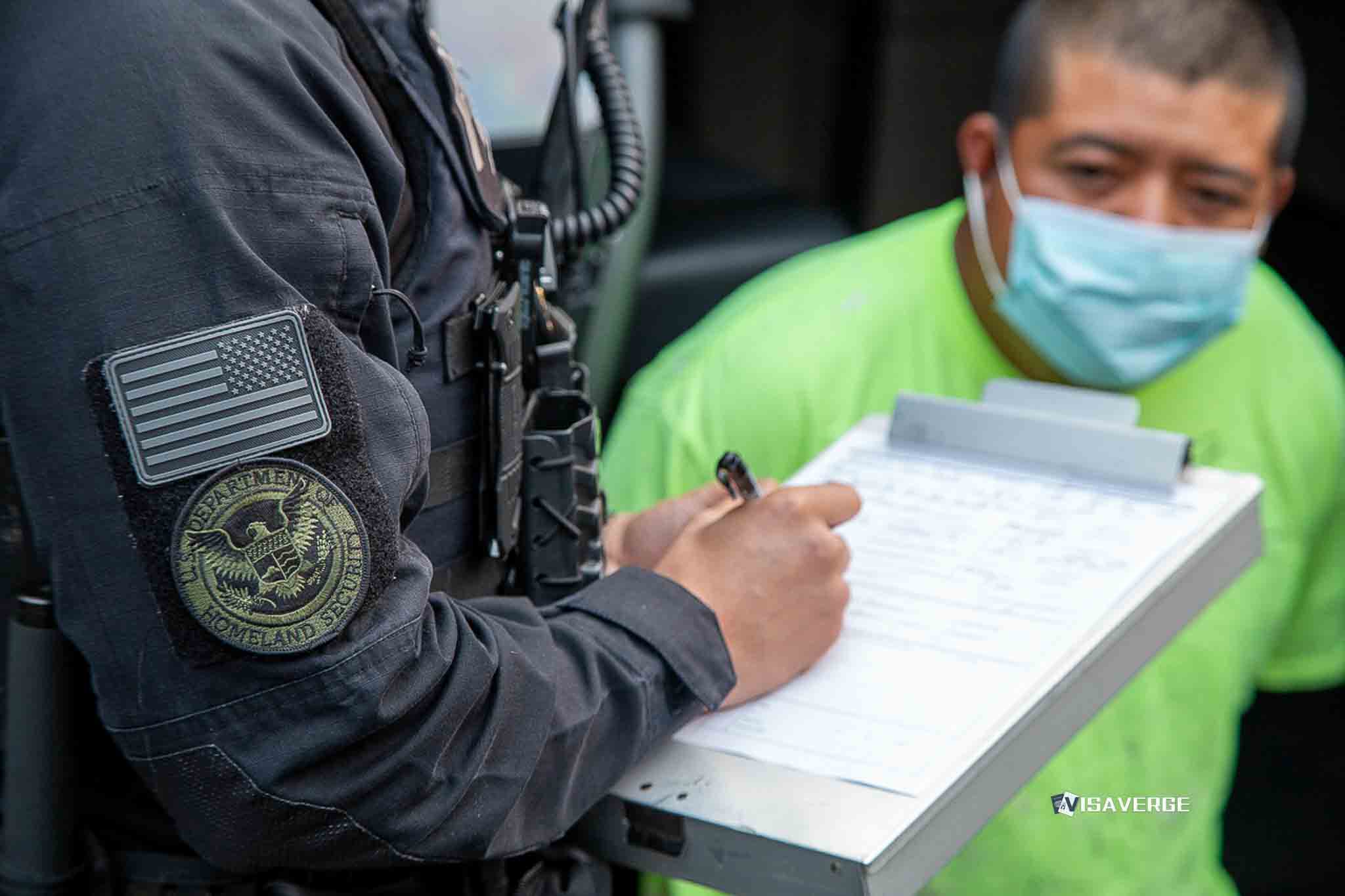
The flights generally combine Mexican passengers with Central American returnees. People are processed during the stopover, then bused into southern Mexico within 24 hours.
Arévalo confirmed the arrangement on August 19. He said the passengers return to Mexican territory within that period “in coordination with Mexican immigration authorities.”
Mexico rejects a route that sends its nationals through third countries
Mexico’s Foreign Ministry rejected the practice on August 20 and said it accepts the return of its citizens directly. The ministry also said no agreement authorizes sending them through another country.
“The Government of Mexico accepts the return of all its nationals. It therefore rejects the deportation of Mexican nationals to third countries and has no such agreement in place.”
President Claudia Sheinbaum separately protested the deaths of 17 Mexicans in U.S. immigration custody during enforcement operations in 2025 and 2026. The diplomatic dispute centers on whether a transit arrangement for one group of nationals can cover another.
Civil organizations have characterized the flights as pressure on Sheinbaum’s government to accept more aggressive U.S. security demands.
The arrangement predates the new flights but was written for a different group
The Guatemalan framework began with diplomatic notes exchanged in June 2025. The notes were published in the Federal Register on July 15, 2025, and concern Central American nationals.
Monitoring groups say recent transfers of Mexican nationals operate beyond the framework’s original parameters. Sporadic movements reportedly started as early as October 2025, then became systematic in April 2026.
Transfers to Honduras began in May or June 2026, according to the monitoring groups. Through mid-August, estimates put the Honduran total at 165 to 200+ Mexican nationals.
The government’s method also changes what happens immediately after removal. Historically, Mexican nationals were sent directly to Mexican border towns or other locations inside Mexico. Under the newer process, they first pass through a Central American airport.
The stop can leave people far from relatives and established communities. Deportees sent onward to southern Mexico may be separated from families who remain elsewhere.
DHS presents the flights as part of a wider removal campaign
DHS Secretary Markwayne Mullin framed the policy as a public-safety measure on August 5. He said the administration’s priority was removing what he called criminal illegal aliens from U.S. communities.
“The Trump Administration will always put the safety of the American people first, and that starts with removing criminal illegal aliens from our communities. DHS is committed to its mission of defending the homeland. and enforcing the law.”
Assistant DHS Secretary Lauren Bis used similar language in July.
“Criminal illegal aliens have NO place in American communities.”
A DHS spokesperson said August 19 that the administration was using all lawful options for what the spokesperson called the “largest deportation operation in history.” The statement tied the Central American transfers to President Trump’s broader removal campaign.
The administration has used Asylum Cooperative Agreements and “Safe Third Country” frameworks in its removal strategy. Advocates say some Mexican transfers do not fit the formal terms of those arrangements.
The administration’s stated rationale is deterrence. Sending people through another country can delay their arrival in Mexico and move them away from the U.S.-Mexico border.
Court fights question notice and the safety of receiving countries
The legal dispute includes notice, transfer authority, and the safety of the receiving countries. In D.V.D. v. Department of Homeland Security, a federal judge found third-country deportations without notice unlawful in February 2026.
The Supreme Court stayed that injunction in early 2026. Flights therefore continued while the appeal proceeded.
A separate case, U.T. v. Bondi, remains pending in the D.C. District Court. That lawsuit challenges expanded asylum transfers to countries that advocates consider unsafe.
Savi Arvey, Director of Policy at Human Rights First, warned that systematic transfers could violate non-refoulement, the principle against returning migrants to places where their lives or freedom may face threats.
The issue can turn on a person’s individual circumstances. A person facing persecution or serious harm may raise different concerns from someone without those claims.
The route leaves deportees far from home before they begin again
Arturo Trejo, a Mexican national deported to Honduras in August 2026, said he received little information before boarding.
“They didn't tell us anything, just to get on the flight.”
People sent onward to southern Mexico can end up thousands of miles from relatives. Some spent decades in the United States and now feel like strangers after removal.
In Mexico City, a neighborhood known as “Little LA” has grown as a haven for some of those deportees. The community includes people who lived for decades in the United States.
The pace of flights continued into August. The August 20 arrival brought another 35 Mexican nationals through the transit system, while the two earlier flights carried 82 between them.
This article provides general information and is not legal advice. Consult a qualified immigration attorney about your specific case.