- ICE has sent some Cuban migrants from Florida to Africa under a third-country arrangement when Cuba would not accept direct repatriation.
- Yasmany Moreno de Armas was removed to Bangui on August 1, 2026, and said he arrived without passports or documents.
- Reporting says Florida issued deportation orders to more than 4,000 Cubans between October 2025 and June 2026.
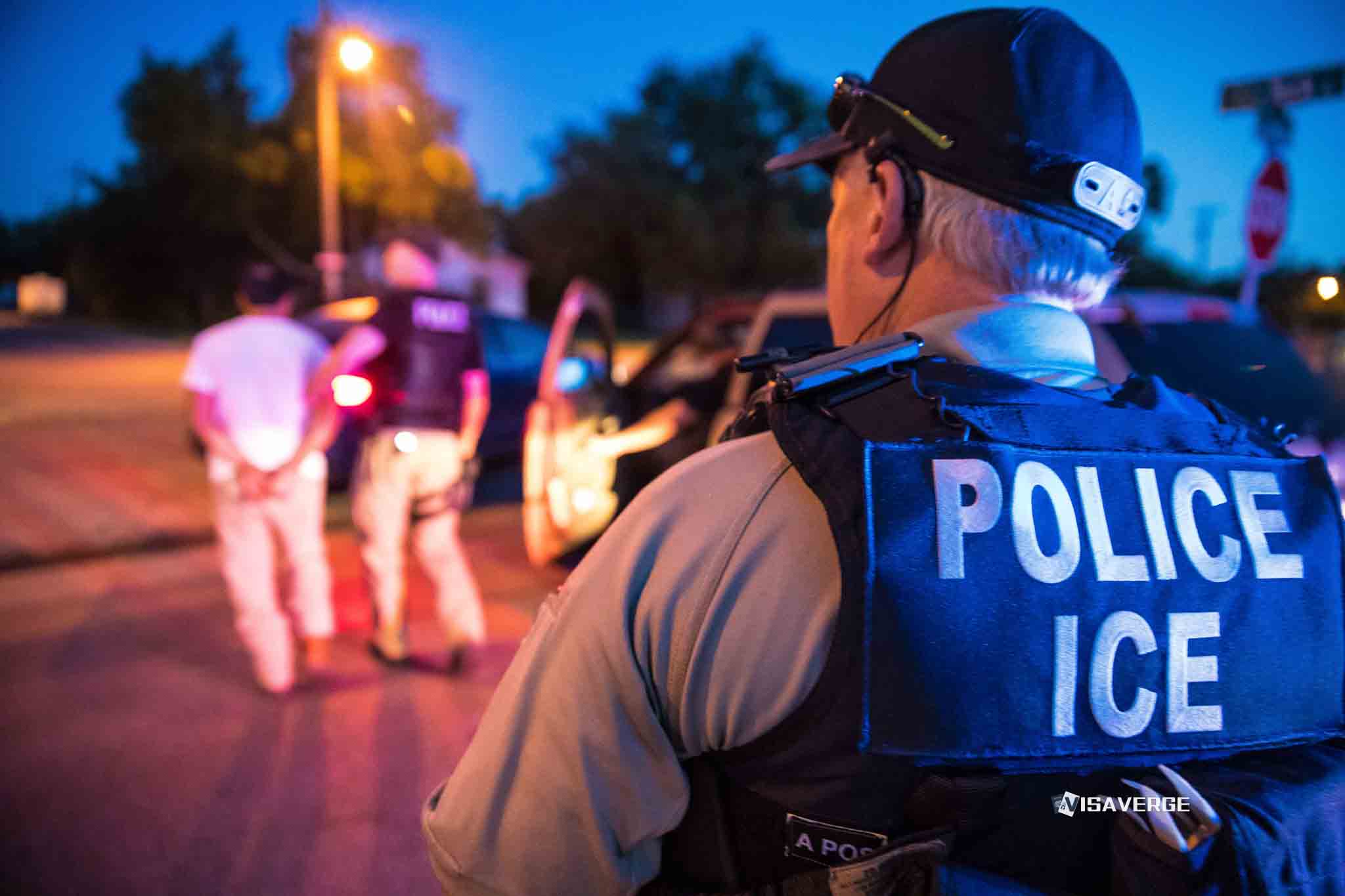
U.S. Immigration and Customs Enforcement, or ICE, has removed Cubans who lived in Florida to African countries, including the Central African Republic, Liberia and Equatorial Guinea. Some later said they lacked documents and could not leave. The transfers form part of a broader third-country arrangement under the Trump administration for migrants whose home governments do not readily accept direct repatriation.
As of September 2026, the reported cases do not show a blanket order covering every Cuban in Florida. They do show people arriving far from the United States with little information about their destination or legal status.
Free toolUSCIS Receipt Number Decoder
The clearest case involves Yasmany Moreno de Armas, a 31-year-old Cuban who lived and worked in Florida. Immigration authorities arrested him in May 2025. He spent nearly a year in custody before his removal.
Moreno de Armas said officials did not disclose where he was going. About five hours into the flight, an immigration officer told him they were going to Africa. A report placed his removal on August 1, 2026, and said he was left in Bangui without passports and without knowing what would happen next.
Moreno de Armas reached Bangui without knowing his fate
Moreno de Armas had sought permanent residence under the Cuban Adjustment Act. Officials denied the application because he filed after his parole expired.
Arístides Fernández García, another Cuban, said he remained in Bangui without documents or the freedom to leave the place where he was staying. He described the removal as a “kidnapping.”
“We cannot leave.”
“We don’t have documents and we’re suffering and missing our families in a continent we don’t know.”
The accounts describe detention, separation from relatives and uncertainty over immigration status. The people profiled included migrants with expired parole, pending or denied asylum claims and prior custody, not only people with criminal records.
Liberia removals ended with conflicting accounts of the diversion
The first U.S. deportation flight under a new agreement reached Liberia on August 20, 2026. Liberia’s information minister said some of the deportees were Cuban.
Separate reports described the passengers’ refusal to leave the aircraft in Monrovia. One account said at least five migrants, including three Cuban men, refused to disembark before authorities flew them to Equatorial Guinea and forced them off the plane.
Another account described a group of six immigrants sent from the United States to Liberia and then onward after refusing to disembark. That group included four Cuban men, a Brazilian man and a Cameroonian woman. The passengers were detained in Equatorial Guinea.
Carlos Rodríguez López, 35, was among the Cubans identified in the six-person account. He had lived in Miami Gardens, Florida. His wife, Igrayne Ribot, said the news of his deportation “arrived all of a sudden.” Rodríguez López reportedly told her by video call that he was in Africa after the diversion.
He also said U.S. authorities were “trafficking with my life.”
The reports differed on the number of people involved and on the number of Cuban men. They described the same broad sequence: refusal in Liberia followed by removal to Equatorial Guinea.
Four Cuban men were identified in the Liberia group
One report named these four Cubans as the men who refused to disembark in Liberia:
- Carlos Rodríguez López
- Leandro Sánchez
- Emilio Destrade Correoso
- Darwin Hernández Calvo
The names appeared in reporting about the group later taken to Equatorial Guinea.
Florida removal orders show the policy’s reach beyond individual cases
The cases sit inside a wider network of transfers. A report said that between October 2025 and June 2026, Florida authorities issued deportation orders to more than 4,000 Cubans.
By early August 2026, about 22,000 people had been sent to at least 26 countries through third-country deportation schemes, according to the same reporting. The United States had signed agreements with at least 35 nations.
| Reported measure | Figure or detail |
|---|---|
| Cubans issued deportation orders in Florida between October 2025 and June 2026 | more than 4,000 |
| People sent to third countries by early August 2026 | about 22,000 |
| Countries receiving people through the schemes | at least 26 |
| Nations with agreements with the United States | at least 35 |
| Central African Republic agreement, reported as signed in May 2026 | $85 million |
| Equatorial Guinea arrangement | an opaque $7.5 million deal |
Cuba has historically refused to accept some deportees. That has led U.S. officials to seek alternative destinations in Africa and elsewhere.
The reported agreement with the Central African Republic was signed in May 2026 and included an $85 million payment. Reporting separately described the Equatorial Guinea arrangement as an opaque $7.5 million deal.
Direct repatriation limits send some Cubans through a wider removal system
The policy applies when a person’s country of origin refuses or limits direct repatriation flights. The reporting indicates that people with expired parole, pending or denied asylum claims, or prior custody can enter that system.
A review of two profiled men found no criminal record beyond traffic and immigration violations. The removals therefore have not been limited, in the reported cases, to people convicted of crimes.
The Cuban cases also reflect the end of “Wet Foot, Dry Foot.” Moreno de Armas had pursued permanent residence through the Cuban Adjustment Act, but his application was denied because he filed after his parole expired.
A Massachusetts ruling remains stayed while the case continues
The legal challenge remains active as reported removals continue. The ruling’s stay allows the policy to remain in operation while the litigation proceeds.
Families have received abrupt calls from relatives in African detention sites. Some deportees remain without passports or other identity documents, leaving them unable to leave or determine their immigration status.
Reporting also referenced a State Department warning that Americans should not travel to the Central African Republic for any reason because of violence and instability. The warning underscores the distance and conditions facing people sent there.
This article provides general information and is not legal advice. Consult a qualified immigration attorney about your specific case.