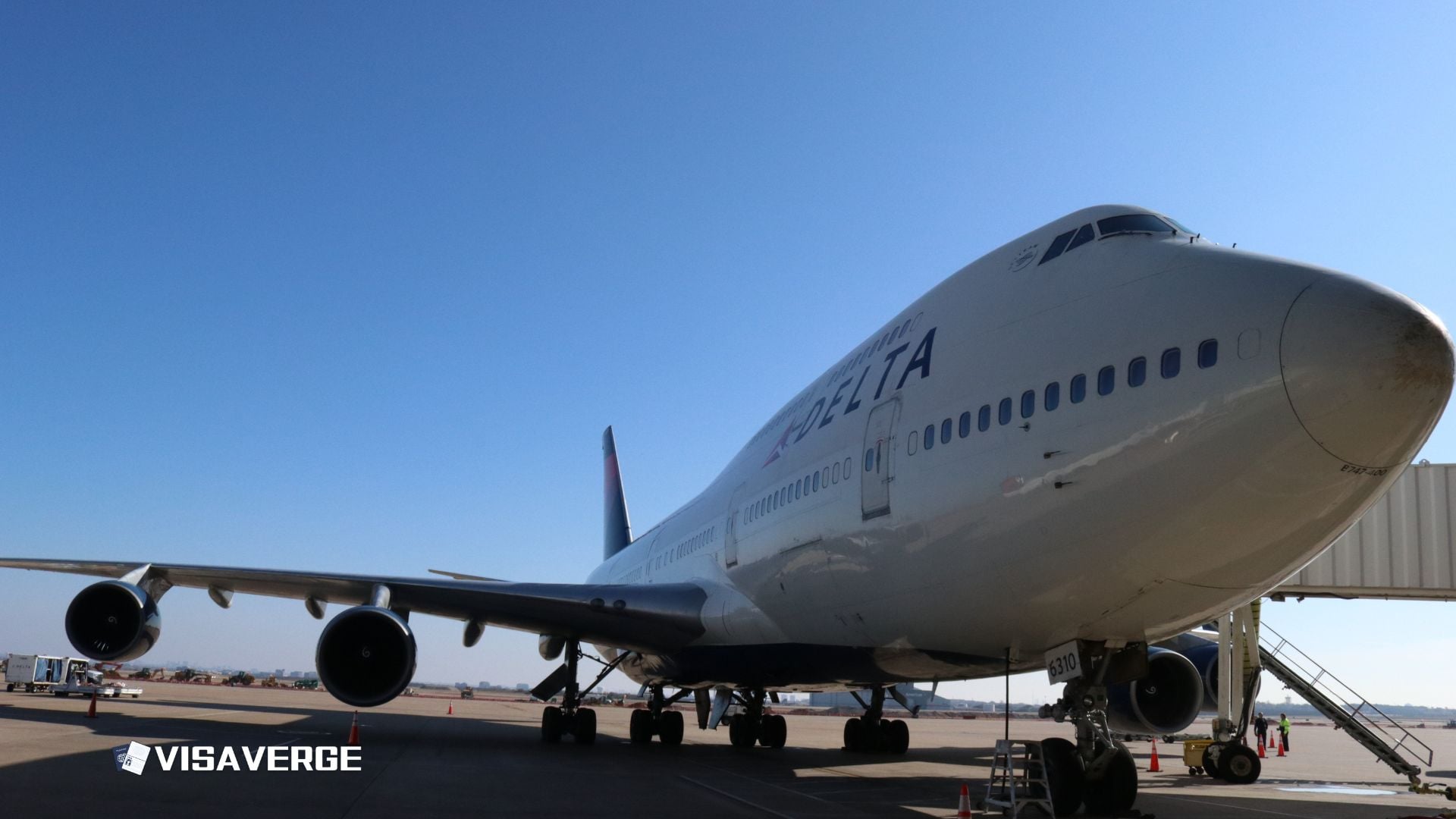
- Delta Flight 5860 landed safely in Portland after pilots reported smoke in the cockpit shortly after departure.
- Seventy-eight people evacuated via boarding bridge following an emergency landing triggered by a smoke sensor alert.
- Initial inspections suggest an electrical issue or faulty sensor caused the alarm rather than an active fire.
Delta Flight 5860 returned to Portland on Saturday after its pilots reported smoke in the cockpit shortly after takeoff, landing safely with 78 people aboard. The flight had been headed from Portland International Jetport to LaGuardia Airport in New York City.
The emergency was declared at about 1:30 p.m. EDT on July 25, 2026, after an onboard alert indicated smoke. The aircraft reached the airport again at approximately 1:45 p.m. EDT, and no injuries were reported.
The plane carried 74 passengers and four crew members. Everyone left through the passenger boarding bridge rather than using emergency slides.
“It was then taxied to the gate and deplaned using the passenger boarding bridge,” Zach Sundquist, assistant airport director at the airport, said. He said the aircraft redirected as a precaution after a smoke sensor activated.
The Portland Fire Department’s aircraft rescue and firefighting team met the aircraft as part of a full emergency response. Any smoke had cleared before the landing, and responders found no signs of fire or structural damage.
A sensor alert brought the aircraft back within minutes
The flight operated by Republic Airways as Delta Connection used an Embraer ERJ-175. It was a regular daily service between Portland and New York, scheduled to leave at 12:15 p.m. after a slight delay before departure.
Maine first responders issued an alert at roughly 1:30 p.m. The Portland Fire Department later determined that an electrical issue had triggered the cockpit smoke sensor, while representatives for the operators said the incident was believed to involve a faulty sensor rather than an active fire.
The distinction shaped the response, not the pilots’ decision. The crew followed emergency procedures after receiving the cockpit warning, and airport officials sent the aircraft rescue team to meet the plane on the runway.
The response area had been cleared by 2:00 p.m., according to dispatchers. The aircraft then moved to the gate, where passengers returned to the terminal.
| Flight detail | Information |
|---|---|
| Operator | Republic Airways as Delta Connection for Delta Air Lines |
| Aircraft | Embraer ERJ-175 |
| Route | Portland to LaGuardia Airport, New York City |
| Emergency declared | Approximately 1:30 p.m. EDT |
| safe landing | Approximately 1:45 p.m. EDT |
| People aboard | 78, including 74 passengers and four crew members |
Passengers waited for a replacement aircraft
The travelers were expected to continue to New York on another aircraft. The airline said it was working to accommodate passengers and rebook connections missed at LaGuardia.
A recovery plane dispatched from Boston was due to reach Portland as of 4:00 p.m. EDT on July 25 to carry the passengers onward to New York City. The schedule created a second stage of the disruption after the original aircraft returned safely.
Passengers remained at the terminal while arrangements were made. They had already left the aircraft through Gate 7 using the boarding bridge.
The emergency also briefly delayed other arrivals and departures at the airport. Airport operations continued, however, and the facility remained fully operational.
The aircraft was removed from service for inspection
Maintenance personnel moved the Embraer ERJ-175 to a hangar after the incident. They planned a detailed inspection of its avionics and sensor systems, including the equipment connected to the warning that prompted the emergency landing.
The available findings pointed to an electrical problem or faulty sensor, rather than a fire. The aircraft’s emergency treatment reflected the warning received in the cockpit, while the later inspection focused on preventing another false alarm.
The safe landing ended the immediate danger, but the aircraft’s removal from service left the recovery flight responsible for completing the trip. The replacement operation was being organized from Boston on the afternoon of July 25.