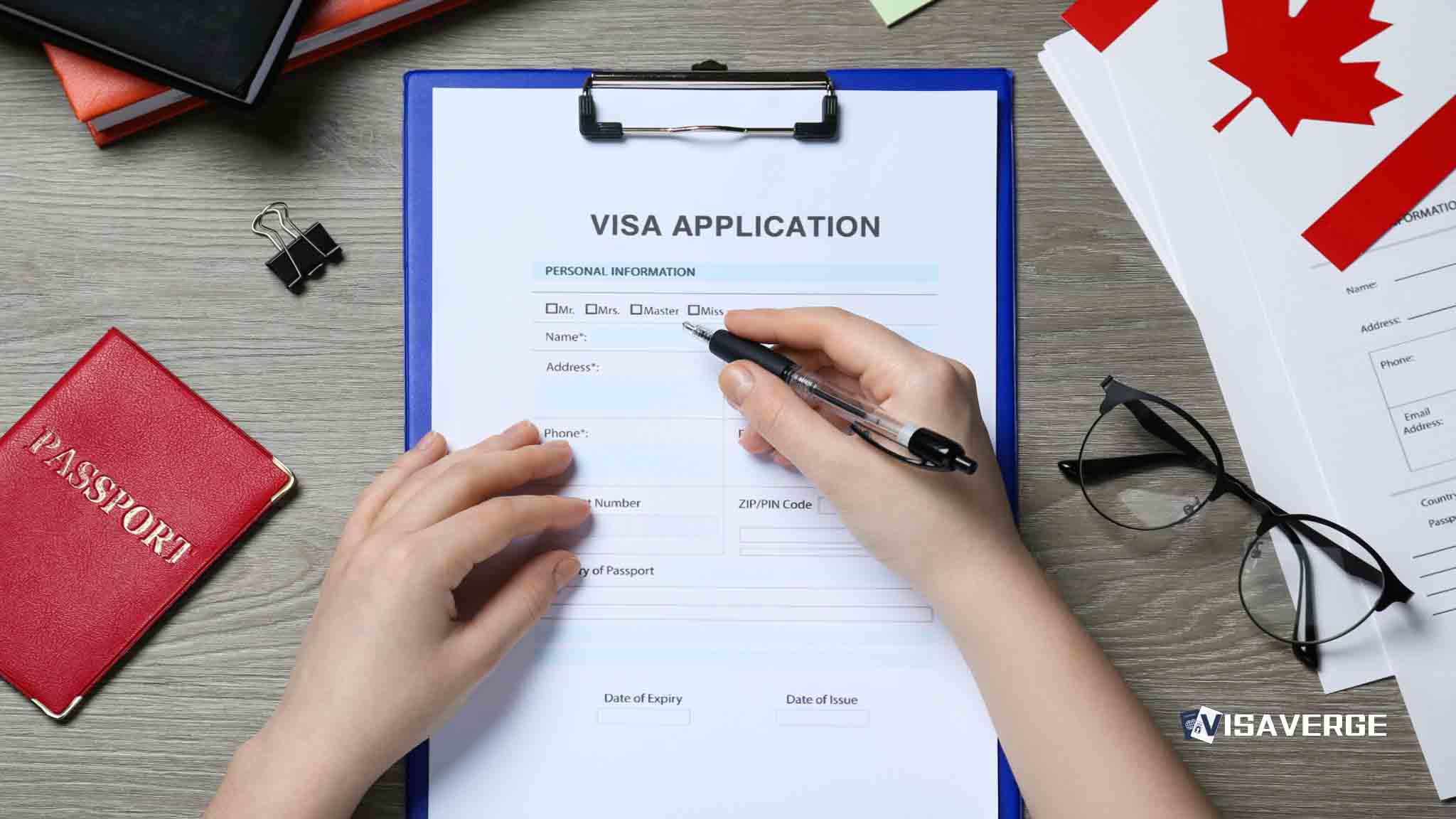
- The State Department will review online presence for I, TN, and TD visa applicants starting October 1, 2026.
- Applicants are instructed to set all social media profiles to public or open for consular review.
- The policy expands existing screening already used for other visa categories under the same vetting framework.
The U.S. Department of State will begin reviewing the online presence of I, TN, TD visa applicants on October 1, 2026, widening a screening step that already reaches other visa categories. The change puts media workers, cross-border professionals and their families under the same scrutiny. It starts then.
I visas cover foreign media representatives. TN visas cover qualified professionals from Canada and Mexico under the United States-Mexico-Canada Agreement. TD visas cover dependents of TN visa holders. Three categories. One system.
Free toolDS-160 Form Filling Online Helper Tool
The department’s notice is blunt about the access it wants:
all applicants for I, TD, and TN nonimmigrant visas are instructed to set the privacy settings on all of their social media profiles to ‘public’ or ‘open.’
That instruction matters because the review is built into visa vetting, not layered on as an afterthought. The department treats social-media information as part of routine screening for national-security or public-safety concerns. The policy broadens that same approach. It does not change the basic logic.
Public profiles now sit in the review
Applicants in the three groups are being told to keep their accounts visible to consular officers. The focus is on account settings. Public or open. That is the point.
The broader review already reached diplomatic and official visas, students, temporary workers, exchange visitors, fiancés, religious workers, and certain witnesses and victims. The new step folds more temporary visitors into the same framework. It is the same net, widened.
The most specific recent notice says the department updated its guidance on September 18, 2026. It still set the start date at October 1, 2026. The calendar is fixed.
The move has been described as an expansion of existing screening rather than a wholly new program. That framing matches the way the department has been building online-presence review across visa classes. The new reach is narrower than the full visa system, but the effect is broader for the people now covered.
The line now sits on the record in plain terms. Social-media profiles for these applicants are meant to be open to review, and the category list now includes journalists, Canadian and Mexican professionals, and their dependents. The notice was updated on September 18, 2026.