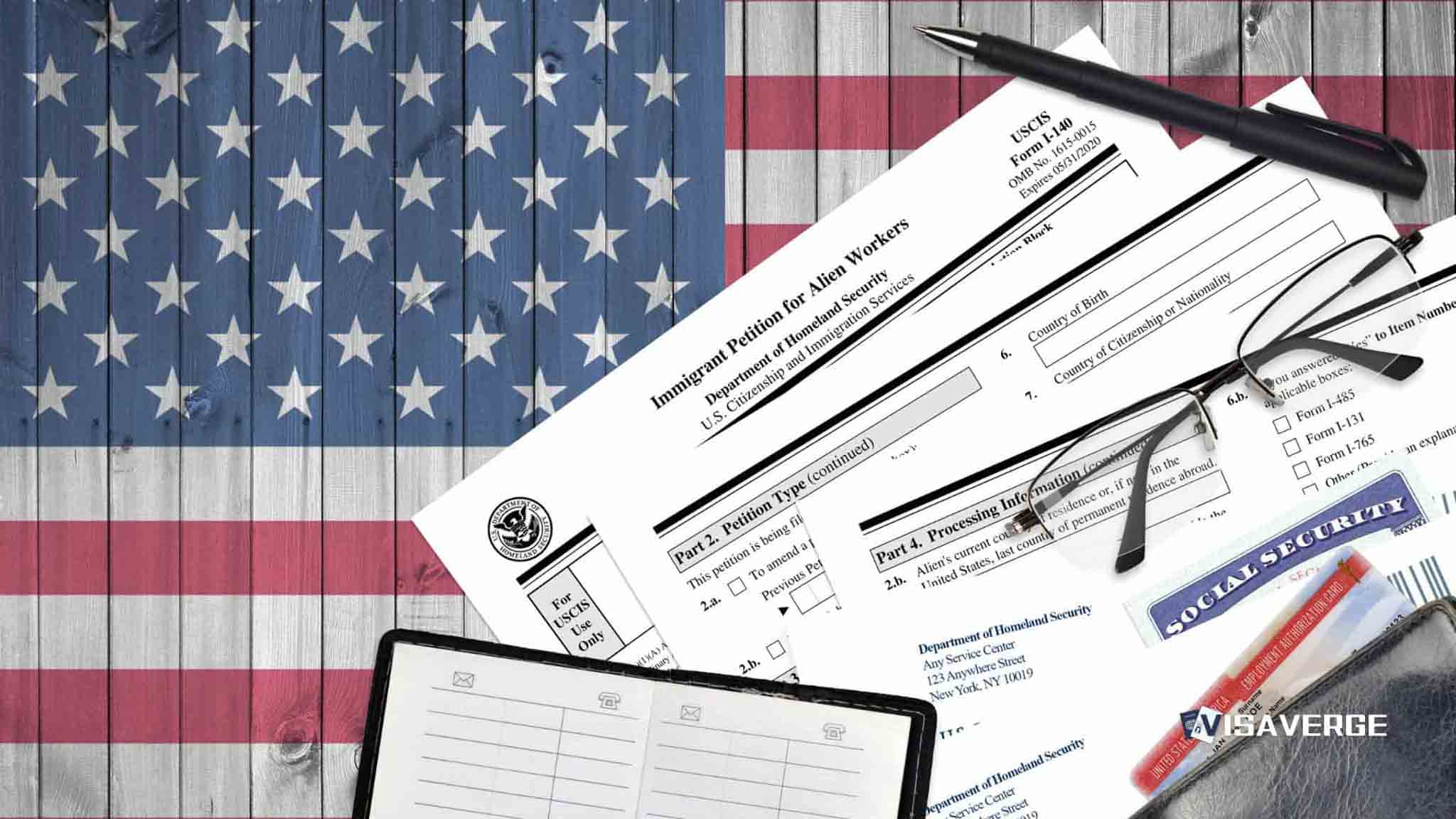
F-1 and J-1 Students Face New Form I-539 and I-765 Editions for Duration of Status

USCIS to reject old I-539 and I-765 forms starting Sept. 15, 2026, as student visas move to fixed admission periods. No grace period will be granted.

Key Takeaways
  • USCIS will reject older form editions for I-539 and I-765 applications starting September 15, 2026.
  • The update aligns with the end of Duration of Status, requiring fixed-period admissions for students.
  • Paper filings must be postmarked by the deadline, while online submissions use Eastern Time limits.

USCIS will reject older editions of Form I-539 and Form I-765 on Sept. 15, 2026, putting F-1 and J-1 students on a new filing calendar as the government moves away from Duration of Status. The cutoff comes fast. It reaches extension filings and work-authorisation cases at once.

The agency made the deadline explicit in an Aug. 14 alert.

Free toolOPT Timeline Calculator Online
F-1 and J-1 Students Face New Form I-539 and I-765 Editions for Duration of Status

There is no grace period for the revised editions of Form I-539 and Form I-765 because the revised editions are necessary for USCIS to apply the final rule. USCIS will reject the [older] edition if it is postmarked or electronically submitted on or after Sept. 15, 2026.

That leaves no transition window. Older editions stop there.

USCIS said the new forms align with the July 17, 2026 final rule titled "Establishing a Fixed Time Period of Admission and an Extension of Stay Procedure for Nonimmigrant Academic Students, Exchange Visitors, and Representatives of Foreign Information Media." Under that rule, students are admitted for a fixed period, typically up to 4 years. The clock now runs. It does not stay open-ended.

Before this change, school officials, or DSOs, handled extensions through SEVIS. Now those cases require a formal application to USCIS. PhD candidates and students changing majors may need the extension filing if their programs run past four years. The paperwork moved.

USCIS also updated the work permit instructions for Optional Practical Training. An old edition can trigger rejection and put work authorization or legal status at risk if the Admit Until Date passes. If status expires while a student is trying to refile, unlawful presence can begin. That window is tight.

USCIS drew one hard line.

Filing windowExtension filingWork permit filing
On or before Sept. 14, 202608/28/2408/21/25
On or after Sept. 15, 202609/15/2609/15/26

Paper and online filings turn on different clocks

For paper filings, the postmark date controls. Online filings turn on the submission date in Eastern Time. Both new editions carry an edition date of 09/15/26. Arrival does not matter.

People also ask

Answers from VisaVerge guides
What happens if an old Form I-539 is submitted after September 15, 2026?

USCIS will reject the old Form I-539 edition if it is postmarked or electronically submitted on or after Sept. 15, 2026.

Read: How to Avoid Rejection When Filing the Updated Form I-539 After September 15, 2026
Who can use Form I-539 Extension of Stay and who must use Form I-129 instead as of July 2025?

Tourists in B-2 status, students (F and M visa holders), dependents of certain employment-based visa holders, and residents of the Commonwealth of the Northern Mariana Islands can use Form I-539. Employment-based principal visa holders must use Form I-129.

Read: 5 Essential Facts About I-539 Extension of Stay in 2025
What changes did USCIS make to the I-539 application process starting October 1, 2023?

USCIS removed the biometrics requirement and fee for I-539 applications filed after October 1, 2023.

Read: Important Updates for Filing I-539 Change of Status
What are the new admission periods for F and J category students after August 2025?

Admissions are tied to the academic program end date plus 30 days, capped at four years at a time, according to policy changes by the Department of Homeland Security.

Read: F-2 Visa Rejection Rate in 2025: Key Denial Trends and Stats
How will the duration of status for F and J visas change under the new proposal?

The proposal would replace the duration of status with fixed four-year admission periods based on the length of the I-20, capped at 4 years.

Read: Congress Proposes Educational Visa Transparency Act of 2026 to Tighten Student Tracking
What do you think? 0 reactions
Useful? 0%
Priya Nair

Priya Nair is VisaVerge.com's Work Visa Correspondent, specializing in employment-based immigration — H-1B, L-1, O-1, TN, OPT, and the PERM and green-card process. She breaks down lottery odds, prevailing-wage rules, and employer obligations for the skilled professionals who navigate them every year. Priya's guides help workers and employers make confident, well-informed decisions about building a career in the United States.

Subscribe
Notify of
guest

0 Comments