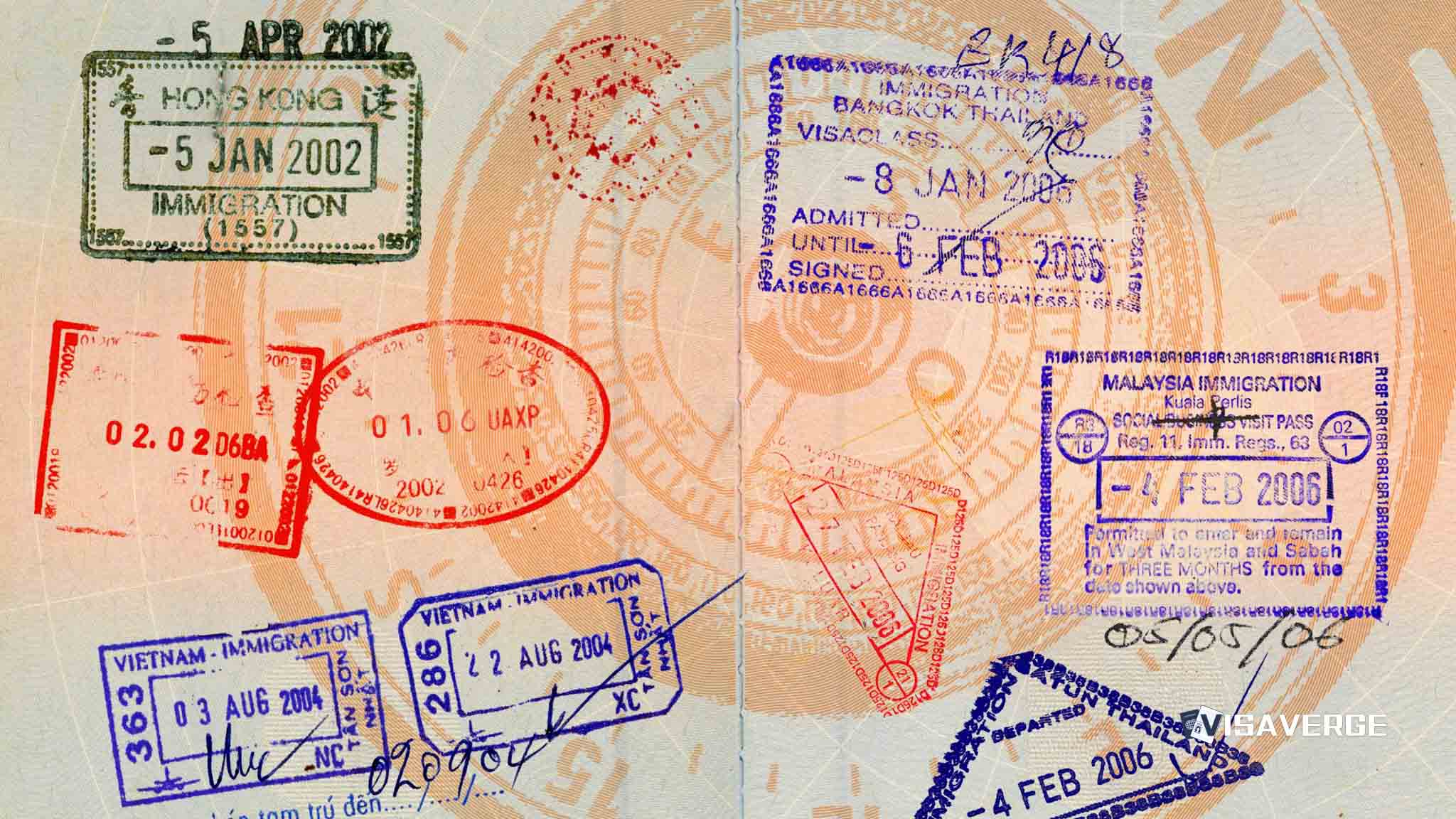
- DHS will enforce the fixed period of admission rule for F-2 and J-2 dependents starting September 15, 2026.
- New I-94s will show an Admit Until Date tied to the principal F-1 or J-1’s authorized stay.
- USCIS will reject older Form I-539 and I-765 editions filed on or after September 15, 2026.
DHS will begin enforcing the fixed period of admission rule on September 15, 2026, and F-2 and J-2 dependents will no longer enter under D/S. Their I-94s will carry an Admit Until Date tied to the principal F-1 or J-1’s authorized stay. The clock changes. It stops being open-ended.
Their admission period generally tracks the principal’s admission period, not a separate open-ended stay, and the fixed admission period is generally capped at four years. That limit still bends to the program end date on the Form I-20 or DS-2019 and any applicable grace period rules. No more drift.

DHS published the final rule on July 17, 2026, in the Federal Register at 91 FR 44976, under RIN 1653-AA95. The effective date is September 15, 2026. On admission or readmission on or after that date, the I-94 will show a specific end date rather than D/S.
Free toolOPT Timeline Calculator OnlinePeople already in the United States before the effective date remain in D/S until they travel or seek an extension. After that move, the fixed-date system applies. Guidance materials in August and September 2026 continue to place the dependents inside the new framework. The timing splits.
The Department of State issued guidance on August 10, 2026, for J exchange visitors. It says new and continuing exchange visitors entering or changing to J status on or after September 15, 2026 will receive an Admit Until Date, and that date cannot exceed four years. The guidance says the AUD marks the last day the exchange visitor is authorized to remain in the United States in J status. It cannot run longer.
The dependent’s clock now follows the principal’s file
DHS described the change as replacing long-standing duration of status admission with a fixed admission period for F, J, and I nonimmigrants. The dependent side follows the same logic. One clock now governs the stay.
| Item | Before the rule | On or after September 15, 2026 |
|---|---|---|
| Admission basis | D/S | I-94 with Admit Until Date |
| End point | Open-ended if status continues | Specific date tied to the principal’s authorized stay |
| Time limit | Not fixed on the I-94 | Generally capped at four years |
| More time needed | Keep maintaining status | File Form I-539 before the current admission expires |
When more time is needed, the dependent generally must also obtain an extension of stay or a new admission record. The family does not get automatic carryover. Form I-539 controls the request.
Extensions and new forms now move on the same date
USCIS is also issuing new editions of Form I-539 and Form I-765 dated 09/15/26, and older editions filed on or after September 15, 2026 will be rejected. The new forms land the same day.
That filing change lines up with the new admission clock. Families will need the right form version when the deadline arrives. The old one will not work.