- Sheriff Dale Schmidt filed a defamation lawsuit seeking $1 million over allegedly false detention claims.
- Records indicate the traveler underwent routine secondary inspection rather than a multi-day multi-state detention.
- A federal judge granted limited expedited discovery to preserve critical electronic and video evidence for the case.
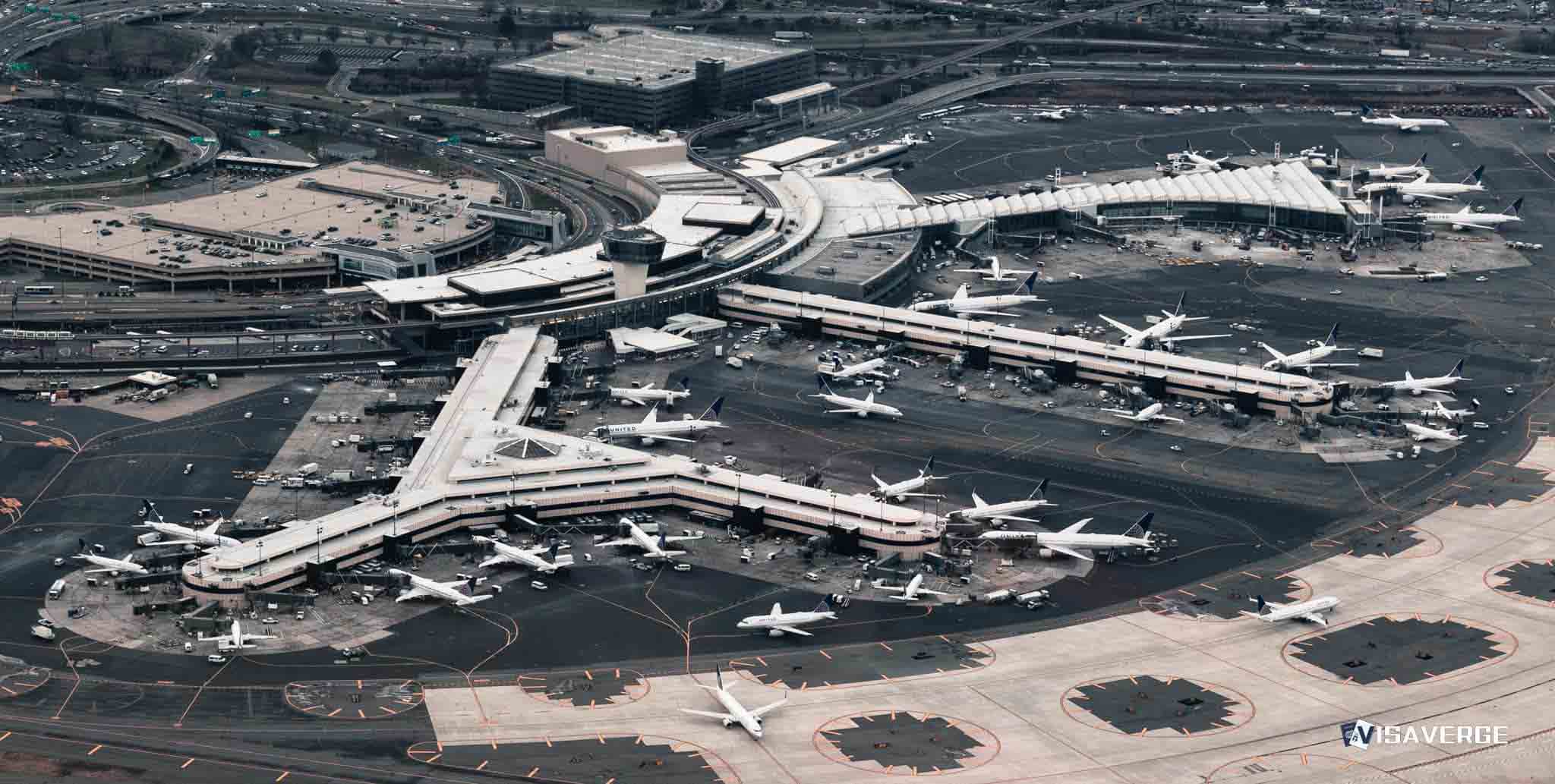
(CHICAGO O’HARE, ILLINOIS, WISCONSIN) — Dodge County Sheriff Dale Schmidt filed a federal defamation lawsuit on April 10, 2026, accusing Sundas “Sunny” Naqvi and Cook County Commissioner Kevin Morrison of falsely saying Naqvi was detained by immigration authorities and transferred to the Dodge County Jail after arriving at O’Hare on March 5, 2026.
Schmidt seeks compensatory damages of more than $1 million, punitive damages, injunctive relief, and attorneys’ fees. The complaint says Naqvi was never booked or detained in Dodge County and says the public allegations harmed Schmidt’s reputation as he prepares for reelection.
Free toolUSCIS Receipt Number Decoder
The suit centers on Naqvi’s public account that she was held at O’Hare for about 30 hours, then taken to an ICE facility in Broadview, Illinois, moved across state lines to Dodge County Jail, and later released. The complaint names Morrison because he publicly backed Naqvi’s account.
Schmidt’s office laid out a different timeline in an April 10 release. It said Customs and Border Protection records showed Naqvi entered secondary inspection at 10:46 a.m. on March 5 and was released at about 11:42 a.m..
Hotel records and witness verification placed her at a Hampton Inn in Rosemont, Illinois, by 1:17 p.m., the sheriff’s office said. It also said any later trip to Wisconsin was voluntary and was supported by video, license-plate-reader data, and other timeline evidence.
DHS also disputed Naqvi’s account last month, saying she was referred to secondary inspection at O’Hare and released within about 90 minutes, not transferred to ICE custody. The agency released photos that it said showed Naqvi entering and leaving secondary inspection and said she was never taken to Broadview or Wisconsin by federal authorities.
On April 13, 2026, U.S. District Judge Brett Ludwig granted Schmidt limited expedited discovery. He authorized subpoenas for Naqvi’s cellphone records and hotel surveillance footage to help verify her whereabouts during the period she said she was in immigration custody and to identify 10 “John Doe” defendants accused of republishing the claims.
Ludwig’s order did not decide who is right. It focused on preserving records that could be overwritten or purged in the ordinary course of business.
The case has turned on a distinction that often gets blurred at a U.S. port of entry. CBP says all travelers entering the United States, including U.S. citizens, are subject to examination and search at the border, and a referral for additional screening does not by itself mean a person has been transferred into ICE detention.
Secondary inspection is an additional screening process. It is not the same as a jail booking, and it is not the same as formal immigration custody tied to removal proceedings.
That distinction sits near the center of Schmidt’s defamation lawsuit. His complaint argues that a border-screening event was recast in public as a multi-agency detention story involving a county jail in Wisconsin.
Naqvi, identified in the complaint as a 28-year-old U.S. citizen from Skokie, Illinois, said publicly that she was held for far longer than the sheriff’s timeline shows. One account described the episode as a detention lasting about 43 hours, while the lawsuit focuses on statements that she was held at O’Hare for about 30 hours before transfers to Broadview and Dodge County.
Dodge County Jail logs show no federal female detainee matching Naqvi’s description was admitted or released during the period in question, the complaint says. Schmidt said his office had no role in holding her.
“They have not been supported by any – any – verified evidence at all,” Schmidt said. He also said, “At no point was Sundas Naqvi in the custody of the Dodge County Sheriff’s office.”
Morrison held a press conference supporting Naqvi’s account. After the suit was filed, he said he could not comment on pending litigation.
Records now sit at the heart of the dispute. The sheriff’s office has pointed to inspection timestamps, hotel check-in logs, surveillance footage, license-plate-reader data and cellphone records as the evidence that will show where Naqvi was and when she was there.
Ludwig’s order reflects how quickly that evidence can disappear. Hotel footage can be erased. Carrier records and digital logs can change retention status. The early subpoenas aim to lock down those materials before the normal discovery process reaches them.
Public confusion over airport screening and detention has added weight to the dispute. A traveler can be questioned, searched, and delayed by CBP without being booked into a county jail or transferred into ICE custody, and referrals for law enforcement checks do not automatically trigger a formal custody transfer.
That gap between screening and detention often matters long after the airport encounter ends. The words “held,” “screened,” “detained,” “transferred,” and “booked” carry different meanings in immigration practice, and this case has turned those distinctions into factual and legal questions.
DHS maintains the Traveler Redress Inquiry Program, known as DHS TRIP, as the government’s single point of contact for screening-related travel difficulties. CBP separately maintains complaint channels for concerns about officer conduct or inspection procedures.
Those avenues are part of the official redress structure, though they are not a substitute for litigation when a plaintiff alleges reputational harm or other injury. In this case, Schmidt says civil court is his recourse because no criminal charges are available in Dodge County.
The dispute also reaches beyond one sheriff and one traveler. Airport inspections, immigration enforcement and public trust all meet in the same set of facts, and a false detention claim, if the records ultimately support Schmidt’s account, can distort public debate over CBP authority and traveler rights.
The reverse problem also exists. If people do not understand what secondary inspection means, routine border delays can be mistaken for jail detention, and families can struggle to understand what has happened when someone is stopped after arrival.
As of April 15, 2026, the case remains unresolved and focused on records verification rather than final findings on the merits. What is established so far is narrower: Schmidt has sued over public claims he says were fabricated, his office has produced a detailed alternate timeline, and a federal judge has moved quickly to preserve evidence that may determine whether Naqvi’s story described secondary inspection, immigration custody, or something else entirely.