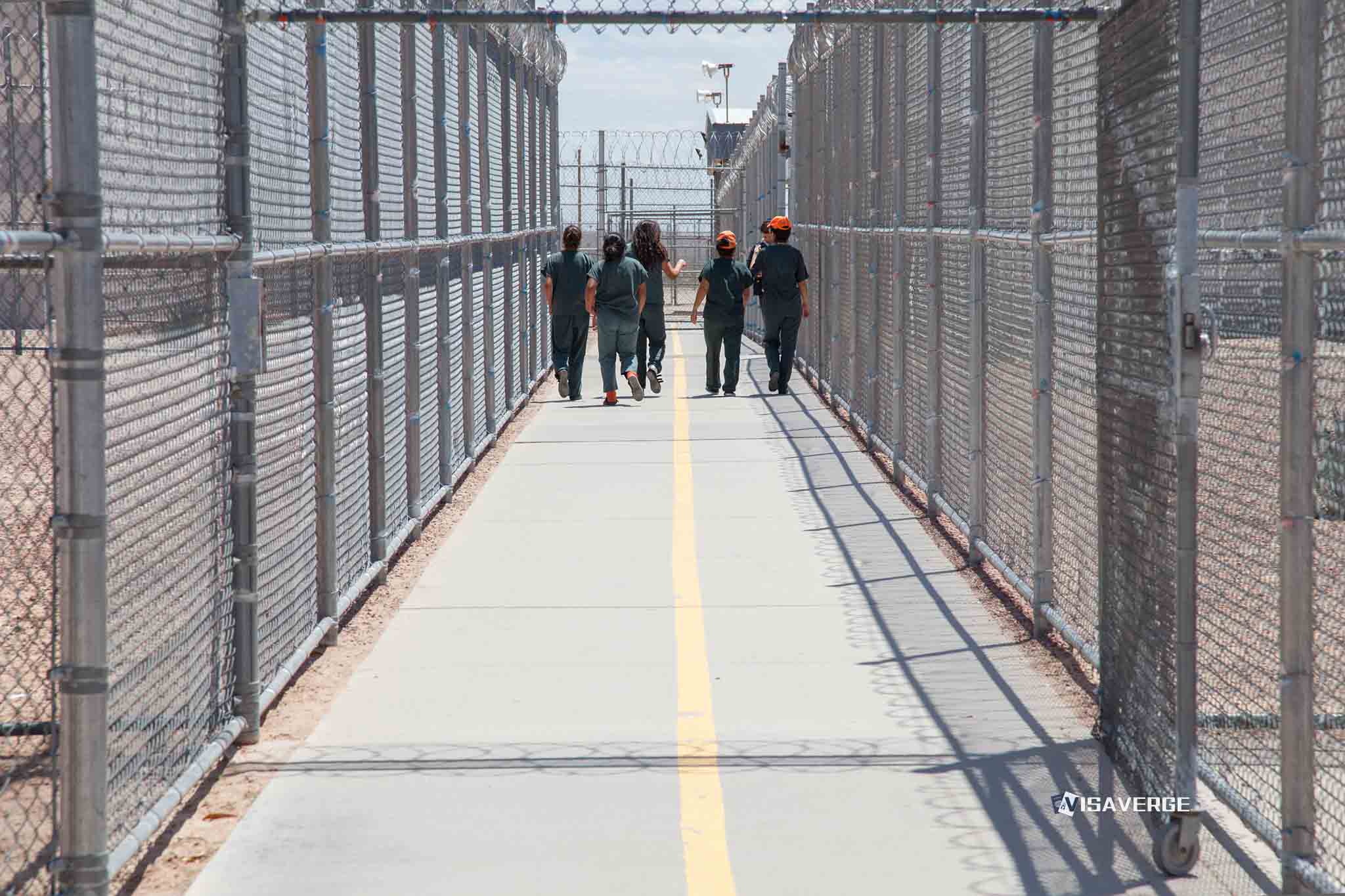
The Trump administration separated thousands of migrant families at the border, and the damage still has not been fully repaired in 2026. Federal records, court filings, and advocacy groups place the total at at least 5,569 children separated from parents or caregivers between 2017 and 2021, while a newer report says the administration also detained the parents of more than 11,000 U.S. citizen children.
If your family was affected, the main reality is this: reunification efforts remain incomplete, records were often missing, and many parents and children still face legal and emotional fallout years later.
Trump Administration Separated Thousands of Migrant Families at Border
In the El Paso Border Patrol Sector, a pilot program started separating parents from children in 2017. That approach later expanded across the southern border under the administration’s “zero tolerance” policy.
Free toolUSCIS Receipt Number DecoderThe policy treated adults who crossed the border without authorization as criminal defendants. After a parent was referred for prosecution for improper entry, children were often reclassified as “unaccompanied” and transferred to the Office of Refugee Resettlement (ORR) within the Department of Health and Human Services.
That move split families across different agencies. Border Patrol handled the arrest. The Department of Justice handled the criminal case. ORR took custody of the child. Immigration and Customs Enforcement often detained or removed the parent. The government did not create a reliable tracking system to keep those family links together.
How Many Families Were Separated
The exact total has shifted as lawsuits, audits, and revised government reviews uncovered additional cases.
- At least 5,569 children were separated from parents or legal guardians between 2017 and 2021, according to federal records and rights groups.
- Department of Homeland Security data recorded more than 4,600 children separated from 2017 to 2021.
- Official estimates revised upward in October 2019 put the total at nearly 5,500.
- That revised total included 1,556 additional separations after June 2018, even after Judge Dana Sabraw ordered the government to stop systematic separations.
- During a six-week peak in 2018, authorities separated nearly 2,000 children.
Some records also show how young many of these children were. Of the children identified in one major set of data, 1,033 were under age 10, including 103 under age 5. Those ages mattered. Very young children often could not give a full name, remember a phone number, or explain where a parent had gone.
How the Policy Began in El Paso and Spread Border-Wide
The 2017 pilot program
The separation system did not begin with one order on one day. It grew through internal discussions that began in February 2017 and then took shape on the ground in West Texas.
A pilot program operated in El Paso from March-November 2017. Other records describe the pilot as running from May to October 2017. In practice, the same pattern emerged: parents were prosecuted, children were removed, and agencies lacked a working method to reconnect them quickly.
The “zero tolerance” expansion in 2018
By May 2018, the administration expanded the policy across the border. The stated goal was deterrence. Officials wanted every adult who crossed between ports of entry to face criminal prosecution.
The result was widespread family separation. Parents were taken to jails or detention centers. Children were sent into ORR custody. In many cases, parents did not know where their children were. Children could not call their parents. Records were incomplete or wrong.
Why the Tracking Failures Became a Lasting Crisis
The government’s paperwork failures became one of the most damaging parts of the policy.
There was no central database that linked each parent to each child across Border Patrol, ORR, ICE, and the Department of Justice. In some cases, parent and child files did not match. In others, basic contact details were missing. Some parents were deported without usable information that would allow later reunification.
From January to June 2018, the Department of Homeland Security’s civil rights office received 850 complaints about family separations. Many of those complaints were forwarded by ORR.
Those administrative failures still shape reunification work today. Families have spent years trying to reconstruct records that should have existed from the beginning.
What Changed in June 2018
Executive Order 13841
After public outrage over images and audio of crying children, President Donald Trump signed Executive Order 13841 on June 20, 2018.
The order:
- Ended systematic separations
- Directed the government to keep families together through expanded family detention, unless a child’s welfare was at risk
- Set up a new conflict with the Flores Settlement Agreement, which generally limits how long children can be held in immigration custody to 20 days
Border authorities stopped zero-tolerance referral practices on June 25, 2018. But separations did not fully end. Additional separations continued through 2019 on other claimed grounds.
Judge Dana Sabraw’s nationwide injunction
On June 26, 2018, U.S. District Judge Dana Sabraw of the Southern District of California issued a nationwide preliminary injunction. He ordered the government to reunify families within 14 to 30 days, depending on the child’s age.
That court order forced agencies to begin a broad cross-government effort to identify parents and children who had been split apart. Even then, reunification moved slowly because the records were so poor.
What Investigations Found About Intent and Responsibility
Later investigations showed that senior officials understood separations would happen.
A 2021 Office of the Inspector General report found that Department of Justice leaders, including President Donald Trump and then-Attorney General Jeff Sessions, knew the policy would cause family separations. Sessions had pushed the policy as a deterrence tool and as a way to increase prosecutions.
Then-DHS Secretary Kirstjen Nielsen also faced intense scrutiny in Congress over reports that children were being separated from parents, including at ports of entry. Senator Susan Collins criticized the practice as public evidence mounted.
The UN High Commissioner for Human Rights condemned the policy as well, citing the rights of refugee families and children.
The Human Cost for Parents and Children
For affected families, the consequences went far beyond immigration paperwork.
Parents reported panic, sleeplessness, depression, and lasting fear after losing contact with their children. Children showed signs of PTSD, anxiety, and long-term psychological harm. Many were separated at very young ages, which made the trauma worse and the later reunification process harder.
Some children were too young to identify their parents correctly. Others did not know a phone number or home address. When the government later tried to locate deported parents, those missing details caused serious delays.
That damage did not end when the public policy shifted. It carried into later court cases, asylum claims, mental health treatment, and efforts to rebuild family trust.
Reunification Efforts Under the Biden Administration
In 2021, the Biden administration created a Family Reunification Task Force to find parents and reconnect families.
The task force’s actions included:
- Locating deported or missing parents
- Allowing certain parents to enter the United States
- Reopening some asylum cases
- Providing work authorization in some cases
- Offering mental health services, including services required by court orders
Those steps helped some families. They did not fix the whole problem. Missing records, bad contact information, and years of displacement continued to slow progress.
By 2019, government data had allowed reconnection of only 60 children in one part of the effort. Volunteers and advocacy groups spent enormous time and money searching for parents outside the United States.
How Many Children Still Had Not Been Reunited
Years after the court order, many children still had not been fully reunited with a parent.
- As of November 2020, 666 children remained unfound.
- As of November 30, 2023, the government reported over 1,000 children still separated, and officials could not contact 68 parents.
- By March 2024, the ACLU reported approximately 2,000 children still unlocated.
- As of December 2024, up to 1,360 children remained unaccounted for or unreunited with parents, according to Department of Homeland Security figures cited by Human Rights Watch, the Texas Civil Rights Project, and Yale Law School’s Lowenstein Clinic.
- That means roughly 30% of cases from Trump’s first term still had not reached full reunification by late 2024.
Those numbers reflect different legal stages and data sets. But the pattern stays the same: a large number of families remained separated long after the policy was publicly halted.
The Broader Family Impact: Parents of More Than 11,000 U.S. Citizen Children
A newer report adds another major dimension to the story. It says the Trump administration detained the parents of more than 11,000 U.S. citizen children.
That figure is different from the border family-separation total. It points to a broader effect inside the immigration system, including mixed-status families where the child is a U.S. citizen and a parent is not.
For those families, detention can still trigger separation, even when the child is not part of a border prosecution case. A detained parent can lose access to childcare, school contact, medical decision-making, and daily family life almost immediately. If removal follows, the impact becomes even more severe.
Taken together, the border separation data and the detention figure show that the family impact reached far beyond one six-week period in 2018.
What Families Should Keep and Document Now
If your family is trying to confirm a past separation or detention history, documentation matters.
Keep copies of:
- Every case number
- ORR records and sponsor information
- ICE or CBP custody records
- Immigration court notices
- Any proof of parent-child relationship, including birth certificates and passports
- Medical or mental health records that show the impact of the separation
If reunification is still incomplete, written follow-up is critical. Save emails, call logs, mailing receipts, and copies of every request for an update. Those records can help when agencies have gaps in their own files.
Why This Still Matters in 2026
This story is not only about what happened in 2018. It is also about what still has not been repaired.
Families continue to deal with missing records, reopened immigration cases, mental health needs, and lost years together. Children who were infants or toddlers during separation are now school-age, and many still carry the effects. Some parents remain outside the United States. Others are back in the country but are still rebuilding legal status and family stability.
The official numbers changed over time because the system that created the separations never tracked families properly. That failure turned a harsh enforcement policy into a long-term humanitarian and legal crisis.
Official and Practical Next Steps for Affected Families
If you were separated from a child or parent during a border crossing or later detention, act on the paper trail you have now. Start with ORR, ICE, and immigration court records. Match every name, A-number, and date of custody transfer. Small details often unlock larger missing pieces.
- Gather all A-numbers, ORR records, and court documents.
- Check whether any asylum case, removal order, or family reunification case was reopened.
- Request updated records from the agencies that held the parent or child.
- Document ongoing harm, including school, medical, and mental health effects.
- Monitor court deadlines and immigration hearing dates closely.
The families affected by the Trump administration’s family-separation policy are still living with the consequences. The most important next step is simple: preserve every record, confirm every deadline, and keep building a written timeline of the separation and reunification process.