- Federal agents executed 22 search warrants across the Twin Cities targeting Medicaid and childcare fraud.
- Governor Tim Walz endorsed the joint operation while facing pushback from FBI Director Kash Patel over credit.
- The Trump administration is accelerating immigration court hearings for unaccompanied migrant children, reducing preparation time.
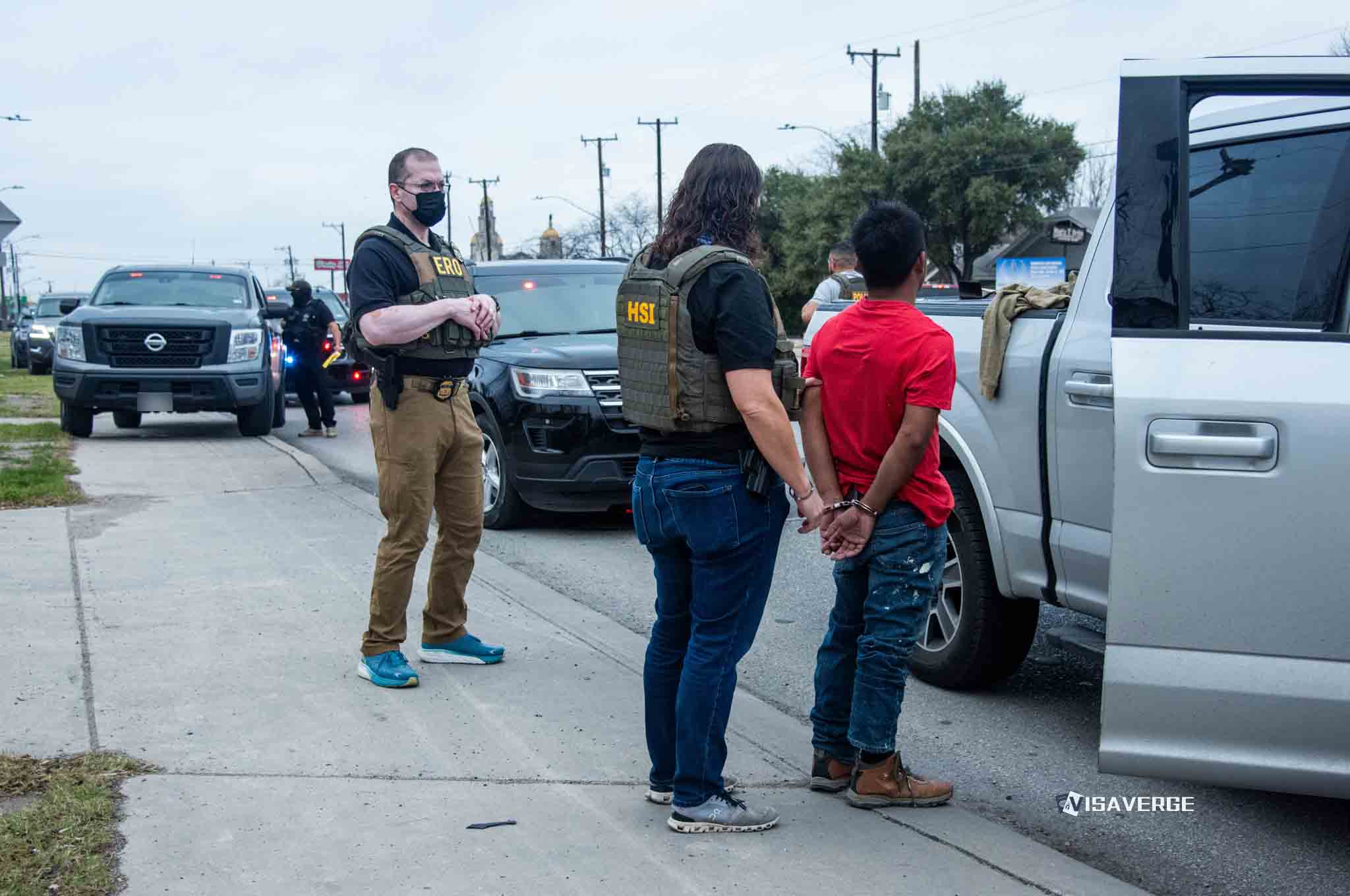
(MINNESOTA) — Federal agents executed 22 search warrants across the Twin Cities on April 28, 2026, and Governor Tim Walz backed the operation as the Trump administration separately advanced deportation hearings for migrant children by weeks or months.
The searches targeted at least 10 daycare centers, at least 5 autism facilities and other sites, including the misspelled-sign “Quality Learing Center” in Minneapolis. Investigators from the FBI, Homeland Security Investigations and the Department of Justice worked with the Minnesota Bureau of Criminal Apprehension and the state attorney general’s Medicaid fraud unit.
Walz endorsed the raids in public statements that cast the searches as evidence that state and federal cooperation can produce criminal cases. He tied the operation to agency reporting of suspicious activity in state programs.
At the same time, the Trump administration has been moving immigration court hearings for unaccompanied migrant children forward on short notice, according to administration officials and children’s attorneys. Some hearings have been advanced by weeks or months, leaving children with only days to prepare.
| India | China | ROW | |
|---|---|---|---|
| EB-1 | Feb 01, 2023 | Aug 01, 2023 ▲31d | Current |
| EB-2 | Nov 01, 2013 | Oct 01, 2021 | Apr 01, 2025 ▲90d |
| EB-3 | Jan 22, 2014 ▲21d | Jan 22, 2022 ▲14d | Jun 15, 2024 ▲31d |
| F-1 | Jan 22, 2021 ▲366d | Jan 22, 2021 ▲366d | Jan 22, 2021 ▲366d |
| F-2A | Oct 22, 2026 ▲30d | Oct 22, 2026 ▲30d | Oct 22, 2026 ▲30d |
Children as young as 4 or 5 years old must appear repeatedly in court, sometimes without legal counsel. The compressed schedule complicates access to relief such as Special Immigrant Juvenile status, which requires prior state court proceedings.
Advocates say the rushed calendar increases the chance that children will be sent back to dangerous situations they fled. Many arrive without guardians, and some have parents in detention.
Older litigation hangs over that process. U.S. District Judge Emmet Sullivan issued a preliminary injunction in 2020 that halted deportations of unaccompanied minors, and the administration admitted to 66 violations, but recent coverage cited no 2026 court order blocking the current acceleration of hearings.
Walz said the Minnesota operation began with state agencies identifying unusual activity. “Today’s raids by state and federal law enforcement happened because our state agencies caught irregular behavior and reported it. That’s how the system is supposed to work, and our agencies will keep at it as long as there are fraudsters around to put behind bars.”
He added in a separate post on X: “If you commit fraud in Minnesota you’re going to get caught — and that’s exactly what we saw today. We catch criminals when state and federal agencies share information. Joint investigations work.”
FBI Director Kash Patel rejected Walz’s attempt to claim credit for the federal raids. “Come again? This FBI and DOJ with our DHS partners drafted and executed every search warrant today. But go ahead and take credit for our work while we smoke out the fraud plaguing Minnesota under your governorship.”
Republican criticism followed quickly. Rep. Tom Emmer and House Leader Harry Niska faulted Walz’s oversight and pointed to earlier warnings about fraud in program spending.
The searches are part of an alleged fraud investigation involving Medicaid, childcare and autism services. A Department of Justice spokesperson described the action as part of an “ongoing fraud investigation.”
Minnesota has already faced scrutiny over public-benefit programs after the Feeding Our Future case, which produced dozens of convictions. The new warrants build on that record and extend the focus to childcare and autism-service providers.
The raids also followed 2025 exposés that drew attention to daycare operations in Minneapolis. YouTuber Nick Shirley published videos showing vacant daycares, adding to questions about whether listed providers were operating as claimed.
That mixture of criminal enforcement in Minnesota and accelerated immigration court scheduling reflects two separate pressure points inside the Trump administration’s broader approach. In one, federal raids target alleged fraud in social welfare programs; in the other, migrant children face a faster court process with less time to secure counsel or complete state court steps tied to immigration relief.
Special Immigrant Juvenile status illustrates the tension in those court calendars. Children seeking that protection must first obtain findings in state court, and advancing immigration hearings by weeks or months can leave little room to complete that process before appearing before a judge.
Repeated court appearances can be difficult even for adults with lawyers. For children who are 4 or 5 years old, the demand to return to court again and again, sometimes without counsel, places the burden on minors who often arrived alone and are now expected to answer in deportation proceedings.
Minnesota’s case carries a different set of pressures, centered on public money and oversight. The agencies involved in the Twin Cities searches combined federal criminal investigators with state units that handle major crime and Medicaid fraud, a structure Walz cited as proof that referrals from state agencies can lead to searches and, potentially, charges.
Patel’s response showed how quickly that enforcement action became political. His post framed the warrants as federal work carried out by the FBI, DOJ and DHS, while also accusing Walz of trying to benefit from an investigation into fraud “under your governorship.”
The timing placed Walz in the middle of a law-and-order argument that cut across parties and levels of government. He embraced the searches as evidence that “Joint investigations work,” while Republicans used the same operation to argue that Minnesota leaders had failed to stop abuse in public programs earlier.
On immigration, the practical effect is visible in the pace of the docket. Hearings once expected later are now arriving with days’ notice, and each date can determine whether unaccompanied migrant children have enough time to find counsel, appear with a sponsor, or pursue a state court order tied to Special Immigrant Juvenile status.
The court process itself can be unforgiving. A child who misses steps needed for relief or appears without preparation risks losing a chance to remain in the United States before a case is fully developed, a concern children’s attorneys have raised as calendars move faster.
Federal enforcement, whether in courtrooms handling migrant children or in search warrants carried out during federal raids, now stands at the center of two very different disputes. One turns on how quickly the government can move children through deportation proceedings; the other turns on whether investigators can prove that providers took money from Medicaid, childcare and autism programs through fraud.
Both fights are still defined by the actions already taken: hearings moved up with little warning, and 22 warrants executed across the Twin Cities. In Minnesota, Walz called that system at work; in immigration court, children and their lawyers are confronting the schedule now in front of them.