- Polish authorities doubled forced deportations of Belarusian citizens during 2025 as border security measures tightened significantly.
- The government implemented a total border closure in September 2025, citing national security and military exercises.
- U.S. officials labeled the migration surge an existential threat while supporting Poland’s sovereign right to border enforcement.
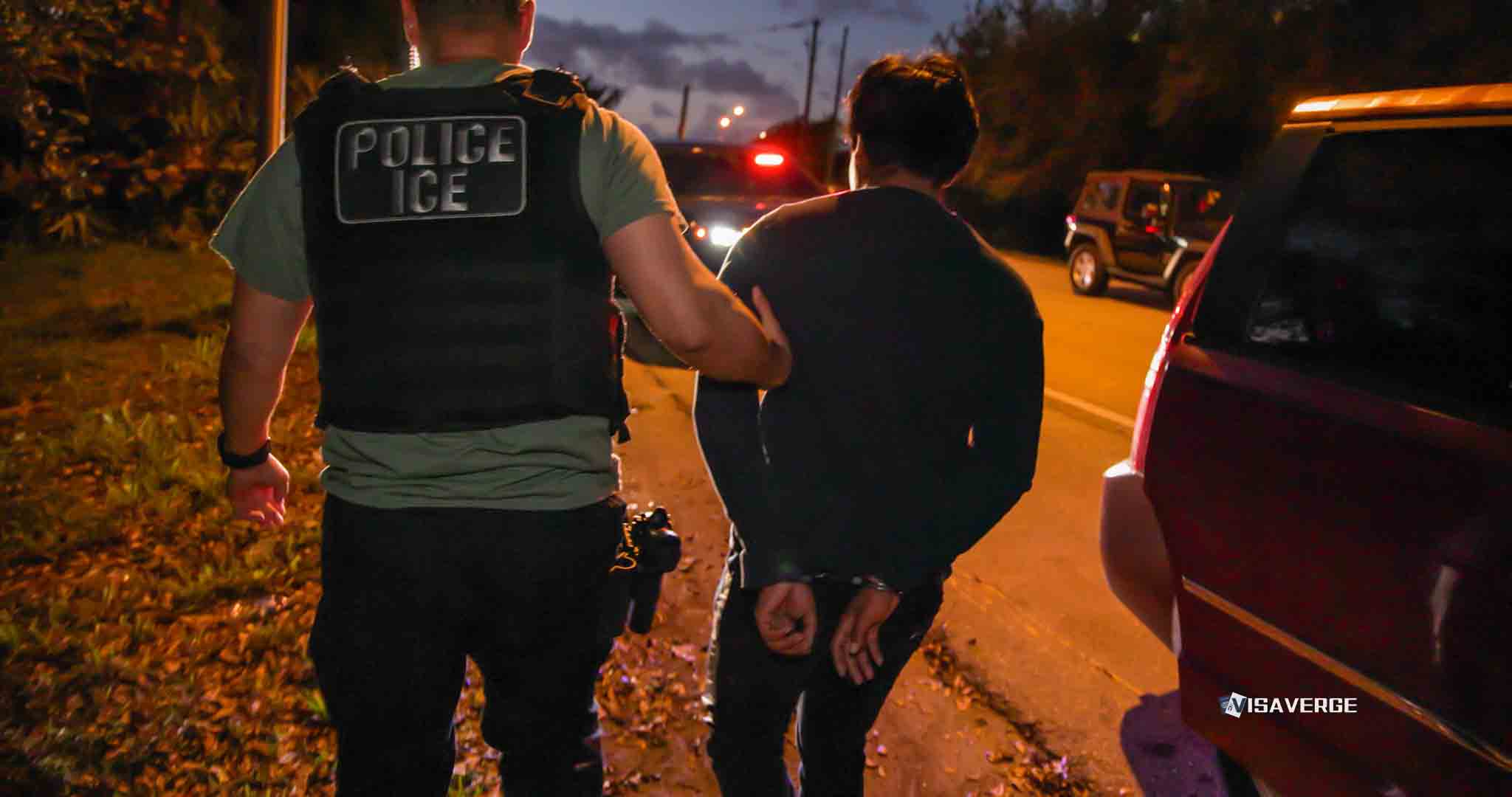
(POLAND) — Poland’s border guard reported on monday that forced deportations of Belarusian citizens from Poland doubled in 2025, as the government tightened migration measures along the border with Belarus.
Data released on January 12, 2026 showed that about 130 belarusian citizens were removed forcibly in 2025, up from 66 forced deportations in 2024. The figures sit within a wider set of “return decisions” issued to foreigners.

Statistics and outcomes
poland implemented more than 9,400 return decisions for foreigners in 2025, the Border Guard data showed. For Belarusians, approximately 1,300 return decisions were issued, and forced deportations made up about 10% of those decisions.
The official statistics underline a key distinction that often gets lost in public debate. A return decision is an administrative outcome, while a forced deportation is an enforced removal, and the two are not the same thing.
In practical terms, some people who receive return decisions may leave without enforcement. Forced deportations refer to cases where authorities carry out the removal.
The 2025 figures also show how sharply outcomes can differ between nationalities. Ukrainian citizens saw over 1,100 forced departures out of 1,200 decisions, while Georgian citizens faced the highest volume of return orders with 1,900+ decisions.
Border measures and operational context
Poland’s measures along the Belarus border in 2025 included an asylum suspension, a full border closure, and a buffer zone, all of which can shape who is screened, who can apply for protection, and who can be returned. The data alone does not explain why the year’s totals changed.
In March 2025, the Polish government under Prime Minister Donald Tusk suspended the right to claim international protection at the Belarus border for a period of 60 days. That measure was repeatedly extended throughout the year.
A suspension of access to the asylum process typically means fewer people can formally register claims at the border, though the Polish government’s operational approach and any exceptions were not set out in the Border Guard figures. The result can be more cases handled through enforcement channels rather than protection procedures.
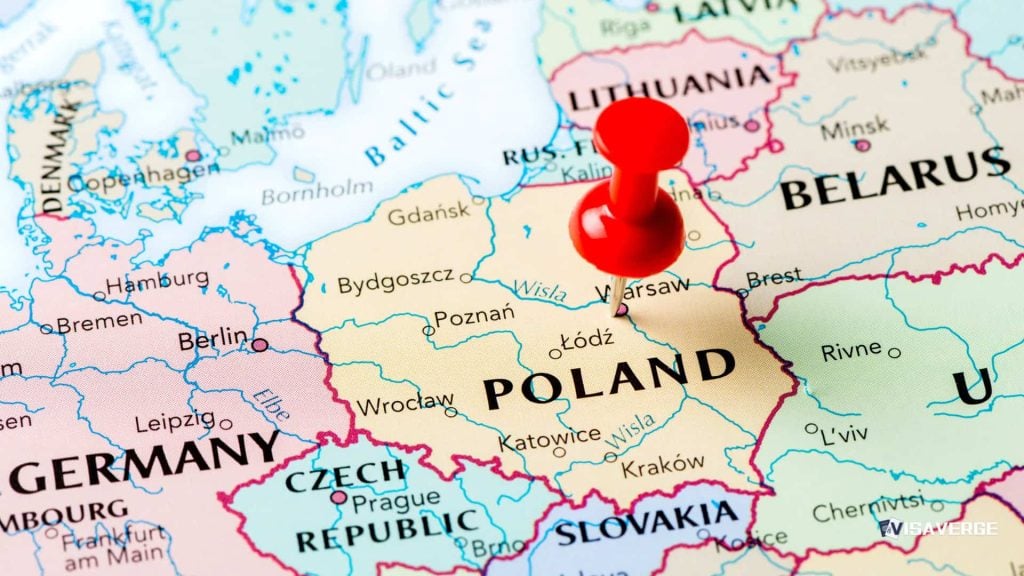
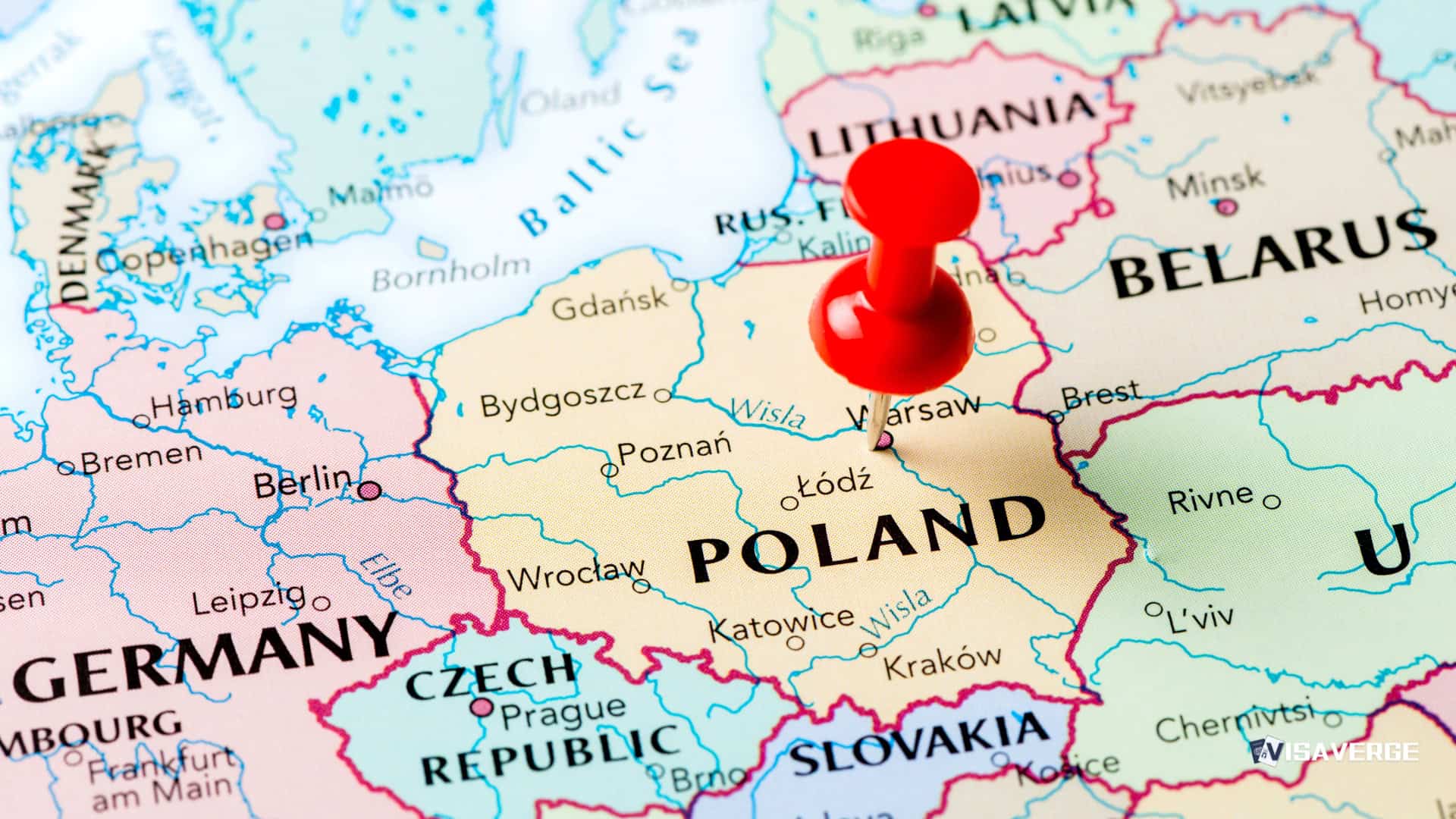
Poland fully closed its border with Belarus on September 12, 2025, including rail and road, citing “national security reasons” related to the aggressive Zapad 2025 joint military exercises between Russia and Belarus. That kind of closure can change how crossings occur and how authorities process arrivals.
A 60km-long “no-go” buffer zone remained in effect for much of 2025, restricting the movement of humanitarian aid workers and journalists near the border. Limits on access can affect independent monitoring and documentation of what happens in the border area.
Human rights concerns and reporting
Human rights organisations have criticised Poland’s border measures in recent years and have used the term “pushbacks” to describe practices in which people are sent back across the frontier without individual procedures. Human Rights Watch and the European Court of Human Rights have criticised these measures.
Reports of “pushbacks” totaling over 9,800 between Dec 2023 and Aug 2024 were described as continuing into late 2025. The Border Guard figures do not detail how individual cases were decided, whether return decisions followed asylum claims, or how many people were detained ahead of removals.
The statistics instead present totals by nationality and outcome type.
Why nationality comparisons matter
The trend carries particular weight for Belarusian nationals because Poland has been viewed as a destination for Belarusians fleeing political pressure at home. The rise in forced deportations suggests more Belarusian cases were processed through general migration enforcement.
For other foreign nationals, the nationality comparisons in the data illustrate why “return decisions” should not be treated as a single outcome. The Ukrainian figures, with over 1,100 forced departures out of 1,200 decisions, show that enforced removals can be a dominant result for some groups, while for Belarusians forced deportations were about 10% of total return decisions.
The Georgian total of 1,900+ return orders points to another dynamic. High volumes of return decisions for a nationality do not necessarily indicate high volumes of forced deportations, but they do show which groups are most frequently subject to administrative return procedures.
International statements and diplomacy
U.S. officials also addressed the Poland-Belarus border in public comments during 2025, using language that framed migration as part of a wider security challenge. Those statements did not set Polish policy, but they helped shape diplomatic narratives around border enforcement.
On November 24, 2025, a senior State Department official characterised the flow of migrants from Belarus into Poland as an “existential threat,” as quoted by Alex Raufoglu of the Kyiv Post on Nov. 25, 2025.
“Weaponized migration is definitely something of serious concern to the US. mass migration represents an ‘existential threat to Western civilization and the safety of both the West and the world.’”
In May 2025, Secretary of Homeland Security Kristi Noem expressed support for Polish border integrity and conservative political figures during the CPAC conference in Rzeszów, Poland. The source summary said she emphasised that the U.S. stands with partners who prioritise national sovereignty and border enforcement.
In December 2025, U.S. Special Envoy for Belarus John Coale negotiated the release of 123 political prisoners from Belarus. The account of the talks said Coale noted that the U.S. goal is “normalizing relations” while ensuring Belarus halts “hybrid threats,” including the instrumentalization of migrants against Poland.
Such statements can be politically influential but are not the same thing as binding immigration policy. For people trying to understand what will actually change at the border, the most consequential developments are formal government measures, published rules, and operational instructions that affect access to procedures and enforcement outcomes.
Implications for monitoring and access
For Belarusian nationals in Poland, the 2025 pattern reflected in the Border Guard numbers is likely to be read alongside the year’s border measures. When access to asylum procedures is constrained, or when movement and monitoring near the frontier is restricted, it can become harder for outsiders to assess the balance between protection and enforcement.
For observers tracking what comes next, several questions matter more than single-year totals: whether measures such as the March 2025 asylum suspension continue or are extended again, how consistently procedures are applied at the border, and whether legal challenges alter how return decisions and forced deportations are carried out.
Monitoring will also depend on transparency and access. With a 60km-long buffer zone restricting humanitarian aid workers and journalists near the border for much of 2025, public understanding of enforcement practices can be shaped as much by what is not seen as by what is published.
Verifying sources
Readers trying to verify the statistics and policy claims can cross-check primary sources. The Polish Ministry of Interior site at gov.pl/web/mswia is a central location for national measures and official communications.
For U.S. framing on human rights, the State Department’s reporting portal is available at state.gov. U.S. domestic posture and departmental summaries can be checked through the Department of Homeland Security’s DHS 2025 Year in Review.
Readers looking for changes that directly affect immigration processing, rather than diplomatic messaging, can monitor updates at the USCIS newsroom. When comparing claims across sources, matching dates, confirming document versions, and noting translation differences between Polish-language and English-language material can help avoid misinterpretation.
Conclusion
For now, Poland’s official figures capture a clear shift in one measure of enforcement against Belarusian nationals. The most charged language around the issue came in the U.S. official’s comments quoted in the Kyiv Post: “Weaponized migration is definitely something of serious concern to the US. mass migration represents an ‘existential threat to Western civilization and the safety of both the West and the world.’”
Poland’s migration landscape shifted dramatically in 2025, marked by a doubling of forced deportations for Belarusians. Under Prime Minister Donald Tusk, the government implemented aggressive measures, including a 60-day asylum suspension and a total border closure in September. These actions were supported by high-level U.S. rhetoric focusing on national security, despite ongoing criticism from human rights organizations regarding the lack of transparency and the use of pushbacks.