- Ukrainian authorities reported 50 citizens deported from US through Poland into Ukraine in late 2025.
- The group of 45 men and 5 women crossed at Shehyni after landing in Jasionka.
- Poland denies a formal deportation arrangement with Washington despite serving as a critical transit hub.
(POLAND) — Ukrainian border authorities reported on November 19, 2025, that 50 Ukrainian citizens deported from the United States arrived in Jasionka, Poland and then crossed into Ukraine through the Shehyni border crossing.
The group included 45 men and 5 women. Their route, as described by the authorities, ran from the United States to Poland and then overland into Ukraine.
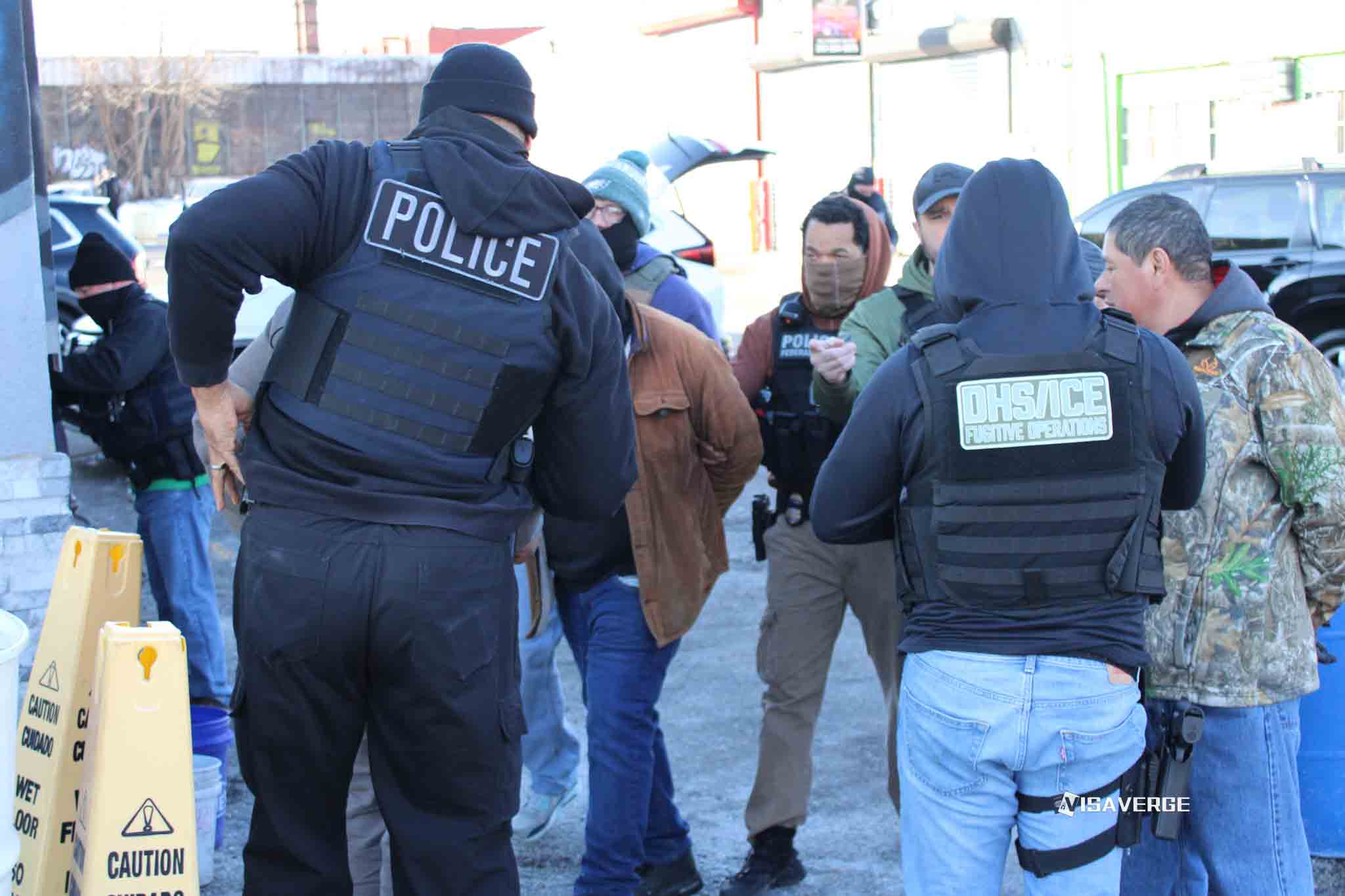
The transfer drew accusations that Poland had helped facilitate an ICE deport operation involving Ukrainians removed from the United States. It also raised fresh scrutiny over deportation flights that pass through third countries before people reach their final destination.
A Polish government spokesperson rejected any suggestion of a formal bilateral framework for the removals. “Poland has no agreement or arrangement with the United States regarding deportations. This is an internal matter between two countries.”
That statement left a narrow but consequential gap between what happened and what officials publicly acknowledged. Ukrainians were sent to Jasionka and crossed at Shehyni, but no formal agreement between Washington and Warsaw on those deportations had been disclosed or confirmed as of late November 2025.
Civil society groups in Poland and across Europe urged Poland to stop supporting such U.S. removals to Ukraine through its territory. They said the use of Poland as a transit country could expose deportees to weak procedural safeguards, rights violations at the border, or onward removal without a proper assessment of protection needs.
The concerns centered on the mechanics of transit as much as the destination itself. A person flown from the United States into Poland and then moved onward to Ukraine can pass through several layers of control in quick succession, with little public visibility into what review took place at each stage.
Jasionka has become a familiar logistical point in the region since Russia’s invasion of Ukraine reshaped security and transport networks across eastern Europe. Poland’s role as a regional ally and hub for military, humanitarian and political coordination has deepened its ties with Washington.
That strategic partnership forms the backdrop to the removals, even as Polish officials denied any formal deportation arrangement. Poland is a key regional ally and logistical hub, conditions that give the country practical importance whenever U.S. operations touch the region.
The Trump administration had also warned some Ukrainians in the United States about possible removal on military flights to Ukraine or Poland. Those warnings gave the November transfer a wider policy frame, linking a single reported movement of 50 people to a broader enforcement posture.
No U.S. litigation challenging these specific transfers to Poland is known. That absence leaves the public record thin on how the removals were authorized, reviewed or coordinated beyond the facts of the transfer itself.
As of May 13, 2026, no additional deportation flights to Poland involving Ukrainians had been publicly reported. The reported incident remains a distinct case: a group of Ukrainians removed from the United States, flown to Poland, then directed through the Shehyni border crossing into Ukraine.
Shehyni sits on the Poland-Ukraine border and served as the final overland step in the transfer. In practical terms, the crossing turned a U.S. deportation into a multi-country movement, with Poland functioning as the intermediate point between removal and return.
That transit role has become the central point of dispute around Poland’s involvement. Critics have focused less on whether Warsaw signed a formal deportation pact and more on whether Polish territory, airports or border procedures were used to move people onward without enough safeguards.
The Polish spokesperson’s wording reflected that distinction. By calling it “an internal matter between two countries,” the spokesperson denied a Polish-U.S. deportation arrangement while not disputing that the Ukrainians landed in Poland and then crossed into Ukraine.
The sequence reported by Ukrainian border authorities was straightforward on its face. A group departed the United States, arrived in Jasionka, and then entered Ukraine through Shehyni.
What remains politically sensitive is the role of an allied state in the middle of that route. Poland has positioned itself at the center of Western support for Ukraine since the Russian invasion, and that status carries different implications when the movement in question involves deportees rather than aid, troops or supplies.
Civil society groups framed the issue around legal exposure at moments of transfer. Their concern was that people routed through a transit country could face border decisions or onward movement before anyone fully assessed whether they needed protection.
The text does not identify the groups by name, but their objections ran along familiar rights-based lines: access to procedure, scrutiny of removal decisions and the risk of being moved across borders too quickly. In cases that unfold across several jurisdictions, each handoff can narrow the chance for review.
Those objections also drew attention to language often used in migration enforcement. A deportation flight can appear administratively clean on paper, yet the details that matter most often lie in the spaces between airport arrival, state custody and border crossing.
In this case, the human count was precise. Ukrainian authorities said 50 citizens crossed into Ukraine after the U.S. transfer to Poland, made up of 45 men and 5 women.
No broader pattern had been publicly established by mid-May 2026. Without additional reported flights to Poland involving Ukrainians, the November transfer stands as the known example in the record.
That does not make it a routine administrative footnote. The episode linked three sensitive matters at once: U.S. immigration enforcement, Poland’s role as a frontline ally, and Ukraine’s status as a country still shaped by war.
The geography mattered. Jasionka, as the arrival point from the United States, and Shehyni, as the crossing into Ukraine, anchored the route in places already loaded with strategic meaning after Russia’s invasion.
Those places are not abstract markers on an itinerary. They are part of the infrastructure through which governments move people and goods, and in this instance they became part of a chain tied to an ICE deport process that ended at the Ukrainian border.
Poland’s official line remained unchanged: no agreement or arrangement with the United States regarding deportations. Critics, meanwhile, focused on the operational reality that the deportees still landed on Polish soil before entering Ukraine.
The tension between those two positions explains why the case drew attention beyond the number involved. Formal agreements can be denied, yet transit can still occur, and that gap is where legal and political questions tend to gather.
By late November 2025, the public picture had narrowed to a few hard facts. Ukrainian authorities reported the deportation of 50 Ukrainian citizens from the United States to Jasionka; the group then crossed through Shehyni; Poland denied any formal arrangement with Washington; and rights groups warned that the transit route risked leaving deportees without proper procedural protection.
Nothing suggests the transfers became a continuing series. As of May 13, 2026, the reported movement on November 19, 2025 remained the known case, a single set of deportation flights that carried Ukrainians from the United States to Poland and then onward to Ukraine.