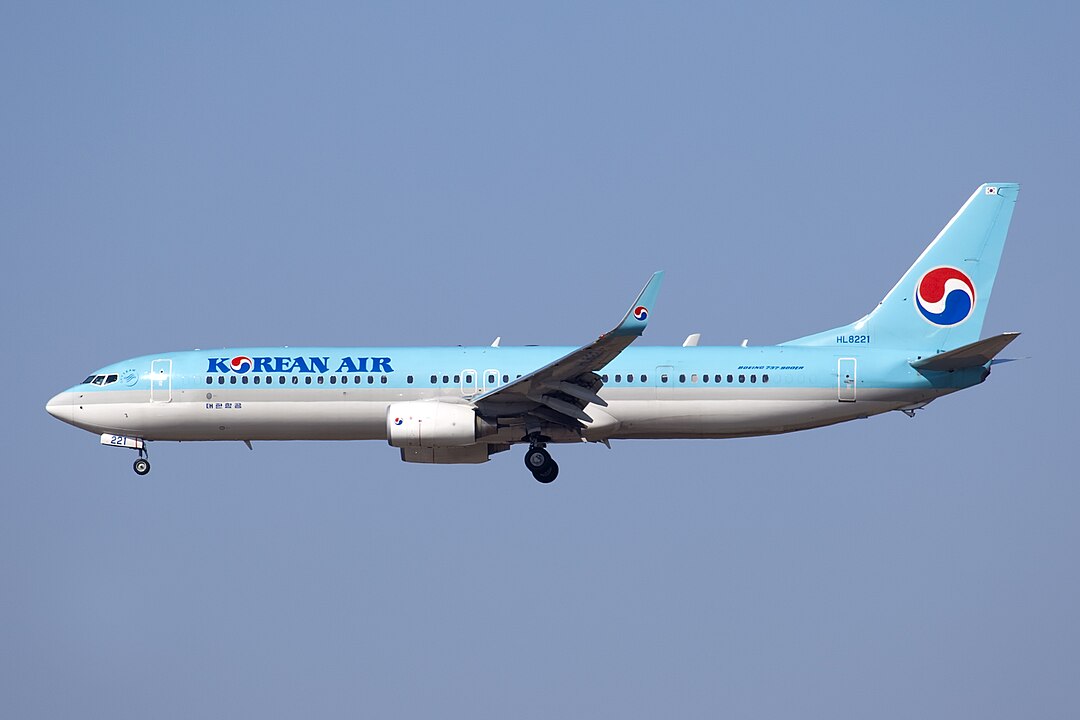
- Korean Air will fully absorb Asiana Airlines by the end of 2026 after its 2024 acquisition.
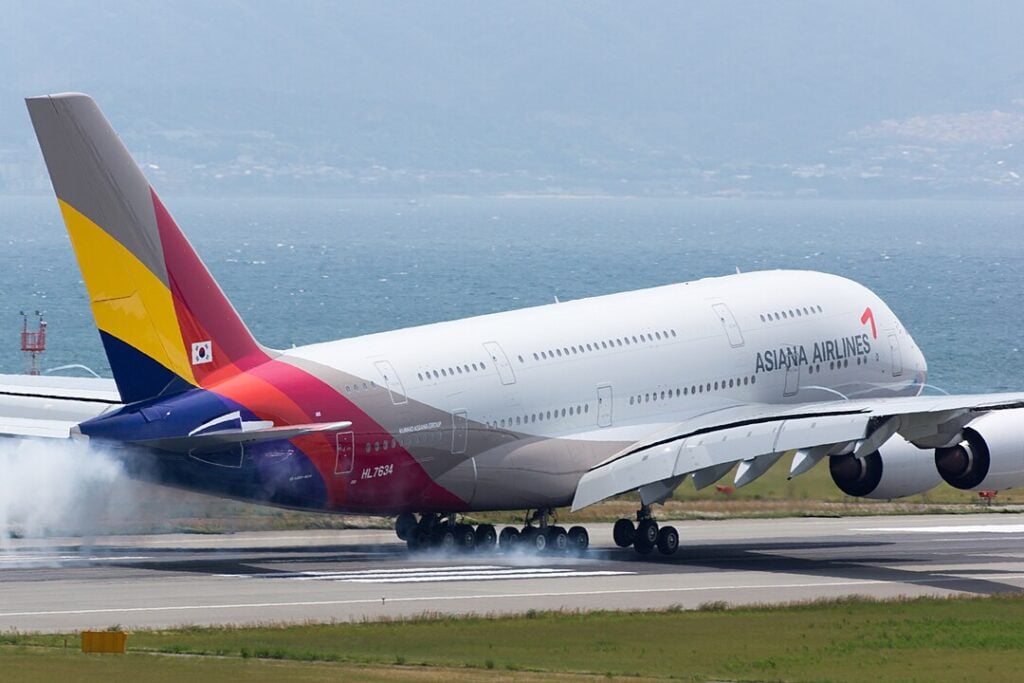
- The Asiana brand will vanish as aircraft align seat numbering systems and cabin configurations by December 2026.
- Jin Air will serve as the group’s sole low-cost carrier, absorbing Air Seoul and Air Busan.
(SOUTH KOREA) — Korean Air is moving to fully absorb Asiana Airlines by the end of 2026, capping a takeover the company completed on December 12, 2024 in a 1.8 trillion-won ($1.2 billion) transaction after winning antitrust approvals in 14 jurisdictions, including the European Union.
The carrier set out a two-year post-merger integration process after the acquisition closed. That program now includes the end of the Asiana Airlines brand, changes to aircraft cabin numbering, a restructuring of low-cost units and the folding of loyalty programs into Korean Air’s SKYPASS system.
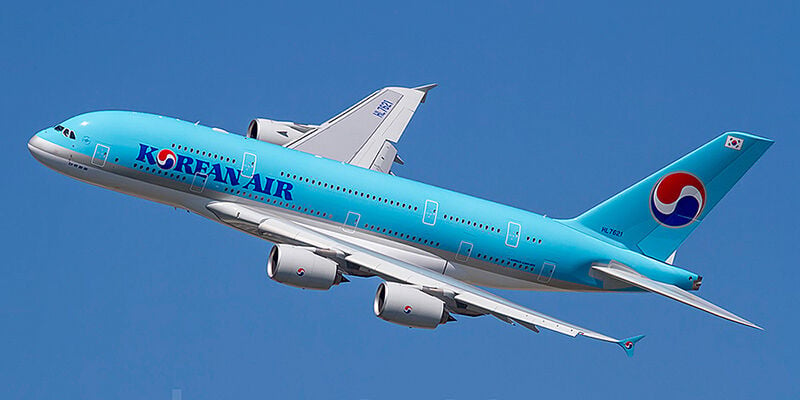
Korean Air announced on March 11, 2025 that the Asiana Airlines brand will be phased out by the end of 2026. Both carriers plan to launch a unified Korean Air in 2027 after completing the merger process in 2026, though industry sources and the 2,500-member Korean Air Pilots Union point to an internal target of December 17, 2026.
Asiana Airlines will also align its aircraft seat numbering system with Korean Air’s between December 14 and 17, with full implementation on December 18. The timetable puts one of the more visible passenger-facing changes at the very end of the integration calendar.
The deal had been under review for years before Korean Air closed it. The Korea Fair Trade Commission, or KFTC, conditionally approved the merger on February 22, 2022, allowing it to proceed while attaching conditions to routes where competition would shrink.
Those conditions require Korean Air and Asiana to limit fare increases or capacity reductions on certain routes. They also require the airlines to free up slots for 10 years on routes lacking competition.
That regulatory framework shaped the merger from the outset. Korean Air did not simply buy a rival and erase it at once; it entered a staged process that preserved oversight on pricing, capacity and airport access while the companies worked toward a single operation.
The brand changes extend beyond the two full-service airlines. Jin Air, Korean Air’s low-cost carrier unit, will absorb Asiana’s budget affiliates Air Seoul and Air Busan.
Once that post-merger integration program is finalized, Asiana Airlines, Air Seoul and Air Busan will no longer exist. The consolidation leaves Jin Air as the surviving low-cost platform inside the enlarged airline group.
The loyalty transition will run on a longer clock than the branding work. Existing Asiana Club mileage will remain in place as “former Asiana Mileage” for 10 years from the integration date and remain usable until its original validity.
After integration, new flight and partner miles will accrue as SKYPASS miles. Members will be able to hold both types of mileage and choose which to redeem, but anyone seeking to combine them must convert former Asiana Mileage to SKYPASS miles in full.
Korean Air set separate conversion ratios depending on how the miles were earned. Flight-accrued miles convert at 1:1, so 100 Asiana Club flight miles = 100 SKYPASS miles, while partner-accrued miles convert at 1:0.82, so 100 Asiana Club partner miles = 82 SKYPASS miles.
Any former Asiana Mileage left unconverted will automatically become SKYPASS miles after 10 years. That means Asiana members will keep a long runway to use or convert balances, even as the brand itself disappears much earlier.
Elite status will move across on a matching basis. Asiana Club elite tiers will map to corresponding SKYPASS tiers from the integration date, with existing validity periods honored, and members who hold status in both programs will receive the higher tier.
Asiana Club terms will stay in place until integration and then consolidate under SKYPASS terms. Asiana Club members will also retain Star Alliance benefits until merger completion, preserving alliance perks during the transition period rather than cutting them off at the point of rebranding.
The size of the combined airline explains why regulators examined the merger so closely. The merged carrier holds about 50% of South Korea’s local market share and ranks as the world’s 10th largest by international passenger volume.
That scale also strengthens Incheon as a major Asian hub. A single network built around Korean Air, Asiana Airlines assets and the reworked low-cost structure under Jin Air gives the group a larger role in channeling international passenger traffic through South Korea.
The integration plan shows how broad the changes will be by late 2026. Brand identity, seat maps, affiliate structures, mileage balances and elite recognition all shift onto Korean Air’s systems, but not all on the same day and not under the same timetable.
Passengers who knew Asiana Airlines as a separate full-service brand will still see it through the transition, even though the acquisition itself closed in 2024. By the time Korean Air reaches its internal target of December 17, 2026, the brand phaseout, operational alignment and low-cost consolidation are meant to sit in place ahead of the unified launch planned for 2027.
Jin Air’s role is especially clear in that structure. Rather than keep three budget airline brands, the group will fold Air Seoul and Air Busan into one low-cost unit, matching the wider push to reduce overlap after Korean Air’s takeover of Asiana Airlines.
The merger therefore ends with fewer airline names but a larger single operator. Korean Air closed the acquisition in 2024; by the end of 2026, Asiana Airlines and its budget affiliates are set to disappear into one group built around Korean Air and Jin Air, with Incheon at the center of its network.