- Authorities reopened Bunia Airport on June 1, 2026, to facilitate aid delivery in Ituri province.
- The current outbreak involves the Bundibugyo virus strain, which lacks approved vaccines or medical treatments.
- The U.S. maintains strict Title 42 restrictions, barring entry for most travelers from the DRC region.
(BUNIA, DEMOCRATIC REPUBLIC OF THE CONGO) — Officials in the Democratic Republic of the Congo reopened Bunia Airport on June 1, 2026, restoring flights to the main transit hub in Ituri province as health authorities confront the country’s 17th recorded Ebola outbreak.
Authorities resumed passenger operations after a temporary suspension by the DRC Ministry of Transport and imposed mandatory temperature screening for arriving and departing passengers. The reopening restores a route used by aid groups and local travelers at a moment when Ituri remains the center of the outbreak.
Free toolUSCIS Receipt Number Decoder
The outbreak involves the Bundibugyo virus strain, which has no approved vaccine or treatment. As of June 1, 2026, officials had recorded 321 confirmed infections, though some reports cited 282, and 48 deaths across 23 health zones in Ituri, North Kivu, and South Kivu.
Those figures frame the risk around the airport’s reopening. Bunia is a logistical lifeline for humanitarian operations, but renewed air traffic also raises concern that infected travelers could carry the virus toward larger urban centers such as Goma or Kinshasa.
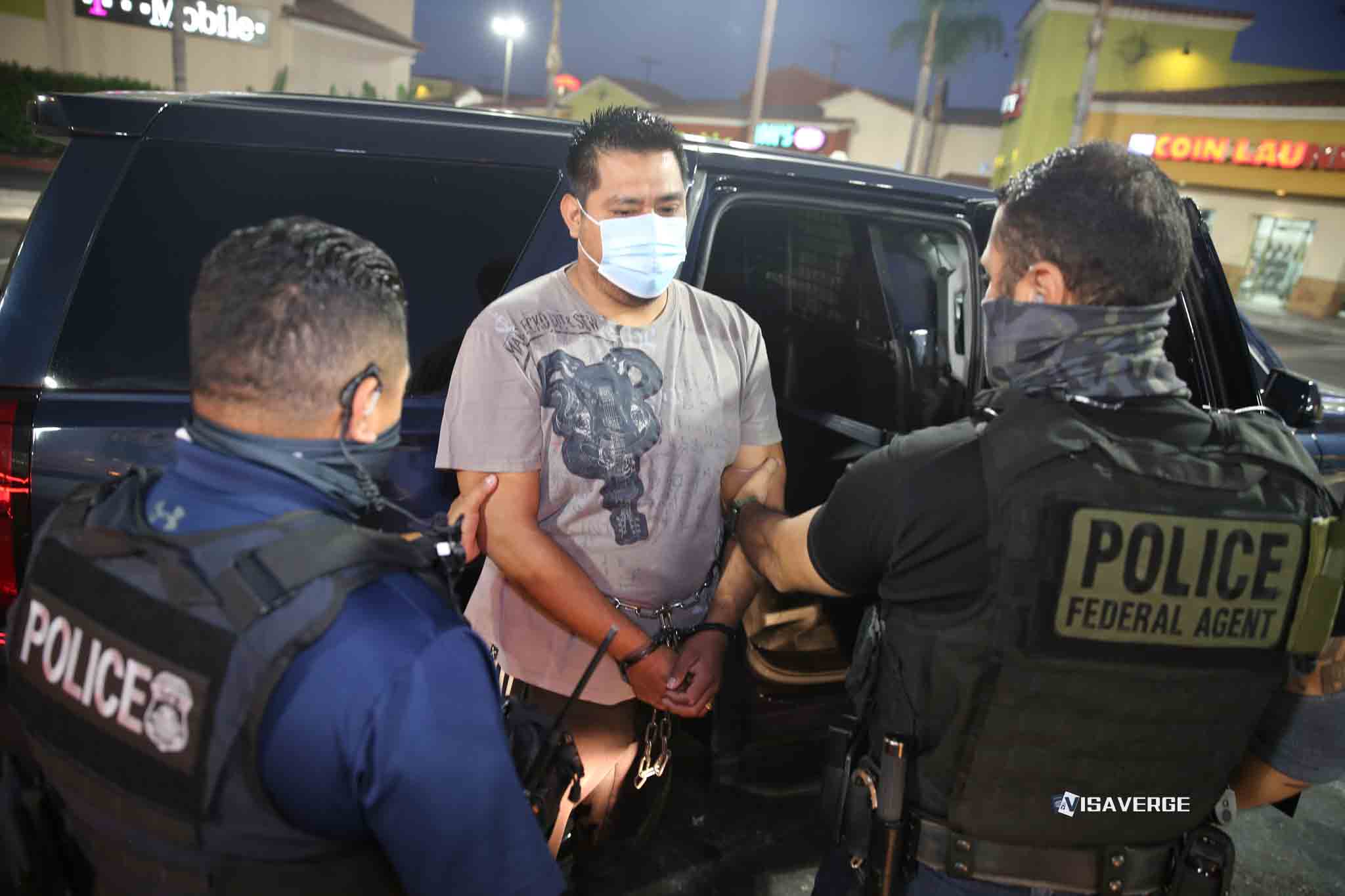
Washington has answered the outbreak with border controls, flight restrictions and consular limits that reach far beyond eastern Congo. A Title 42 public health order issued on May 18, 2026, remains in effect and bars entry for non-U.S. passport holders who were present in the Democratic Republic of the Congo, Uganda or South Sudan within the previous 21 days.
The Department of Homeland Security tightened arrival rules on May 28, 2026, ordering all travelers, including U.S. citizens, who had been in those three countries within the last 21 days to arrive through four airports. They are Washington Dulles International, Hartsfield-Jackson Atlanta, George Bush Intercontinental and John F. Kennedy International, which DHS added in late May.
DHS Secretary Markwayne Mullin described the administration’s approach as “proactive measures” in testimony before a Senate Appropriations subcommittee on June 2, 2026. Days earlier, on May 27, 2026, Mullin defended strict screening and detention protocols with a remark that drew attention beyond the immigration system: “The fact is, we’re giving them the calories they want. This isn’t Holiday Inn. Well, they can go back to their country and get whatever food they want.”
Mullin made that comment after reports of hunger strikes in ICE facilities, including Delaney Hall, where Congolese and other African nationals are being held during the outbreak. At the same time, the administration suspended deportations to the Democratic Republic of the Congo in late May 2026 because of the health risk.
Visa processing also stopped across a wide swath of the region. U.S. embassies in Kinshasa, Kampala and Juba have paused visa services since May 18, 2026, interrupting immigrant and nonimmigrant cases while the outbreak response continues.
The State Department has also warned Americans against travel to Ituri province. Its consular information regarding the Ebola outbreak says returning travelers face enhanced screening and 21-day symptom monitoring in the United States.
Secretary of State Marco Rubio said on June 1, 2026, that the United States would commit $13.5 million toward Ebola preparedness, with the money directed primarily to Kenya rather than directly to Congolese authorities. “It’s a little tough to get to it because it’s in a rural area. But we’ll have more to announce on that. We’re going to lean into it pretty heavy,” Rubio said.
Rubio had already faulted the international response. On May 20, 2026, he said the World Health Organization was “a little late to identify this thing unfortunately.”
The U.S. restrictions rest on a broad public health framework that treats movement from the region as a direct border issue as well as a disease-control problem. The CDC order suspending entry under Title 42 has revived a pandemic-era tool in response to the outbreak.
That approach leaves different groups in sharply different positions. U.S. citizens and other permitted travelers can still return, but only through the designated airports and under screening rules. Non-U.S. passport holders who have recently been in the three countries face a full bar on entry under the current order.
The reopening of Bunia Airport therefore lands in two overlapping realities. On the ground in Ituri, it restores transport into a rural outbreak zone where roads are slow and aid delivery depends on air access. Abroad, it sharpens anxiety over international spread because Bunia connects an active Ebola center to wider travel networks.
Health officials face added difficulty because the Bundibugyo virus differs from the Zaire strain that shaped earlier response plans. Without an approved vaccine or treatment, containment depends more heavily on case finding, isolation, contact tracing and movement controls, all of which become harder once air travel resumes.
Bunia Airport’s return to service may speed the flow of medical workers, supplies and surveillance teams into Ituri province. It also places more weight on the temperature checks now in place, on health monitoring after arrival, and on the restrictions foreign governments have imposed as eastern Congo confronts an outbreak with no approved shot, no approved treatment and no quick end in sight.