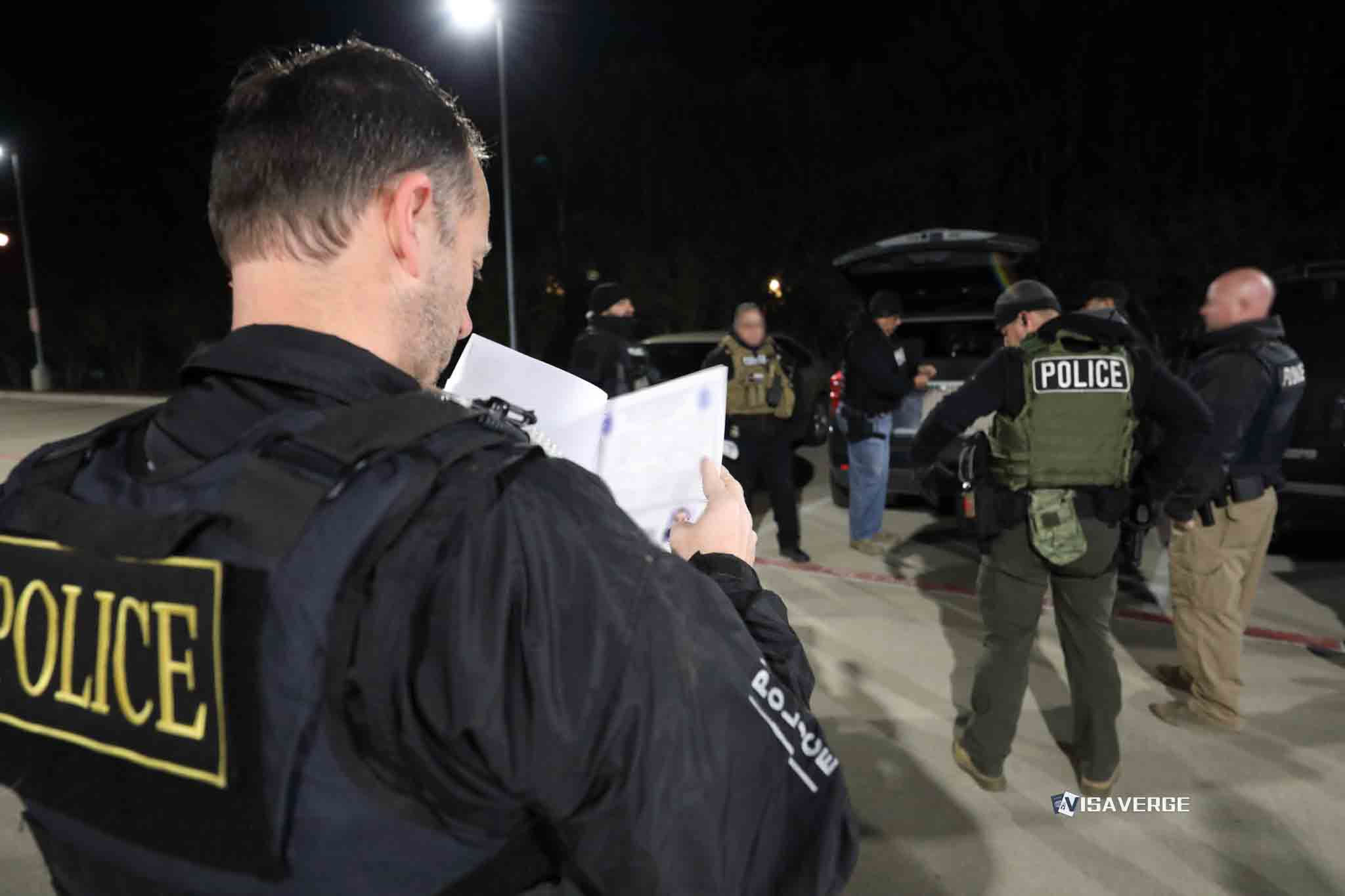
- The ACLU report claims the 287(g) program expansion is turning local police into a national deportation force.
- Participating counties now cover seventy-seven point two million people, representing thirty-two percent of the United States population.
- Civil rights groups warn of increased racial profiling and the erosion of public trust in local law enforcement.
The American Civil Liberties Union published a report accusing the Trump administration of expanding the 287(g) program so rapidly that state and local police are becoming part of a larger deportation force.
The report, titled Deputized for Disaster: How President Trump’s supersized 287(g) deportation force is a powder keg for law enforcement, our communities, and our democracy, says the policy is placing immigration enforcement inside routine policing. The ACLU published it in late February 2026.

The organization says officers may question people about immigration status during ordinary encounters, including traffic stops. It describes the approach as “show me your papers” enforcement.
The report warns that the shift can produce racial profiling, civil-rights violations and public distrust while pulling police away from core public-safety responsibilities.
Local agencies are taking on federal immigration duties
Section 287(g) agreements allow Immigration and Customs Enforcement to cooperate with state and local agencies. Under those arrangements, local officers may receive authority to perform certain immigration-enforcement functions.
The ACLU says the administration has moved beyond limited cooperation. It argues that federal immigration enforcement is now being embedded in everyday police work.
That arrangement can create legal exposure. The report points to potential disputes over equal protection, Fourth Amendment stops and arrests, and liability for participating local governments.
The constitutional questions will depend on the facts of each encounter. Officers and agencies may face different standards depending on the authority used, the location, and the conduct underlying a stop or arrest.
The reported expansion reaches millions of residents
An ACLU-related commentary on the same issue says counties with a participating local agency encompass at least 77.2 million people, or 32 percent of the country.
The reach is expanding through police departments and other local agencies. That gives federal immigration priorities a larger role in encounters that traditionally focused on traffic enforcement, criminal investigations, or other local duties.
DHS reported in September 2025 that it had trained, or was training, more than 10,000 officers under the program’s street-level enforcement model. The ACLU says that training reflects a broader operational change rather than a narrow administrative partnership.
The report also warns that residents may become less willing to contact police, cooperate as witnesses, or report crimes if they fear immigration consequences. The organization ties that erosion of trust to public-safety concerns.
The deportation campaign is facing separate court challenges
The police-partnership expansion forms part of a wider deportation effort. On June 24, 2026, a D.C. Circuit panel allowed nationwide expedited-removal efforts to proceed.
A separate federal case produced a different result. Judge P. Casey Pitts of the Northern District of California struck down the administration’s courthouse-arrest policy nationwide on June 25, 2026.
The ruling came in Pablo Sequen v. Albarran. It addressed courthouse arrests, not the validity of every 287(g) agreement or every action taken by a participating local officer.
Those cases illustrate why the report’s legal concerns cannot be resolved by the existence of an agreement alone. Federal authorization may define what an officer can do, but constitutional limits and state-law rules can still affect an encounter.
Agencies may face operational and legal consequences
The ACLU says local departments that join the partnerships assume more than a federal immigration role. They may also take on litigation, training, supervision, and public-trust risks.
A department’s exposure could turn on whether officers had proper authority, followed applicable procedures, and had an adequate factual basis for the action. The report frames those risks as extending to the agencies themselves, not only individual officers.
The policy also creates a conflict between two policing models. One emphasizes cooperation with residents and local public safety. The other places federal removal priorities into encounters controlled by local departments.
The February report therefore presents the expansion as a structural change in American policing. Its warning is aimed at the federal government, participating agencies, and communities affected by the new enforcement role.
This article provides general information and is not legal advice. Consult a qualified immigration attorney about your specific case.