- DHS is seeking contractors for a government-owned deportation air fleet with nine aircraft at minimum.
- ICE wants seven Boeing 737-700s or equivalent jets plus two C-37B or Gulfstream 650ER-type aircraft.
- Companies must respond by July twenty-second, twenty twenty-six; operations could start in summer 2027.
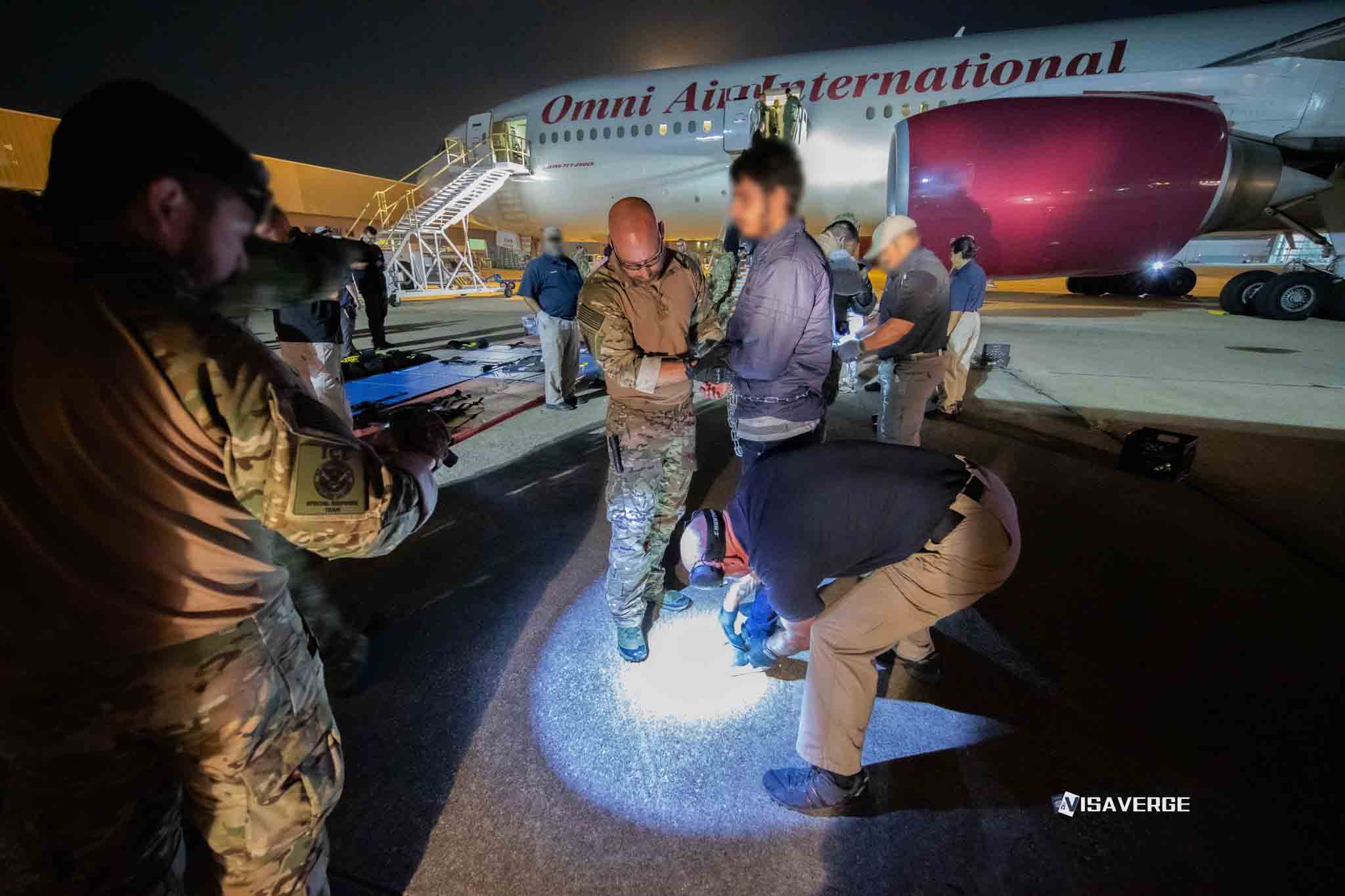
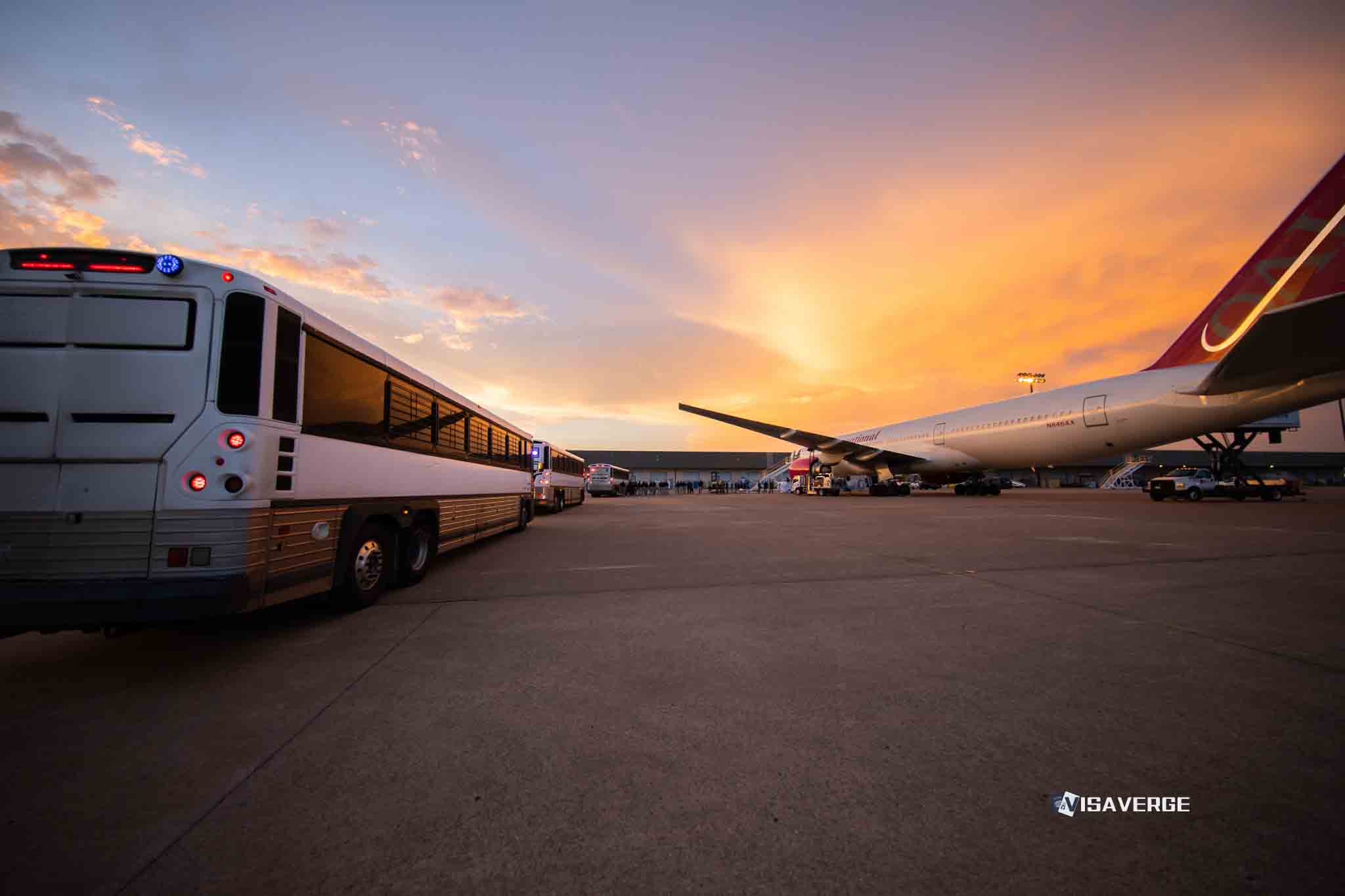
The Department of Homeland Security is seeking private operators for a federally owned fleet that could support deportation flights around the clock, including seven Boeing 737-700s or equivalent aircraft and two C-37B or Gulfstream 650ER-type jets. The contract has not been awarded.
Immigration and Customs Enforcement published a sourcing notice on July 8 seeking companies to provide flight operations, maintenance, logistics, training and mission support. The planned fleet would remain government-owned while contractors supplied the crews and day-to-day operation.

The notice describes aircraft capable of flying 24 hours a day, 365 days a year, with little advance notice. Missions could include removal operations, voluntary repatriation, high-risk charter flights and the movement of senior officials.
Companies must respond by July 22, 2026. The proposed contract could begin in summer 2027 and run through 2032.
Markwayne Mullin, the secretary of homeland security, said in July that the department expects to integrate the aircraft into deportation operations “in the coming weeks.” He said the fleet would provide “secure command and control and rapid long-range mobility.”
The sourcing effort would give the administration a standing aviation capability rather than relying primarily on commercial charters. The plan covers nine aircraft at minimum.
The proposed fleet would combine removal capacity with executive transport
The solicitation divides the aircraft into two broad categories. Seven passenger jets would handle most removal and charter missions, while two larger long-range aircraft would support special operations and senior-official travel.
| Aircraft category | Planned number | Described role |
|---|---|---|
| Boeing 737-700s or equivalent | 7 | Removal operations and charter missions |
| C-37B or Gulfstream 650ER-type jets | 2 | High-risk missions and senior-official movement |
| Total | 9 | Government-owned, contractor-operated fleet |
The operating concept also calls for “short-notice mission tasking” and flights to “remote, primitive, or austere environments” in the United States and abroad. Contractors would handle pilots, maintenance, logistics, training and other mission support.
A separate report described the fleet as capable of emergency transport and some senior-official travel. The notice also refers to voluntary repatriation, a term used for departures arranged with the government rather than forced removals.
The plan is still at the market-research stage. Industry responses come before any award, aircraft acquisition or operational launch.
Congress supplied the money as deportation flights expand
The administration has set aside approximately $464.5 million to assemble and operate the private-sector-supported fleet, following a $70 billion congressional infusion passed through budget reconciliation.
That spending would support a wider enforcement campaign. Reports from June and July said ICE operated nearly 300 removal flights in May 2026 and roughly 3,000 deportation flights since January 2025.
The administration has also maintained a target of 1 million deportations per year. Official reports as of January 2026 claimed nearly 3 million removals during the administration’s first year, including 2.2 million “self-deportations” and 675,000 forced removals.
Those figures combine different categories of departure. The fleet solicitation itself does not set a removal target.
Tom Homan, the White House border czar, described the policy at the Border Security Expo in May 2026.
“President Trump made a promise of mass deportation and that's what this country is going to get.”
Homan also previously said, “If we find you, we’re going to arrest you.”
ICE could use the aircraft for third-country removals
The administration has expanded removals involving countries other than a person’s country of citizenship or prior residence. Reported destinations include Rwanda, Eswatini and South Sudan.
Amnesty International reported that a fourth transfer to Eswatini took place on July 8, 2026. Human Rights First documented cases in which detainees were deported to countries they had never visited and learned their destination only after boarding.
The government’s sourcing notice does not identify individual destinations. It does, however, contemplate missions outside the United States and flights requiring short-notice preparation.
The administration has branded its broader enforcement campaign “Operation Aurora.” It began as a targeted effort against the Venezuelan gang Tren de Aragua, also known as TdA, and later became associated with a nationwide mass-deportation campaign.
Stephen Miller, the deputy chief of staff for policy, has described the effort as part of a goal to ensure “America's doors are closed fully to asylum seekers” after favorable 2026 court rulings.
The planned aircraft would therefore support more than a single route or removal category. They could carry out ordinary removals, voluntary departures, high-risk charters and government travel under one operating structure.
Critics point to detention and enforcement risks
The American Immigration Council has reported that the administration is using a “mass immigration detention system” to pressure detainees, including people with no criminal record, to abandon their legal cases.
Aaron Reichlin-Melnick, a senior fellow at the organization, said the pressure was intended to weaken detainees’ ability to pursue those cases.
“The goal is not public safety, but to pressure people into giving up their rights.”
The expanded enforcement campaign has also drawn attention after two U.S. citizens, Renee Good and Alex Pretti, were fatally shot by federal agents in Minneapolis in January 2026. The shootings prompted national protests.
The sourcing notice focuses on aviation services. It does not establish new detention procedures, adjudication standards or removal grounds.
Those issues remain separate from the contractor’s duties. A flight operator would provide transportation and mission support, while immigration agencies would continue making enforcement and removal decisions.
A separate luxury aircraft has already drawn scrutiny
The planned fleet follows reports that ICE purchased a $70 million Boeing 737 Max 8 in early 2026. The aircraft reportedly included showers, bedrooms and a bar and initially was intended for former Secretary Kristi Noem.
The White House later designated that aircraft for “Cabinet-level secure mobility” alongside deportation duties. The 737 Max 8 is separate from the seven 737-700s or equivalent aircraft described in the new sourcing effort.
The distinction leaves two aviation initiatives operating at once: a previously purchased aircraft with luxury accommodations and a proposed nine-plane fleet for recurring government missions.
The proposed fleet would also expand the government’s control over scheduling. Under the model, federal ownership would remain in place while private contractors supplied the operational infrastructure.
The administration’s expansion could affect migration and spending
The Brookings Institution updated its forecast on July 13, 2026, projecting that mass-deportation flows would keep net migration in “negative territory” through the end of 2026. The institution projected that consumer spending could fall by over $60 billion.
That projection addresses the broader economic effects of removals, not the cost or performance of the aircraft contract. The fleet’s proposed funding is approximately $464.5 million.
The contract timeline could extend the aviation program beyond the current enforcement surge. A summer 2027 start and a 2032 end date would create a multiyear operating framework, subject first to contractor selection and award.
ICE’s July 22 response deadline is the next formal milestone. Until then, companies are responding to the government’s requirements rather than operating the aircraft.
This article provides general information and is not legal advice. Consult a qualified immigration attorney about your specific case.