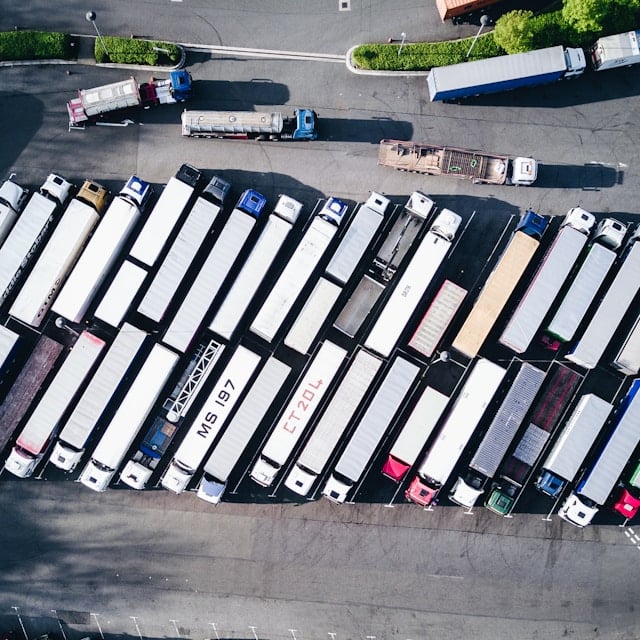
The White House has launched a veterans recruitment push called Freedom Haulers to bring former service members into trucking jobs after the administration’s license crackdown on immigrant drivers. On Friday, Department of Transportation Secretary Sean P. Duffy announced the campaign, while Trump said veterans who drove heavy military vehicles will “automatically be eligible” for a commercial driver’s license.
- Freedom Haulers is an interagency campaign led by Secretary Sean P. Duffy to recruit veterans into trucking jobs and connect them with transition resources.
- The campaign says some veterans who recently drove large military vehicles can skip the usual CDL skills test, creating a fast track from military driving to commercial trucking.
- The campaign says the GI Bill will pay for 100% of CDL training and, for some veterans, provide a housing allowance while they are in school.
- The administration is also restricting non-domiciled CDL eligibility to H-2A, H-2B, and E-2 visa holders and requires states to use the SAVE system to verify immigration status before issuing or renewing a CDL.
- President Trump proposes replacing immigrant truck drivers with U.S. military veterans to improve road safety.
- The administration has already rescinded twenty-eight thousand licenses from noncitizen commercial drivers over the past year.
- New federal rules and the Dalilah Law tighten English-language requirements and immigration eligibility for CDLs.
President Donald Trump pledged July 15 to replace immigrant truck drivers with military personnel, pairing the proposal with a promise to make commercial licenses easier to obtain for people who drove heavy trucks in the armed forces.
Free toolUSCIS Receipt Number DecoderHe made the announcement at the Pennsylvania Defense and Innovation Summit in Carlisle, Pennsylvania. The plan would target drivers he described as being in the country unlawfully, while creating a faster licensing route for American military heavy-vehicle operators.
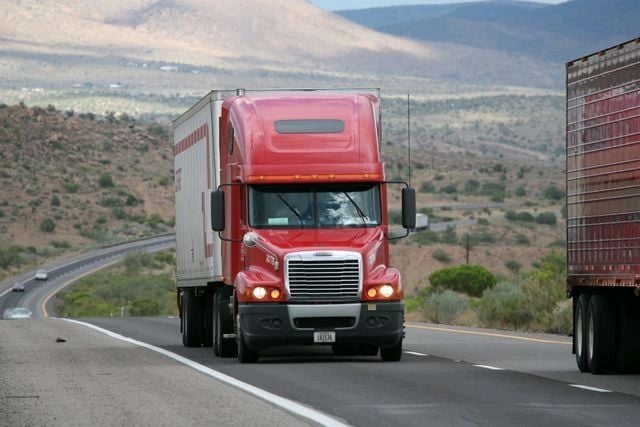
"My administration will soon take historic action to get illegal alien truck drivers who are just killing a lot of people. They can't read signs. and they shouldn't be driving these things, and they came in totally illegally, and they, we don't want them. But they are driving all over American roadways, and we're going to replace them with proud American veterans."
The administration has not presented the replacement plan as a completed rule. It has already moved against noncitizen commercial driver’s license holders, however, rescinding approximately 28,000 licenses during the past year.
Trump also said military truck operators would receive an automatic path to a CDL.
"Any American who's driven a heavy truck for our military will automatically be eligible for a commercial driver's license. So we're going to get them taken care of."
The initiative lands as federal agencies tighten eligibility rules and English-language requirements for commercial driving. Nearly 200,000 noncitizens currently hold CDLs, according to the policy details cited by the administration.
Federal rules are narrowing who can hold a commercial license
Executive Order 14286, issued April 28, 2025, directs federal agencies to ensure that commercial vehicle operators can communicate in English. Beginning June 15, 2026, the Department of Labor and USCIS require proof of English proficiency for labor certifications involving commercial driving.
The Department of Transportation issued another restriction in March 2026. The rule limits CDL eligibility to specified immigration categories and, in many jurisdictions, disqualifies asylum seekers, refugees and DACA recipients.
Transportation Secretary Sean P. Duffy announced the final rule on February 11, 2026, describing it as a response to foreign drivers who obtain licenses through what he called a flawed system.
"For far too long, America has allowed dangerous foreign drivers to abuse our truck licensing systems – wreaking havoc on our roadways. This safety loophole ends today."
DHS Secretary Kristi Noem backed the Dalilah Law on February 25, 2026. The proposed legislation would bar states from issuing CDLs to people without lawful permanent status and seek to revoke existing licenses held by those individuals.
"Allowing illegal aliens, many of whom do not know English, to obtain CDLs to operate 18-wheelers and transport hazardous materials on America's roads is reckless and incredibly dangerous to public safety. DHS is working every single day to remove dangerous criminal illegal aliens who are unlawfully in the U.S."
Senator Jim Banks, Republican of Indiana, introduced the bill in early 2026 after Trump proposed it. The legislation takes its name from Dalilah Coleman, a young girl severely injured in a California crash involving Partap Singh, an undocumented immigrant.
The crackdown reaches drivers with years behind the wheel
The affected group includes people who have worked legally for years under programs such as DACA or Temporary Protected Status. Driver advocacy groups and other critics call the policy discriminatory.
They point to accident data showing that crashes involving immigrant drivers account for approximately 0.31% of total truck fatalities. The administration has instead highlighted individual fatal crashes, including the case of Michael Bon, a Haitian national involved in a fatal crash in Massachusetts.
DHS said Bon had been denied TPS but still held a valid CDL when the crash occurred. Officials have used the case, along with the Singh crash, to support stronger links between immigration enforcement and road-safety rules.
Foreign-born drivers represent approximately 18% of the 3.5 million professional truck drivers in the United States, according to the Bureau of Labor Statistics. Removing a large share of that workforce could create pressure well beyond licensing offices.
Military experience could become a new hiring pipeline
The proposal would fast-track military operators into commercial trucking by waiving certain testing requirements for people with heavy-vehicle experience in the armed forces. The administration presents that route as both a public-safety measure and an employment opportunity.
The proposed change would not simply redirect current applicants. It would fill positions opened by license cancellations and immigration-based restrictions, while relying on military driving records as evidence of qualification.
Industry experts warn that removing nearly one-fifth of the driving workforce quickly could disrupt supply chains and increase shipping costs. The warning comes as the administration continues to revoke licenses and restrict access for noncitizen drivers.
The Department of Transportation and DHS have increasingly incorporated immigration status into commercial-driving enforcement. That approach can override state nondomiciled-license programs that previously allowed work-authorized immigrants to drive.
The Dalilah Law remains part of that broader effort. Its proposed restrictions would reach both future applicants and people who already hold licenses, while the March rule has already narrowed eligibility for several immigration categories.
The administration’s next step is the promised action to create an automatic CDL path for American heavy-truck operators from the military. Its timing and final requirements will determine how quickly those operators can enter the civilian freight workforce.