- Kuwait International Airport reopened Terminal 1 on June 1, 2026, for several international and regional airlines.
- The facility underwent significant repair and upgrade works to improve technical readiness and passenger safety.
- A phased reopening plan is being managed by the Directorate General of Civil Aviation to restore full capacity.
(KUWAIT) – Kuwait International Airport reopened Terminal 1 on 1 June 2026 for Arab and foreign airlines, restarting flights under a phased reopening plan after repair and upgrade works were completed.
The reopening returns passenger services to Terminal 1 and forms part of a broader effort to restore full operational capacity at the airport. Authorities also put operational measures in place to improve air traffic flow, travel procedures and airport readiness.
Free toolB1/B2 Tourist Visa Stay Calculator online
The Directorate General of Civil Aviation is overseeing the phased return, with airlines resuming operations gradually. The agency said the plan is designed to ensure technical readiness and maintain passenger safety as services expand.
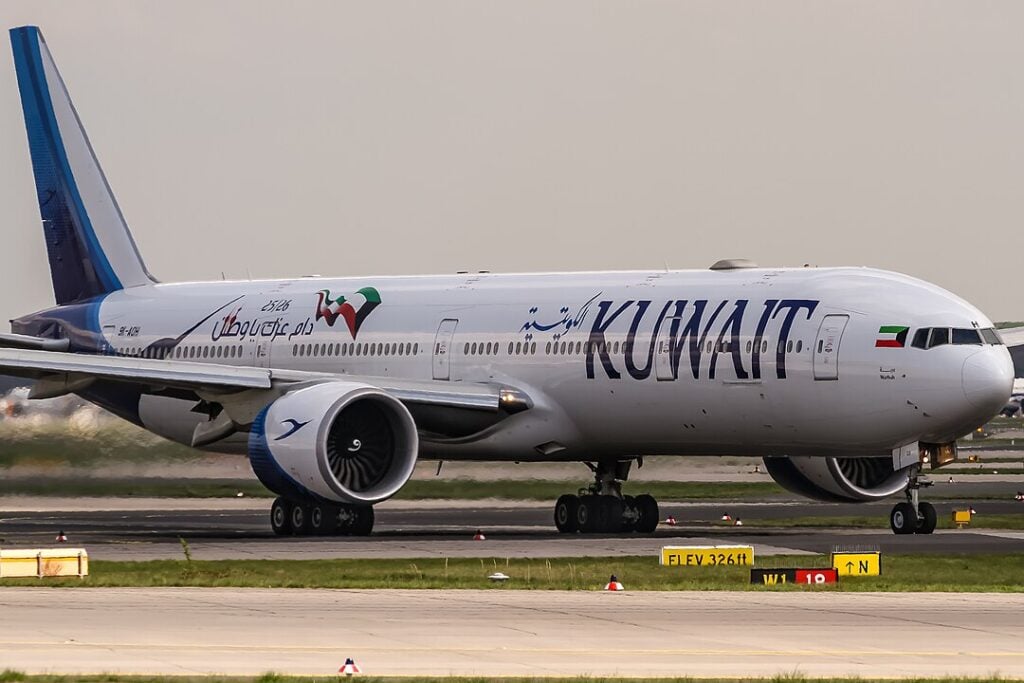
Airlines named in the initial return include Kuwait Airways, Jazeera Airways, Emirates, Saudia, Qatar Airways, Etihad and flydubai. Their participation places a mix of Kuwaiti, Gulf and other regional operators inside the first stage of the reopening.
Terminal 1 had been out of full use while repair and upgrade works were carried out. Its return marks a practical shift in airport operations, with authorities reopening one of Kuwait International Airport’s main international facilities rather than relying on a single-step restoration.
That phased structure points to a controlled restart instead of an immediate return to full traffic. Airlines are resuming operations under an ordered sequence, while airport officials monitor technical readiness and passenger safety at each stage.
The airport tied the reopening to several operational goals. Those include restoring full operational capacity, improving air traffic flow, refining travel procedures and strengthening airport readiness as more flights move back into Terminal 1.
Each of those goals affects how the reopening unfolds on the ground. Air traffic flow concerns the movement of aircraft and the handling of flight volume, while travel procedures and airport readiness point to the passenger side of operations as traffic builds.
The phased reopening plan also shapes the pace at which carriers can return flights to the terminal. Kuwait Airways and Jazeera Airways, the two Kuwaiti airlines named in the rollout, are returning alongside Emirates, Saudia, Qatar Airways, Etihad and flydubai.
That list gives the reopening weight beyond a single domestic operator. Terminal 1 is reopening for Arab and foreign airlines, and the named carriers show that the return covers both national and international traffic from the outset.
The Directorate General of Civil Aviation placed safety at the center of the process. Its role in supervising the phased return links the technical side of airport operations with the gradual reintroduction of passenger services and scheduled flights.
Technical readiness, as framed by the DGCA, sits alongside passenger safety rather than apart from it. Authorities are not presenting the reopening as a simple switch from closed to open; they are treating it as a managed return in which operations expand step by step.
That approach can influence airline scheduling and capacity in the near term. A phased return usually means services build over time, even as the reopening broadens travel options for passengers using Kuwait as an origin, destination or transit point.
Short-term scheduling patterns are likely to reflect that measured rollout. Airlines participating in the reopening can resume operations under the plan, but the structure itself indicates that the airport is sequencing the return instead of restoring every movement at once.
For passengers, the immediate change is the resumption of services at Terminal 1 after the completion of repair and upgrade works. The longer-term objective is larger: restoring full operational capacity across the airport while improving how flights and travelers move through the facility.
That makes Terminal 1 central to Kuwait International Airport’s next phase of operations. Reopening the terminal does not stand alone as a construction milestone; it directly affects the airport’s ability to handle international airlines and passenger traffic under normal operating conditions.
The presence of airlines such as Emirates, Saudia, Qatar Airways, Etihad and flydubai also signals the regional importance of the restart. Their inclusion suggests that the reopening is intended to reconnect Terminal 1 with established traffic flows across the Gulf and wider international network.
Kuwait Airways and Jazeera Airways, meanwhile, anchor the domestic side of the airline mix. Their return under the same phased reopening plan places Kuwait’s own carriers inside the same operational framework that the DGCA is applying to Arab and foreign airlines.
Authorities linked the reopening to airport readiness as much as to physical repairs. That wording suggests the works involved more than reopening space; the return is tied to operational conditions that officials consider sufficient for a gradual restart of passenger services.
Further phases may follow as the plan advances. For now, the reopening of Terminal 1 on 1 June 2026 puts Kuwait International Airport back into a broader pattern of international operations, with the Directorate General of Civil Aviation managing a phased return aimed at full capacity.