- Germany has officially lifted airport transit visa requirements for Indian passport holders effective June 3, 2026.
- The waiver applies to passengers staying in international transit zones at major hubs like Frankfurt and Munich.
- Travelers save up to ₹8,000 in visa fees and avoid a 5-15 day waiting period for connections.
(NEW DELHI, INDIA) — Germany lifted its airport transit visa requirement for Indian nationals on Tuesday, a change the German Embassy in New Delhi said will take effect on June 3, 2026 for passengers connecting through German airports to a third country.
The embassy announced the change on June 2, 2026 after publication in the German Federal Law Gazette, or Bundesgesetzblatt, the same day. Indian passport holders transiting airside through Germany will no longer need an Airport Transit Visa (Type A) if they meet the stated conditions.
“Indian nationals will no longer need a transit visa when travelling to another country with a layover at a German airport. The lifting of the so-called airport transit visa requirement for Indian citizens was announced in the Federal Law Gazette on June 2, 2026, and takes effect on June 3, 2026.”
Free toolB1/B2 Tourist Visa Stay Calculator onlineThe waiver applies to transits through Frankfurt, Munich, Berlin, Hamburg and Düsseldorf, identified in the policy as FRA, MUC, BER, HAM and DUS. It covers passengers who remain in the international transit zone and do not enter Schengen territory.
Indian travellers must hold a valid Indian passport and a confirmed onward ticket to a non-Schengen destination within 24 hours. The exemption does not cover travelers who need to leave the airside zone, including those whose baggage arrangements require immigration clearance before re-check.
Until now, many Indian travellers flying through Germany had to apply for a Type A transit visa even for short layovers. That process typically cost between ₹5,500 and ₹8,000, including fees and service charges, and usually took 5 to 15 days.
The rule change affects a large pool of passengers. Indian students heading to the United States or Canada, professionals on long-haul itineraries, and tourists bound for destinations outside Schengen often use German hubs because of route availability and fare competition.
Germany tied the move to a broader diplomatic push with India. The decision followed German Chancellor Friedrich Merz’s visit to India in January 2026, part of efforts to deepen bilateral links during the 75th anniversary of India-Germany diplomatic ties.
The German Embassy said the measure carries a wider message beyond airport procedure. “It underlines the Federal Government’s commitment to deepening German-Indian relations, facilitating the movement of people, and further strengthening economic ties.”
France made a similar change on April 10, 2026, removing transit visa requirements for Indian nationals. Together, the French and German decisions open easier connections through two of Europe’s largest aviation networks for passengers bound for North America and other regions.
Airlines serving India-Europe-North America routes stand to benefit from the lighter paperwork. Frankfurt and Munich already function as primary transfer points for westbound traffic, and the removal of a separate transit visa reduces both booking friction and pre-departure cost for travelers comparing itineraries.
Students and workers traveling onward to the United States and Canada still need valid entry documents for those countries. The U.S. State Department updated its Germany travel advisories on June 2, 2026 to reflect the eased transit requirements, while keeping in place the reminder that entry to the United States still requires a valid U.S. visa.
U.S. immigration agencies did not issue separate European transit guidance as part of the change. USCIS and the Department of Homeland Security handle domestic immigration and border rules in the United States rather than transit requirements set by European governments.
The practical effect is most visible in trip planning. An Indian passenger flying from New Delhi to Toronto through Munich, or from Bengaluru to New York through Frankfurt, no longer faces the extra step of securing a German airport transit visa so long as the itinerary stays inside the international zone and continues to a non-Schengen destination within the permitted time.
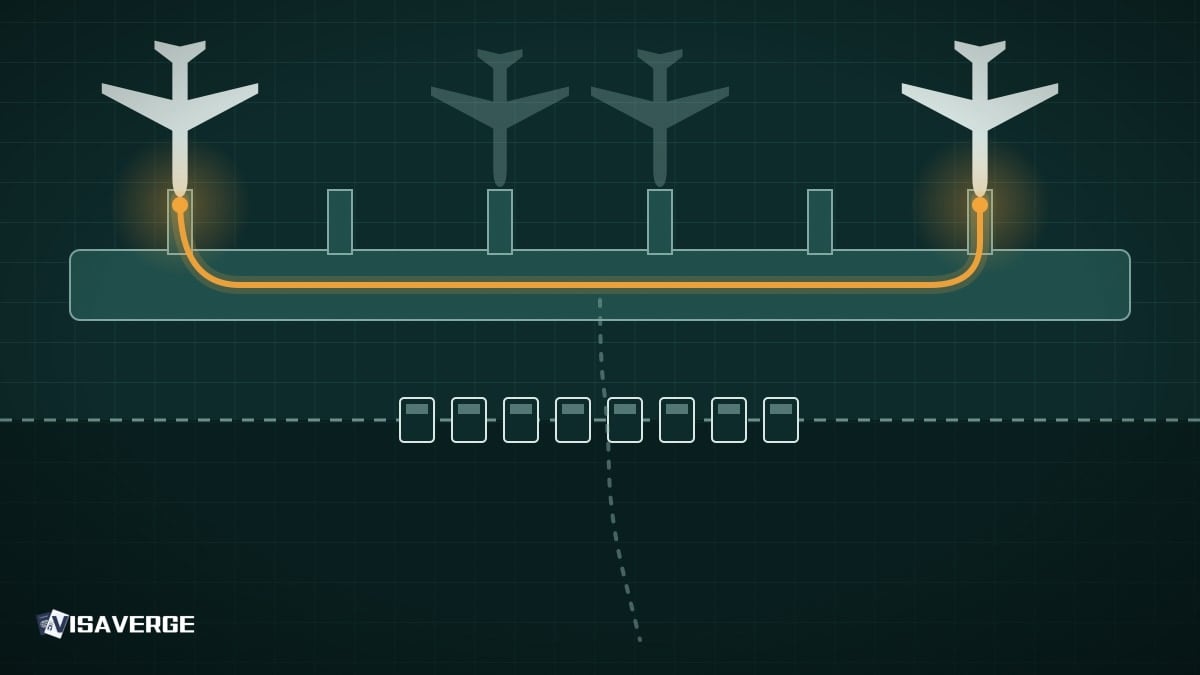
Travelers whose plans involve entering Germany, changing airports, or collecting and rechecking baggage after passing immigration still fall outside the airside transit exemption. The waiver covers transit without entry, not short stays inside Germany or onward travel into the Schengen area.
That distinction matters for tickets built on separate bookings. If the connection requires the passenger to leave the secure transit area, the exemption no longer applies, even though the traveler remains in Germany only briefly.
The announcement also removes an expense that had little connection to the final destination. A traveler bound for the United Kingdom or Latin America through Germany previously had to factor in both the ₹5,500 to ₹8,000 visa cost and the lead time of 5 to 15 days, even for a same-day airport connection.
Germany’s official mission site for India, [German Missions in India](https://india.diplo.de), posted the policy change, while the legal text appeared in the [Federal Law Gazette](https://www.bgbl.de). India’s foreign ministry also provides travel updates through the [Ministry of External Affairs](https://www.mea.gov.in), and visa service information remains available through [VFS Global](https://www.vfsglobal.com).
The result is a simpler transit map for Indian travellers. From June 3, 2026, an Indian passport holder connecting through Germany to a third country can pass through the airport’s international zone without a transit visa, a change that cuts both cost and waiting time before departure.