- France has removed airport transit visas for Indian passport holders making airside connections as of April 10, 2026.
- The exemption applies to stays under 24 hours within international transit zones at airports like Paris Charles-de-Gaulle.
- Indian nationals no longer need US or Canadian visas to qualify for transit through French airport hubs.
(FRANCE) — France removed the airport transit visa requirement for Indian passport holders making airside connections through its airports to non-Schengen destinations, a change that took effect on April 10, 2026 and immediately ended the previous rule for all Indian nationals.
The policy covers airside layovers at French airports, including Paris Charles-de-Gaulle, Orly and Lyon–Saint-Exupéry, as long as passengers stay inside the international transit area and do not pass through immigration or passport control.
Passengers can remain airside for up to 24 hours without an airport transit visa, also known as an ATV. Airlines including Air France, Delta Air Lines and their partners cannot deny boarding to eligible Indian passport holders because they lack an ATV or a valid U.S. or Canadian visa for those transits.
French President Emmanuel Macron announced the measure during his state visit to India from February 17-19, 2026. It began as a six-month pilot in Q2 2026, then ended early and became permanent after meeting security benchmarks.
France is the first Schengen country to adopt this arrangement for Indians. That makes French hubs more usable for travelers booking long-haul itineraries that connect onward to destinations outside the Schengen area.
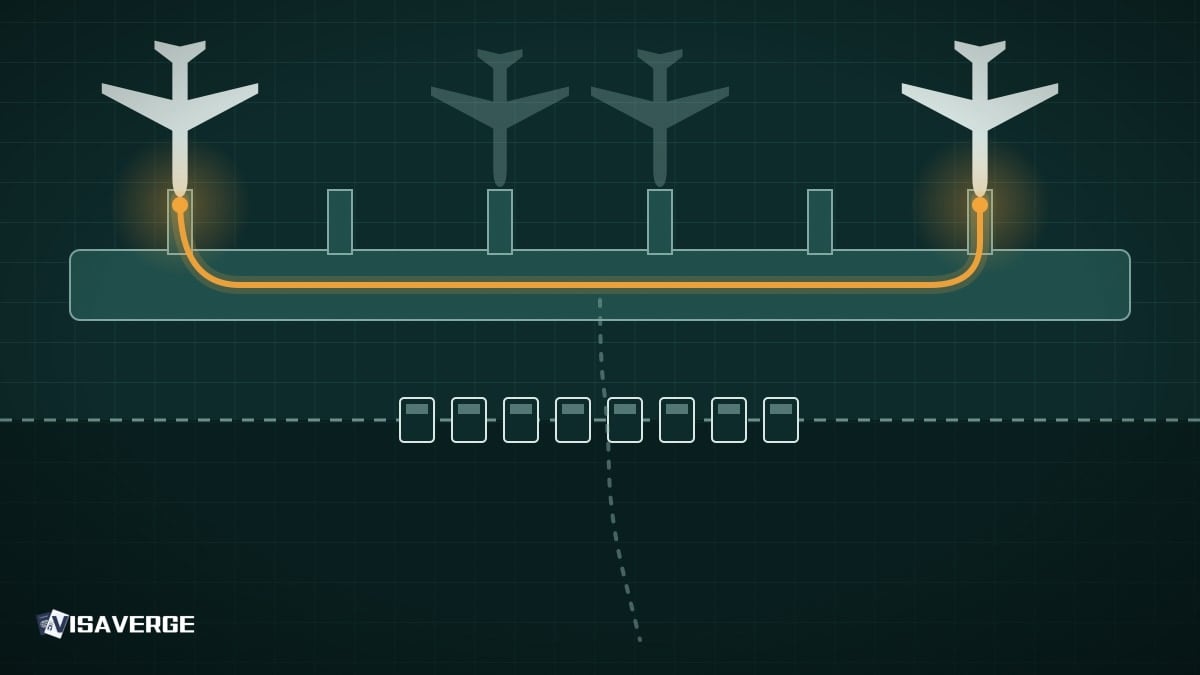
The change is narrow but consequential. It applies only to airside transit, which means a traveler must remain within the secured international transit zone and complete the connection without entering French or wider Schengen territory.
A regular Schengen short-stay C-visa is still required if a passenger exits the transit area, enters Schengen territory, or faces a landside or terminal change that requires immigration clearance. The same rule applies if the itinerary cannot be completed entirely inside the transit zone.
That distinction matters at large connecting airports. A booking that looks simple on paper can still trigger passport control if the transfer requires moving between areas that are not connected airside, even at major hubs such as Paris Charles-de-Gaulle.
Older exemptions tied to U.S. or Canadian visas and residence permits no longer control access for Indian passport holders in these cases. The new rule covers all Indian nationals using eligible airside transit through French airports.
Before April 10, 2026, Indian travelers often had to check whether they qualified for an ATV exemption based on visa or residence status issued by countries such as the United States or Canada. France has now replaced that patchwork with a single rule for eligible airside connections.
Operational checks have not disappeared. Verification may include pre-registering passport data through Air France or Aéroports de Paris portals that interface with PARAFE biometric gates for real-time boarding approval.
That means the end of the ATV requirement does not remove the airline’s obligation to confirm that a passenger qualifies for transit under the new rules. Carriers still screen documents before departure, and the distinction between airside and landside movement remains central.
The boarding protection built into the policy is one of the clearest changes for passengers. Air France, Delta Air Lines and partner carriers cannot refuse boarding to Indians on eligible transits simply because they do not hold an airport transit visa or a valid U.S. or Canadian visa.
In practice, the rule is likely to affect bookings that route traffic between India, North America and other non-Schengen destinations through French airports. A long layover in Paris no longer creates an automatic ATV problem if the traveler stays airside and the connection remains within the transit area.
Longer waits do not change the basic limit. The stay must remain inside the airport’s international transit zone and must not exceed 24 hours.
That is particularly relevant for itineraries between the United States and India that connect through Paris. An 8+ hour layover can still fit within the new framework if the passenger avoids immigration and remains airside throughout the stop.
Airlines still advise passengers to verify transit conditions before they book. A fare that requires reclaiming baggage, changing terminals through landside corridors, or rechecking documents after passport control falls outside the policy and would require a Schengen visa.
The practical burden has shifted from obtaining a separate airport transit visa to checking the structure of the itinerary itself. Connection times, terminal layouts and baggage handling now matter more than a passenger’s U.S. or Canadian visa history.
French airports named in the policy include CDG, Orly and Lyon–Saint-Exupéry, and the rule extends to other French airports as well. That broad geographic scope gives airlines and travel planners more room to route Indian passengers through France without an extra transit-visa layer.
The policy also changes how older travel guidance should be read. Advice describing one-way or return airport transit visas for Indians, including references to 24-hour validity under the old system, predates the new French rule and no longer reflects current requirements after April 10, 2026.
That has created a common point of confusion because older visa pages and third-party advisories can remain online long after a government changes entry or transit rules. Indian passport holders checking older material may still see the previous ATV requirement even though France has lifted it for eligible airside transit.
Official confirmation remains the safer reference point before departure. Airlines such as Air France recommend checking transit rules before booking, and travelers can verify the latest position through the France-Visas portal and the Embassy of India in Paris.
The French move stands out because Schengen states have often treated airport transit as a tightly controlled category even where travelers never formally enter the common travel area. France has now chosen a different approach for Indian nationals, but it has kept the line intact around border control and landside movement.
Nothing in the policy changes the visa requirement for entering France itself. A passenger who wants to leave the airport during a layover, switch to a hotel, or move through immigration for any reason still needs the visa required for Schengen entry.
That leaves the new system simple in principle and exacting in application. Indian passport holders no longer need an airport transit visa for eligible airside connections through French airports, but the itinerary must remain purely airside, the transit must stay within 24 hours, and any step that crosses into immigration control moves the traveler back into the regular Schengen visa regime.