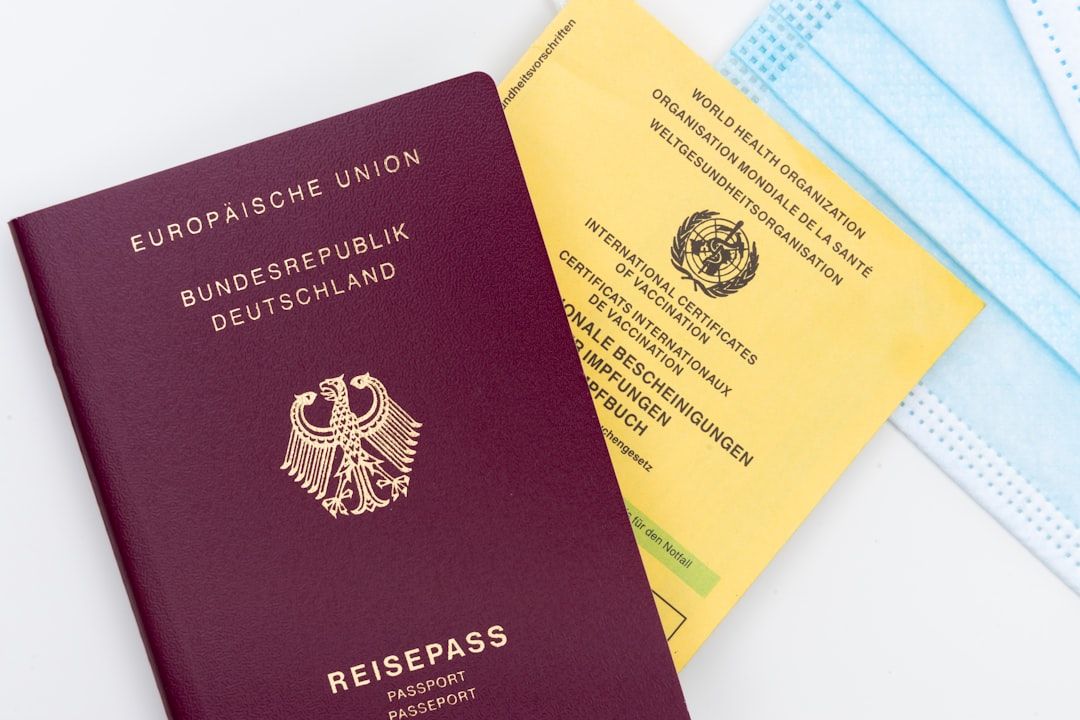
- German courts expanded legal deportation routes for foreign nationals convicted of crimes to countries like Afghanistan and Syria.
- Refugees risk losing protection status if moving within the EU solely to improve their living conditions.
- Germany reported a sharp increase in removals following bilateral agreements and high-profile criminal deportation flights in early 2026.
(GERMANY) — Germany’s Federal Administrative Court and the federal government have expanded the legal and operational path for deporting foreign nationals convicted of crimes, including removals to Afghanistan and Syria after a series of rulings and bilateral arrangements through 2025 and 2026.
That shift has opened routes that German authorities had long treated as legally blocked, especially for returns to countries previously regarded as unsafe. It also places Germany alongside broader mass deportation and public safety initiatives cited by U.S. authorities this year.

On February 19, 2026, the Federal Administrative Court, known by its German initials BVerwG, ruled in case Ref.: 1 C 16.25 that refugees who had already received international protection in another European Union member state and then moved to Germany could lose that protection status. The court said those secondary migrants must “weigh whether they want to take this risk” of deportation when moving solely to improve living conditions.
German judges had already started narrowing other barriers. In January 2026, several administrative courts found that Syrians no longer had a general right to asylum after the fall of the Assad regime in late 2024, while the Federal Office for Migration and Refugees reported that 99% of Syrian asylum applications were rejected in October 2025.
| India | China | ROW | |
|---|---|---|---|
| EB-1 | Feb 01, 2023 | Aug 01, 2023 ▲31d | Current |
| EB-2 | Nov 01, 2013 | Oct 01, 2021 | Apr 01, 2025 ▲90d |
| EB-3 | Jan 22, 2014 ▲21d | Jan 22, 2022 ▲14d | Jun 15, 2024 ▲31d |
| F-1 | Jan 22, 2021 ▲366d | Jan 22, 2021 ▲366d | Jan 22, 2021 ▲366d |
| F-2A | Oct 22, 2026 ▲30d | Oct 22, 2026 ▲30d | Oct 22, 2026 ▲30d |
Another decision came earlier, on April 16, 2025, when the BVerwG ruled in case 1 C 18.24 that healthy, single male refugees returned to Greece would not face “inhuman or degrading” conditions. That judgment allowed Germany to resume removals to Greece, a transit country that often sits in the chain of later repatriations.
Interior Minister Alexander Dobrindt tied the legal changes to a wider enforcement policy after Germany sent a direct flight carrying 20 convicted Afghans to Kabul on February 26, 2026. “Our society has an interest in ensuring that criminals leave our country. That is why we are acting consistently and expanding deportations step by step. Our agreement [with the Taliban] creates a reliable basis for direct and permanent deportations to Afghanistan.”
Dobrindt had used similar language months earlier. “I would feel remorse if I did not do everything in my power to ensure the deportation of criminals who threaten our society in Germany. Therefore, we will continue this approach relentlessly,” he said on November 29, 2025.
The operational figures show how sharply that policy has moved. Germany deported 83 Afghan criminal offenders in 2025, and the February 26, 2026 flight added 20 more convicted criminals under the new arrangement with Kabul. Their offenses included sexual crimes and assault.
Removals to Syria also resumed. Germany carried out its fourth post-war deportation to Syria on January 22, 2026, after a December 2025 bilateral understanding with the Syrian transitional government.
At the state level, Baden-Württemberg reported a record 1,046 criminal deportations in 2025. That was a 42% increase from the previous year, giving one of the clearest numerical signs of a harder line already taking hold inside Germany before the latest federal court ruling.
Officials have described the change as a “Migrationswende,” or migration turnaround, shifting from a humanitarian-first approach toward a “Humanity and Order” model centered on national security. In practice, the policy targets convicted criminals and “Gefährder,” the German term used for dangerous individuals considered a threat.
Rights groups have warned that the new approach carries legal and humanitarian costs. PRO ASYL said the rulings erode the individual right to asylum and could lead to “collective expulsions,” even as German authorities argue that deporting foreign nationals convicted of crimes serves public safety and restores confidence in enforcement.
Germany’s decisions are also drawing attention beyond its borders because they test whether governments can restart removals to states long treated as off-limits. Direct engagement with the Taliban and with Syria’s new authorities has turned Berlin into a closely watched example for other European Union governments considering similar safe-country removal frameworks.
U.S. officials have not issued a statement on the German court case itself, but they have endorsed the same broad enforcement direction. DHS Secretary Kristi Noem said on January 20, 2026, “In President Trump’s first year back in office, nearly 3 million illegal aliens have left the U.S. because of the Trump administration’s crackdown on illegal immigration. DHS is restoring the rule of law [and] removing dangerous criminal illegal aliens.”
USCIS echoed that message in an alert on March 30, 2026, saying, “USCIS will remain vigilant and proactive in protecting the United States from foreign terrorists, criminal aliens, those who commit fraud, and other threats. only eligible and vetted individuals are granted immigration benefits.” A White House executive order issued on February 6, 2026 directed the homeland security secretary to “Exchange. criminal history record information (CHRI) with the border security and immigration authorities of. trusted allies. for the sole purpose of screening travelers and immigrants.”
Those statements do not govern German law, but they place Berlin’s policy within a wider transatlantic climate that favors faster removals of foreign nationals with criminal records. Germany’s courts have provided the legal rulings, Dobrindt has supplied the political drive, and the deportation numbers from Afghanistan, Syria and Baden-Württemberg show how quickly the framework is turning into practice.
Public records for the policy can be found through Germany’s Interior Ministry at bund.de, the Federal Administrative Court at bverwg.de, the U.S. Department of Homeland Security at dhs.gov/news, and USCIS at uscis.gov. The court cases, the flights to Kabul and Syria, and the state-level deportation totals now mark one of Germany’s clearest breaks from the asylum approach it defended for years after the refugee crisis.