- India’s Ministry of Home Affairs added 14 seaports to the e-Visa scheme starting March 19, 2026.
- The national network now includes 114 total entry points across air, sea, land, and rail routes.
- Major commercial hubs in Gujarat and Tamil Nadu will now process electronic travel authorizations for foreigners.
(INDIA) — India’s Ministry of Home Affairs designated 14 additional seaports as Immigration Check Posts for the e-Visa scheme, effective March 19, 2026, expanding the national network to 114 entry points across air, sea, land, rail and river routes.
The move opens more maritime entry options for foreign nationals who hold Indian e-visas, a system that had previously limited arrival to a narrower set of approved airports and seaports. The added ports sit within a wider Immigration Check Posts framework used for identity checks, immigration control and security screening.
Seven of the newly designated seaports are in Gujarat: Alang, Bedi Bandar, Bhavnagar, Porbandar, Hazira, Pipavav and Mandvi. Three are in Tamil Nadu: Cuddalore, Nagapattinam and Tuticorin.
The expansion also covers four other seaports confirmed in the announcement. Their names were not included alongside the listed Gujarat and Tamil Nadu facilities.
Until this change, India allowed e-visa entry through 33 designated airports and 33 seaports. The airport list included cities such as Ahmedabad, Bengaluru, Chennai, Delhi and Mumbai.
The approved seaports largely served cruise traffic. Examples included Chennai, Cochin, Goa, Mangalore and Mumbai, reflecting how the maritime side of the e-Visa scheme developed first around passenger shipping rather than cargo gateways.
That distinction remains in place at some of the country’s busiest commercial facilities. Jawaharlal Nehru Port (Nhava Sheva), Mumbai, India’s largest container port, still requires a traditional visa rather than e-visa entry.
The rule for travelers is unchanged. E-visa holders must enter India only through approved Immigration Check Posts, while departure is allowed from any ICP.
That makes the designation of seaports unusually practical. A traveler can hold a valid e-visa, but the document does not by itself authorize entry through every harbor, airport or land border; entry still depends on whether that point appears on the approved ICP list.
The new maritime additions widen that approved map. In states with active coastal trade and passenger movements, they give shipping-linked arrivals more places where immigration officers can process e-visa entries without routing travelers through older hubs.
India’s e-visa system serves more than tourism alone, though the seaport network has often been associated with cruise passengers. The expansion broadens access for travelers from more than 180 eligible nationalities, adding capacity at coastal points where immigration formalities can now be completed under the same electronic authorization framework used at airports and other checkpoints.
Operationally, the change folds the 14 new seaports into the same national control structure that governs other Immigration Check Posts. That matters because ICP status is what allows immigration authorities to verify identity, examine travel documents and admit e-visa holders at the port itself, instead of sending them to a location that already had authorization.
Gujarat accounts for half of the named additions. Ports such as Alang and Pipavav already hold strong maritime profiles, while Porbandar, Hazira, Bhavnagar, Bedi Bandar and Mandvi extend the reach of the e-Visa scheme along a long commercial coastline.
Tamil Nadu’s three named additions, Cuddalore, Nagapattinam and Tuticorin, add another cluster on India’s eastern coast. Together with the Gujarat ports and the four other seaports covered by the order, they reshape a system that once concentrated maritime e-visa entry far more tightly.
The previous arrangement still left travelers with a substantial airport network, but seaports worked differently in practice because many were tied to cruise itineraries. By adding more coastal checkpoints, India has widened the places where foreign visitors arriving by sea can present an Electronic Travel Authorization and complete immigration formalities.
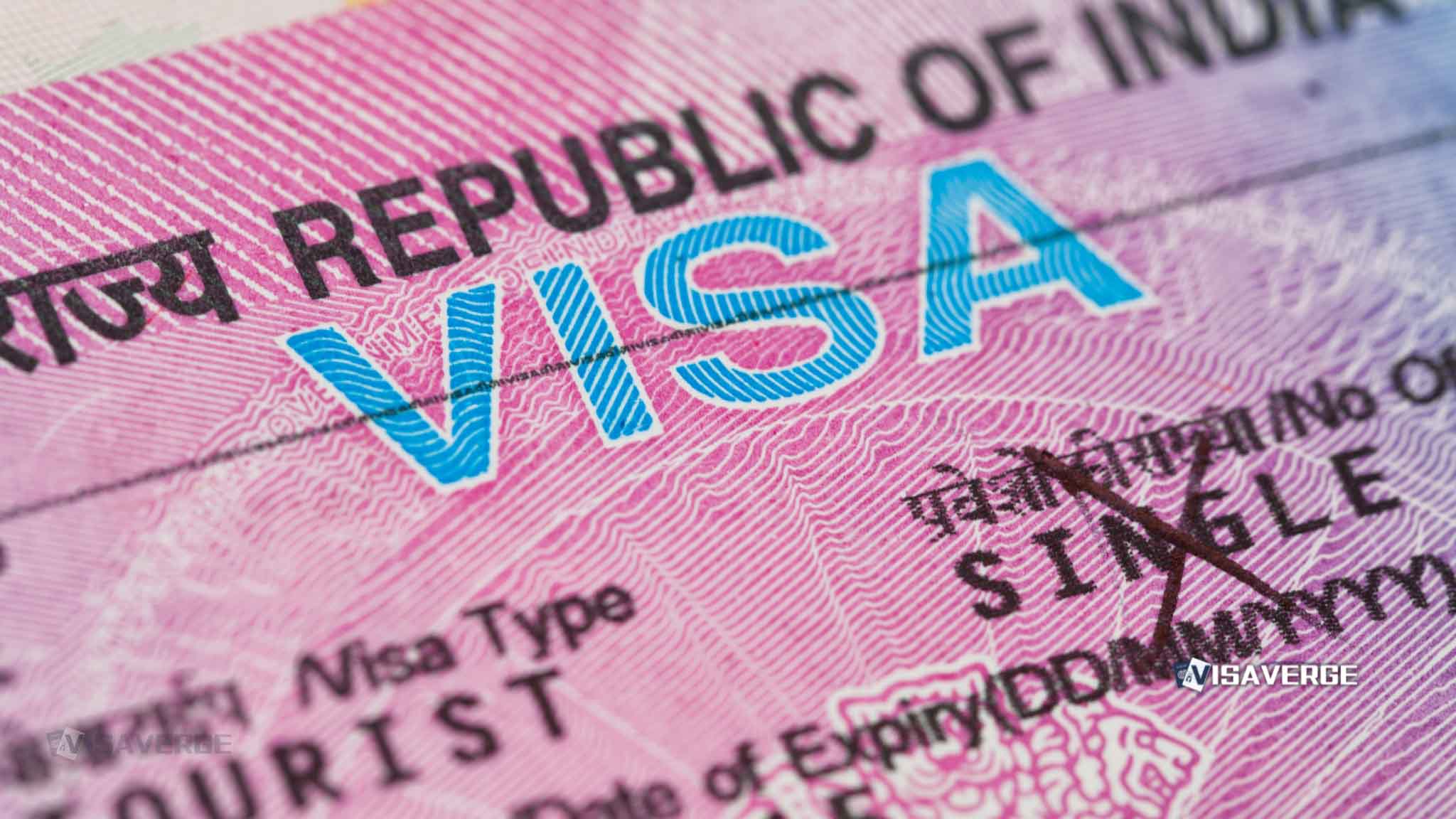
Travelers using the e-Visa scheme still need to carry the printed authorization. India publishes e-visa instructions at [the e-visa portal](https://indianvisaonline.gov.in/evisa), where applicants receive their ETA to print for stamping at an approved ICP on arrival.
That final step remains central to the system. The electronic approval is issued before travel, but admission occurs only after immigration processing at a designated checkpoint, whether at an airport, one of the newly added seaports, or another approved border facility within India’s 114-point ICP network.
The March order does not erase the split between electronic and traditional visa entry. It expands the list of approved maritime gateways, while preserving the rule that some ports, including Jawaharlal Nehru Port (Nhava Sheva), continue to operate outside the e-visa entry system.
For travelers and shipping operators, the practical effect is geographic rather than procedural. The e-visa process itself remains the same, but the number of places where that approval can be used to enter India by sea is now larger than it was before March 19, 2026.
With the additional seaports now recognized as Immigration Check Posts, India has pushed the e-Visa scheme deeper into its coastal infrastructure, linking more harbors to a border-control system that spans airports, seaports, land crossings, rail stations and river ports.