- Form one hundred sixty-eight introduces a new statement for the twenty twenty-six twenty-seven tax year.
- Investors must maintain transaction-level broker records to prove acquisition costs and holding periods.
- Corporate action documents are essential for calculating adjustments from mergers, splits, or bonus issues.
India’s Income-tax Act, 2025 adds Form 168 as the Annual Information Statement for Tax Year 2026-27, but the new record does not replace the documents investors need to prove their gains. The tax file should include Contract Notes, acquisition records, fund statements, bank evidence, returns, and papers explaining corporate actions or inherited holdings.
The new law took effect on April 1, 2026. Income earned through March 31, 2026 remains under the Income-tax Act, 1961 and its assessment-year system.

The transition creates two separate information trails. Income earned from April 1, 2025 to March 31, 2026 is reported for Assessment Year 2026-27, using the existing AIS and tax-credit information. Income earned from April 1, 2026 onward falls under Tax Year 2026-27, with the new statement available through the e-filing portal.
Free toolSubstantial Presence Test CalculatorBoth statements will remain separately available during the transition. Investors should download each one for the relevant period.
A broker’s capital-gains summary may show a final profit, but it may not establish the purchase date, original cost, holding period, source of funds, or tax deducted. Those details can become important if the Income Tax Department identifies a mismatch or asks an investor to support a claim.
The sale price alone cannot establish the taxable gain
Section 72 of the Income-tax Act, 2025 generally calculates capital gains by deducting qualifying transfer expenses, acquisition cost, and improvement cost from the consideration received or accruing on transfer.
A sale value is only one part of that calculation. An investor may need to prove the quantity sold, purchase price, acquisition date, and adjustments resulting from a bonus issue, split, merger, or demerger.
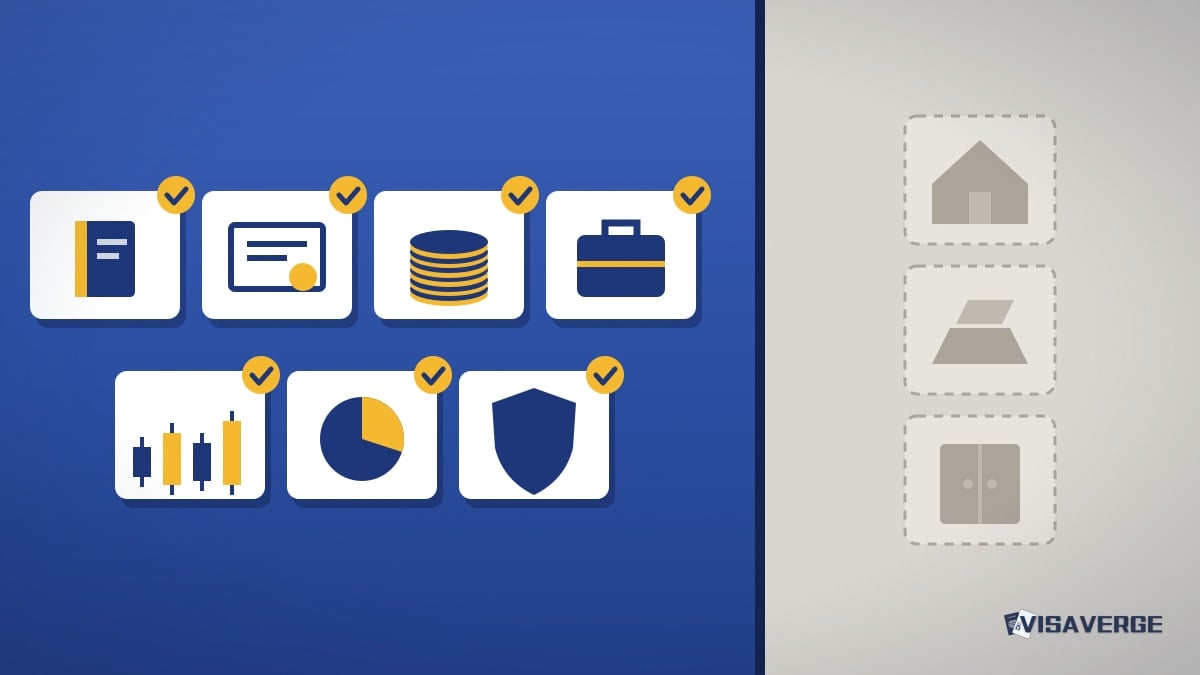
The seven records below cover those underlying facts.
1. Broker records must show the transaction behind the summary
A transaction-level broker record normally identifies the security, trade date, quantity, price, and charges. Investors should retain purchase and sale contract notes, annual broker ledgers, demat transaction statements, capital-gains and profit-and-loss reports, derivative turnover workings, settlement statements, and payment evidence involving the broker.
An annual report can help prepare a return. It should not replace the underlying records.
If the new statement shows share-sale proceeds of ₹25 lakh, it does not establish whether the taxable result was a ₹2 lakh gain, a ₹10 lakh gain, or a loss. The investor still needs evidence of cost, date, quantity, and later corporate-action adjustments.
Brokerage accounts can disappear from view after closure. Investors should download historical records before access ends.
2. Mutual fund files must preserve each acquisition event
A Consolidated Account Statement, or CAS, provides a broad view of mutual fund and demat holdings. Statements from the asset management company or registrar fill in details that a current holdings summary may not show.
The additional records are particularly useful for systematic investment plan instalments, partial redemptions, switches, distribution reinvestments, scheme mergers, segregated portfolios, transmission after a holder’s death, and investments held outside demat form.
Each SIP instalment can have a separate acquisition date and cost. A statement showing only the total units may not support the calculation when an investor redeems part of the holding.
CAS and AMC records should remain available until the complete holding has been sold and the related tax position has been settled.
3. The tax statement needs to be checked against private records
The new statement may contain tax deducted at source, tax collected at source, advance tax, self-assessment tax, specified financial transactions, refunds, outstanding demands, and information on pending or completed proceedings linked to the taxpayer’s PAN.
The taxpayer does not file it. The Income Tax Department generates it and uploads it to the registered e-filing account under Section 510.
The Taxpayer Information Summary, or TIS, appears through the same dashboard. The detailed statement records transaction-level information, while TIS gives category-wise figures that may cover salary, interest, rent, capital gains, and taxes paid. The income-tax return remains the taxpayer’s final legal declaration.
Investors should compare all three with broker, fund, and bank records. They should submit feedback when an entry is incorrect or duplicated.
A reported share-sale receipt is not automatically a capital gain. Securities information may be duplicated, assigned to the wrong taxpayer, or recorded without cost and corporate-action adjustments. Exempt income may appear as a transaction, while taxable income may be absent.
The department says the statement reflects information presently available to it. Taxpayers remain responsible for reporting complete and accurate income.
4. Keep the return file, not only the acknowledgement
A complete annual tax file should contain the filed return, acknowledgement and verification record, computation of total income, detailed capital-gains working, current and carried-forward loss schedules, advance-tax and self-assessment-tax challans, and TDS certificates.
It should also include refund and demand records, intimations, assessment orders, rectification applications, and appeal papers where applicable.
The return may show only consolidated figures. The computation explains how the investor reached them.
Section 111 permits an eligible unabsorbed capital loss to be carried forward for up to eight tax years. Short-term capital loss may be set off against qualifying gains from another capital asset. Long-term capital loss may be set off only against long-term capital gains.
An investor carrying a loss forward should keep the return where the loss first arose, the original cost and transaction records, that year’s computation, the loss carry-forward schedule, and later returns showing any set-off.
A carried-forward balance may need support years after the original transaction.
5. Bank records can establish both payment and funding
Bank statements can show purchase payments, sale or redemption proceeds, SIP deductions, dividend credits, interest receipts, broker settlements, refunds, transfers between an investor’s own accounts, and the source of money used for a large investment.
Annual interest certificates and dividend statements should be stored separately. A bank narration may not identify the gross income, payer, or related tax deduction.
The records can also help answer questions about whether an investment came from disclosed income, earlier savings, a loan, inheritance, a gift, or the sale of another asset.
6. Corporate-action papers can change the tax calculation
The latest demat statement may not reconstruct a transaction that began years earlier. Investors should preserve records for bonus shares, rights issues, stock splits, consolidations, mergers, amalgamations, demergers, buybacks, security conversions, delistings, employee stock options or awards, mutual fund scheme mergers, segregated portfolios, and court- or tribunal-approved restructurings.
These events can alter the number of securities, acquisition cost, or holding period even when the investor receives no money at the time.
A demerged shareholding may require the original company’s purchase record, the demerger scheme, and the prescribed cost-allocation ratio. A current broker report may not correctly rebuild that history.
7. Gifts, inheritance and transmission require older ownership records
An investor who received an asset by gift, inheritance, succession, or family arrangement may not have the original cost in their own bank account.
The file should include the gift deed, will or succession documents, probate or legal-heir records, transmission forms, the former holder’s death certificate, historic purchase documents, earlier demat or folio statements, valuation records where relevant, and evidence of the relationship between the parties.
The tax calculation may depend on how the former owner acquired the asset and how long it was held. That history can sit outside the current owner’s account.
Retention should follow the asset and the tax dispute
Section 62 concerns prescribed books and documents for people carrying on specified professions or businesses. It is not a blanket rule requiring every individual investor to retain every document for exactly eight years.
A practical schedule is more tailored:
| Record | Suggested retention period |
|---|---|
| Purchase records and acquisition documents | Throughout ownership and at least eight years after sale |
| Corporate-action documents | Throughout ownership of the resulting security and after disposal |
| CAS, AMC and demat statements | Until related holdings are sold and tax matters are closed |
| Tax statements and earlier Form 26AS records | For every relevant assessment or tax year |
| Returns, computations and challans | At least eight tax years, or longer if proceedings remain pending |
| Capital-loss records | Until the loss expires or is fully set off, plus records for the adjustment year |
| Notices, reassessment and appeal records | Until final disposal and the expiry of further remedies |
Section 282 generally bars a notice under Section 280 after four years and three months from the end of the relevant tax year, unless an extended category applies. If the Assessing Officer possesses specified books, documents, or evidence indicating escaped income of ₹50 lakh or more, the period may extend to six years and three months.
The preceding show-cause notice under Section 281 has corresponding four-year and six-year limits. These are notice periods, not permission to destroy documents.
Retention should continue where a notice or appeal is pending, a capital loss remains available, an investment is still held, acquisition cost depends on an earlier owner, or a merger or demerger shaped the holding. The same applies where a foreign asset or overseas income is involved, or a taxpayer has submitted a revised or disputed claim.
Documents should be downloaded annually instead of being left indefinitely on a broker, bank, or government portal. A filename such as 2026-08-12_ABC-Ltd_Sale_Contract-Note.pdf is easier to identify than “statement1” or “download.”
NRIs need a wider evidence file
NRIs and returning Indians should preserve NRE, NRO, and FCNR statements, inward and outward remittance documents, overseas broker and custodian statements, foreign withholding certificates, foreign tax returns, tax-residency certificates, treaty forms and declarations, passport and travel-day records, evidence of the original foreign-currency investment, and repatriation or transfer records.
An overseas income item does not become non-taxable simply because it is absent from the tax statement. Information shown there should not be offered to tax without considering residential status, applicable exemptions, and any relevant treaty.
The new framework applies from April 1, 2026, while the earlier system continues to govern income through March 31, 2026. Investors should preserve both periods separately, with the supporting records that explain each reported figure.
This article is for informational purposes only and does not constitute tax advice. Consult a qualified tax professional or CPA about your specific situation.