Authorities and local reporting identified the man killed during the July 14, 2026 ICE-related incident in St. Augustine as Juan Jairo Coronilla Duran, a 28-year-old Mexican tourist. He was visiting from San Luis de La Paz, Guanajuato, held a valid tourist visa, and had been in the United States for three weeks and in Florida for two days before the fatal collision.
- The crash happened at about 6:40 a.m. on July 14, 2026 on State Road 16 near Green Acres Road in St. Johns County as he fled an ICE operation.
- Florida Highway Patrol and Homeland Security Investigations are jointly investigating the case, while ICE and HSI conducted the operation that led to the pursuit.
- The Mexican Consulate in Orlando is assisting the family, and a community vigil was held in St. Augustine to remember Coronilla Duran.
An ICE agent shot and wounded a man in North Austin on September 20, 2026, in the 7000 block of West Anderson Lane near U.S. 183 and Research Boulevard. City officials said Austin police were not involved, and the injured man was taken to a hospital and was alert and talking when he left the scene.
- U.S. Rep. Greg Casar called for a full independent investigation, the immediate release of body-camera footage, and accountability if an officer broke the law.
- The Department of Homeland Security, Austin police, and the Texas Department of Public Safety had not immediately provided further details.
- Local officials planned a news conference at Austin City Hall with Mayor Kirk Watson, Austin Police Chief Lisa Davis, and Austin-Travis County EMS Chief Robert Luckritz.
1 earlier update
Authorities and local reporting identified the man killed during the July 14, 2026 ICE-related incident in St. Augustine as Juan Jairo Coronilla Duran, a 28-year-old Mexican tourist. He was visiting from San Luis de La Paz, Guanajuato, held a valid tourist visa, and had been in the United States for three weeks and in Florida for two days before the fatal collision.
Free toolUSCIS Receipt Number Decoder- The crash happened at about 6:40 a.m. on July 14, 2026 on State Road 16 near Green Acres Road in St. Johns County as he fled an ICE operation.
- Florida Highway Patrol and Homeland Security Investigations are jointly investigating the case, while ICE and HSI conducted the operation that led to the pursuit.
- The Mexican Consulate in Orlando is assisting the family, and a community vigil was held in St. Augustine to remember Coronilla Duran.
- ICE agents fatally shot a Mexican homebuilder in Houston after misidentifying him as an enforcement target.
- The agency claims self-defense involving a vehicle, though no body or dashboard camera footage exists.
- Mexico and U.S. lawmakers are demanding independent investigations and potential criminal charges against the officers.
(HOUSTON, TEXAS) — Federal immigration officers fatally shot Lorenzo Salgado Araujo on July 7, 2026, after mistaking the Mexican homebuilder for a target identified through a “credible tip,” the Department of Homeland Security confirmed.
DHS said officers were conducting surveillance near an address in Houston’s East End when they saw a white van and an individual who resembled the intended target. ICE separately alleged that Salgado Araujo tried to use the vehicle as a weapon, prompting an officer to fire in self-defense.
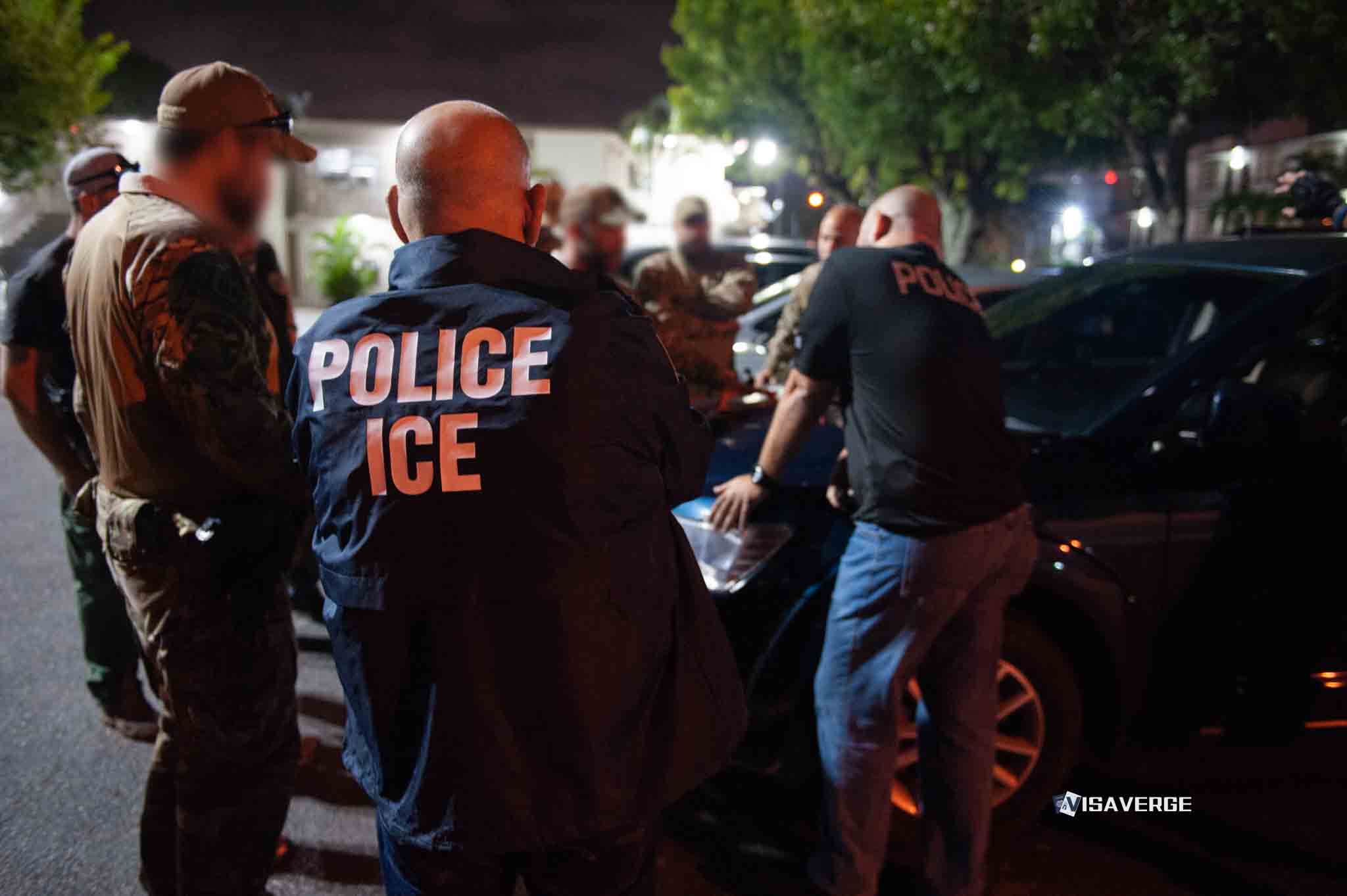
“After receiving a credible tip from our law enforcement partners, our officers conducted surveillance on a target’s address. Weeks prior to the incident, they noted two white vans at the property. On July 7, officers were almost at the target’s address when they observed a white van with an individual who resembled the target. Officers then initiated the vehicle stop,” DHS said in a statement issued July 9, 2026.
An ICE spokesperson described the encounter on July 7 as a “targeted enforcement operation” and alleged that Salgado Araujo attempted to strike an officer.
“[The individual] weaponized his vehicle in an attempt to run over an ICE law enforcement officer, resulting in our officer firing his weapon in self-defense,” the spokesperson said.
Acting ICE Director David Venturella confirmed in a July 9 phone call with U.S. Rep. Sylvia Garcia that Salgado Araujo “was not a target” of the operation. The intended targets were two individuals from Guatemala who were not inside the vehicle.
Salgado Araujo was 52 and had lived in Houston for approximately 35 years. He worked as a homebuilder and lived in Magnolia Park, a predominantly Latino neighborhood in the city’s East End.
The operation relied on an administrative warrant rather than a criminal warrant signed by a judge. Administrative warrants are used in immigration enforcement proceedings and do not carry the same judicial authorization as warrants issued by a court.
Salgado Araujo had no criminal record and was reportedly in the final stages of seeking legal immigration status. His death has drawn scrutiny because officers stopped and shot a man who had no connection to the people they intended to arrest.
DHS and ICE confirmed that the agents involved did not wear body cameras during the operation. The vehicles also lacked dashboard cameras, leaving investigators without recordings from those devices.
DHS attributed the missing cameras to funding shortages stemming from recent government shutdowns. Venturella committed to Garcia that ICE would equip all field agents with body cameras by the end of July 2026.
The absence of video has intensified disputes over what happened during the vehicle stop. Witness accounts differ from the official ICE description of a vehicle being used to ram an officer, according to members of Congress and community organizations calling for an independent inquiry.
Garcia, U.S. Rep. Al Green and U.S. Rep. Lizzie Fletcher have demanded an independent investigation. The lawmakers also called for the release of all available video footage and questioned the circumstances that led officers to identify Salgado Araujo as their target.
The League of United Latin American Citizens, known as LULAC, joined calls for an independent investigation. The organization cited discrepancies between witness accounts and the official ICE narrative regarding the alleged ramming of vehicles.
Mexico has also pressed for action. Foreign Minister Roberto Velasco and President Claudia Sheinbaum criticized the shooting, and Mexico announced plans to seek criminal charges against the officers involved.
The case has created tensions between Mexican officials and the U.S. government while raising questions about immigration operations conducted without body-worn cameras. Mexico’s demand focuses on criminal charges, while congressional lawmakers and LULAC have called for an inquiry independent of the agencies involved.
Salgado Araujo’s family has faced further difficulty since his death. Agents seized his personal identification at the scene, and the hospital processed him as a “John Doe,” leaving his relatives struggling to claim his body.
He is survived by three sons, all U.S. citizens. The family has had to establish his identity while also seeking answers about why officers stopped him and opened fire.
Three other men in the van, including Salgado Araujo’s brother, were detained after the shooting. Two were held at the Montgomery ICE Processing Center in Conroe, Texas.
The detention of the passengers added to the family’s distress as relatives sought information about the shooting and attempted to recover Salgado Araujo’s body. The men were in the vehicle when the operation ended in gunfire, although the two people sought by ICE were not present.
Protests and vigils followed in Magnolia Park. Residents gathered at the shooting site as fear spread through Houston’s immigrant community, where federal immigration operations have become a source of concern.
The case has also prompted scrutiny of the wider use of administrative warrants. Officers acted on an immigration enforcement document rather than a criminal warrant signed by a judge, then stopped a vehicle after deciding that one occupant resembled a person under surveillance.
DHS’s statement described a sequence that began with information from law enforcement partners, continued with surveillance of an address and ended after officers saw a white van near the target location. Venturella’s confirmation established that the person killed was not the intended target.
ICE’s account focuses on the alleged threat posed by the vehicle. The agency has not released body-camera or dashboard-camera footage from the encounter because the agents and vehicles had no such equipment.
Witnesses and lawmakers have disputed the agency’s account of the vehicle’s movement. The competing descriptions have become central to requests for an independent investigation, particularly because the shooting killed a longtime Houston resident who had no connection to the two Guatemalan men sought by officers.
The absence of recordings has left the investigation dependent on official statements, witness accounts and evidence gathered after the shooting. The family, members of Congress, LULAC and Mexican officials have each called for scrutiny beyond the initial ICE description.
Federal immigration officials have set a camera deadline for the end of July. Venturella said all ICE field agents would receive body cameras by then, while the circumstances of Salgado Araujo’s death remain under examination.
At the site in Magnolia Park, residents have continued to hold vigils for the homebuilder who spent approximately 35 years in Houston. His family is still seeking his body, and three men who traveled with him remain tied to the immigration operation through detention.