- Indian citizens living abroad retain full RTI access regardless of their country of residence.
- OCI cardholders and foreign nationals cannot claim RTI rights as the law is limited to citizens.
- RTI requests should focus on existing records and facts rather than asking for opinions or explanations.
(INDIA) — Indians living abroad can use the Right to Information Act if they remain Indian citizens, while OCI cardholders and other foreign citizens of Indian origin should not assume they have the same access under the law.
The dividing line is citizenship, not residence, ancestry or emotional connection with India. An Indian citizen does not lose RTI access by living overseas, but the Right to Information Act, 2005 grants that right to citizens, not to the wider diaspora as a whole.
Free toolSubstantial Presence Test Calculator
That distinction has practical consequences for NRIs, students, workers and families abroad who deal with passport files, consular records, delayed certificates, scholarship communications and document verification. RTI can help them obtain information already held by a public authority, including the status of a file, the office holding it, the date it was received, whether any communication was issued and whether the matter was transferred.
The same legal position does not extend automatically to people of Indian origin who hold foreign citizenship. OCI status gives long-term immigration and residence benefits in India, but it is not dual citizenship and does not convert a foreign citizen into an Indian citizen for citizen-only rights under the RTI law.
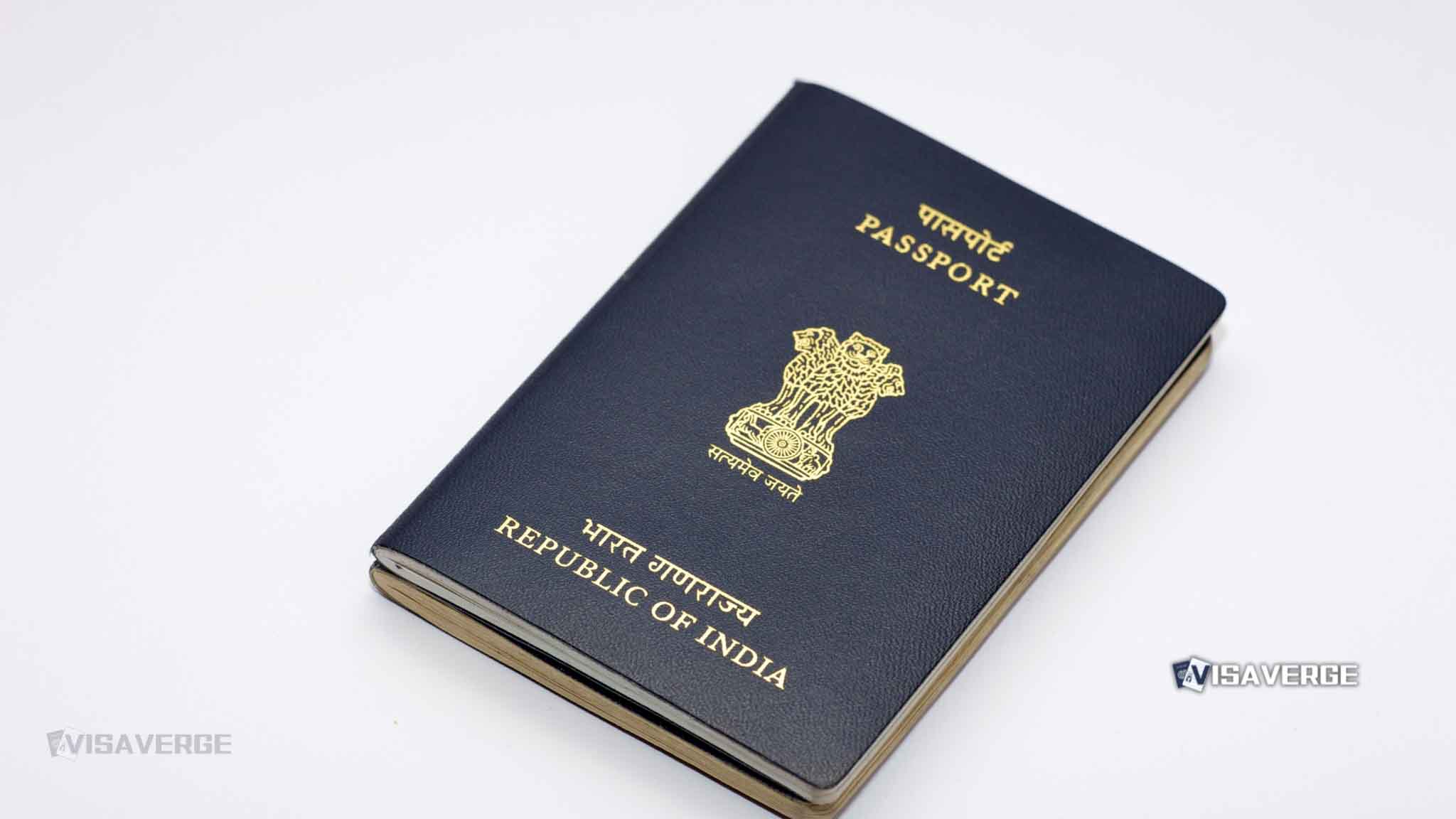
The source of the confusion is often the passport. In daily life, an Indian passport is widely treated as the strongest sign that a person is Indian, especially for travel and identity purposes. But passport issuance, citizenship determination, RTI eligibility, OCI benefits and immigration status are distinct legal questions, even when they overlap in ordinary conversation.
An Indian citizen abroad who holds an Indian passport should not be excluded from RTI merely because that person lives outside India. At the same time, a passport is not the final legal answer for every question tied to nationality or status. The practical test for RTI remains whether the applicant is an Indian citizen.
That matters in mixed-status families, where one household may include Indian passport holders, foreign passport holders, OCI cardholders and children born abroad. Parents may retain Indian citizenship while their children hold foreign citizenship with OCI cards. In those cases, RTI eligibility can differ within the same family, even when everyone is seeking information about related matters.
People overseas often turn to RTI in situations that are procedural rather than political. An Indian student abroad may want to trace a scholarship communication sent to a public authority. A worker in the Gulf, Europe, Canada, the UK or the United States may need an update on a passport file, police verification movement, employment clearance issue or consular record. A family waiting on a delayed certificate or document verification may want to know what happened to the file on record.
RTI can help in those cases if the applicant is a citizen and the information sits with a public authority. It is not a substitute for an appeal, a grievance process, a court case or a service request. A request seeking records works better than one asking officials to approve a case, explain suffering or take immediate action.
A focused application usually asks neutral questions tied to existing records. Requests about the present status of an application, the date a file was received, the office currently holding it, any deficiency memo issued, any transfer to another authority, or any rule or circular being relied on fit more naturally within the law than argumentative questions or demands for relief.
Indian citizens abroad seeking information from central ministries, departments and many central public authorities can file electronically through the RTI Online portal. The portal also accepts online payment and first appeals for covered authorities. Accuracy matters at the start, because choosing the wrong authority can slow the process even if the application is later transferred.
A sound filing identifies the correct ministry, department, mission, office or authority and then states the information sought with precision. Name and contact details are standard. File numbers, application numbers, passport file numbers, grievance numbers, reference numbers and relevant date ranges help the Central Public Information Officer or State Public Information Officer identify the records. Applicants do not need to explain why they want the information.
The route changes when the information is held by a state authority rather than a central one. The central RTI portal is not a universal filing system for every public authority in India. Matters involving state universities, state police departments, municipal bodies, state revenue offices or state-level educational authorities may require a state portal or the procedure followed in that state.
That central-state split often matters in education and document cases. A central university, national regulator or central ministry may fall within the central route, while a state university or state board may not. Filing in the wrong place can turn a simple records request into a longer delay.
The law also has limits that applicants abroad need to keep in mind. RTI gives access to information already available on record with a public authority. It does not force officials to create new information, provide legal advice, answer hypothetical questions or replace another statutory remedy such as a passport appeal, visa appeal, writ petition or service grievance.
The difference shows up in the wording. A request framed as “Please provide the present status of passport application number ___ and the date on which the file was last acted upon” fits the law better than “Why are you harassing me by delaying my passport?” A request framed as “Please provide the current status of OCI application number ___ and copies of any deficiency notice or communication issued in the matter” is stronger than “Why was my OCI application not approved?”
Before filing from abroad, applicants need to check a few basics. Citizenship comes first. They also need to confirm that the information is held by an Indian public authority, decide whether the matter belongs to a central or state authority, keep file or reference numbers ready, and make sure the request seeks existing records rather than opinions or explanations.
Care at that stage can reduce delay and rejection. It also helps to avoid sending unnecessary personal documents and to save the registration number after filing, especially if a first appeal becomes necessary after no reply or an unsatisfactory reply.
The debate carries weight because the overseas Indian population is not legally uniform. Some people abroad are Indian citizens on work, study, research, business or family assignments. Some are long-term NRIs. Others have taken foreign citizenship and now rely on OCI status for travel and residence in India. Legal rights follow those categories more closely than family history does.
Under the Right to Information Act, that means an Indian citizen abroad keeps access to transparency rights tied to Indian public authorities, while an OCI cardholder cannot rely on Indian origin alone to claim the same status. For families and individuals dealing with Indian offices from overseas, the practical line is direct: RTI follows citizenship.