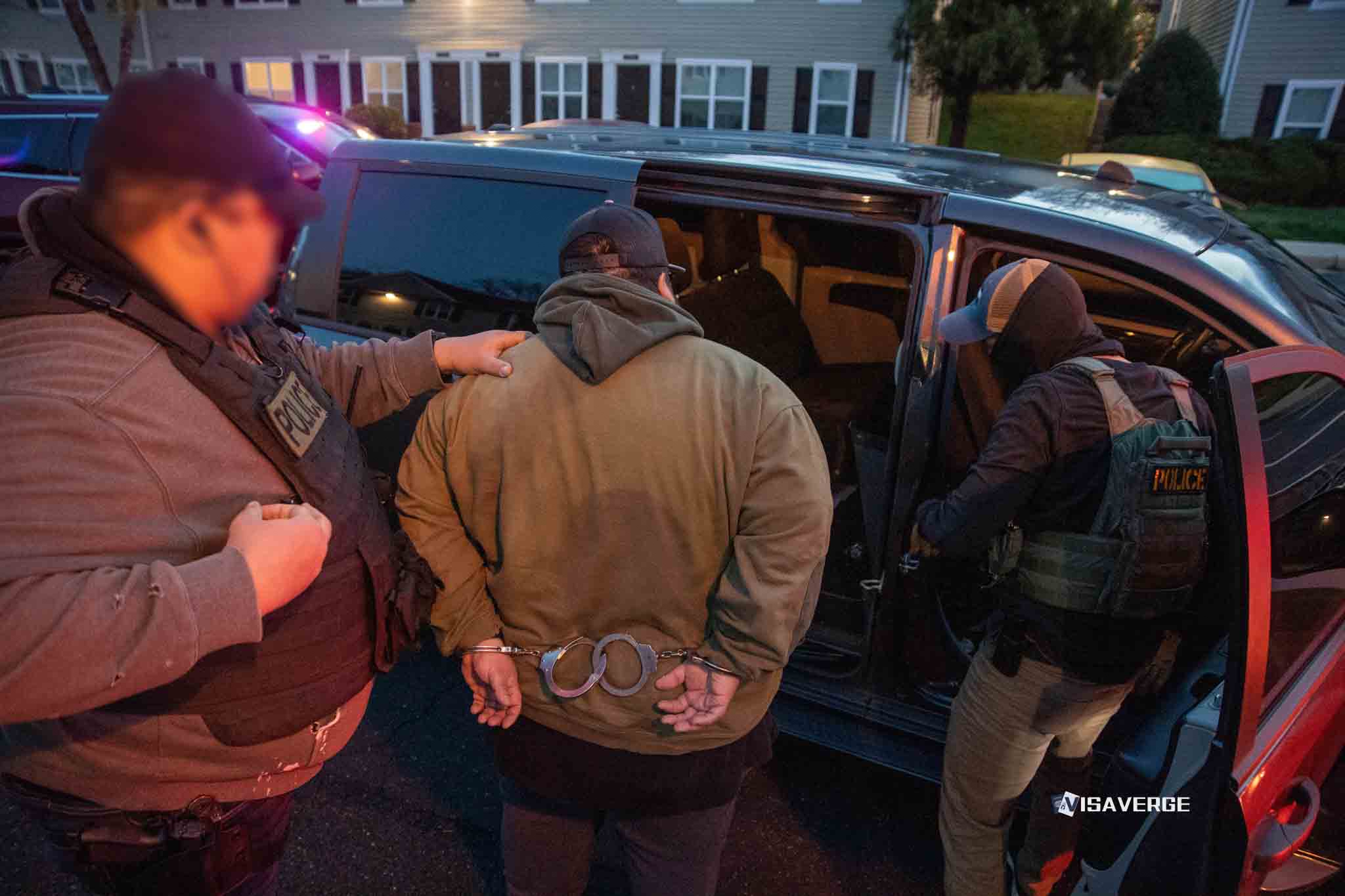
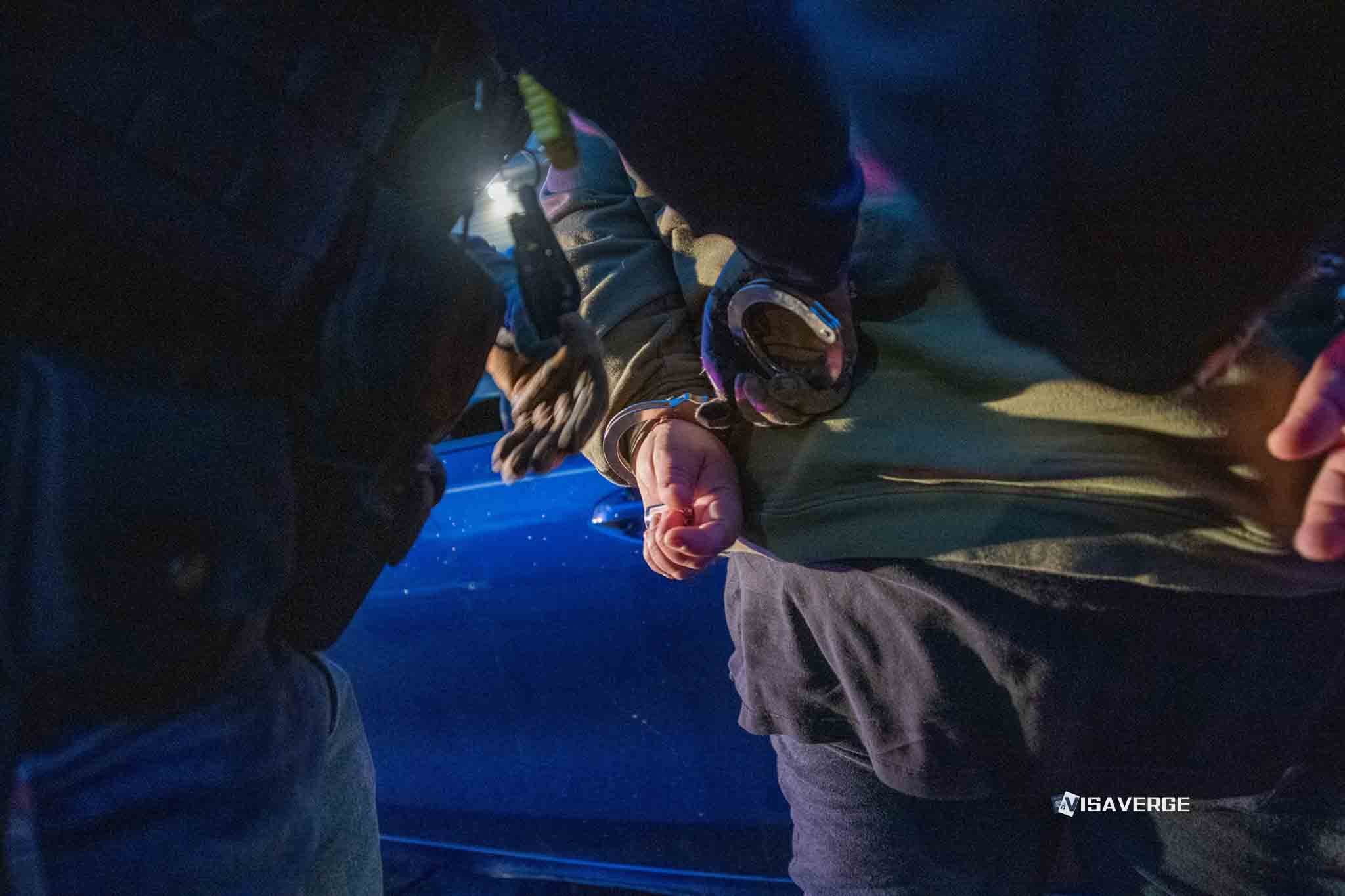
- Crowding at the LA Federal Building leads to default deportation orders for respondents stuck in security lines.
- Missing a hearing triggers an in absentia removal order with a ten-year bar on legal relief.
- Respondents have one hundred eighty days to file a motion to reopen based on exceptional circumstances.
(LOS ANGELES, CALIFORNIA) — The Los Angeles Federal Building has become a daily bottleneck for immigration court proceedings, with respondents lining up for hours outside the facility on North Los Angeles Street. Crowding at security checkpoints has led to delayed entry, missed roll calls, and default deportation orders issued against people who arrived late through no fault of their own.
Immigration courts in Los Angeles carry some of the heaviest dockets in the country. “Mega master” calendar hearings, which can group 60 to 100 cases in a single setting, intensify the risk that respondents lose their chance to be heard. When a respondent fails to clear roll call, the judge may issue an in absentia removal order under INA § 240(b)(5).
An in absentia removal order means the person is ordered deported without ever presenting a defense. A respondent trapped in a security line outside the Los Angeles Federal Building faces the same legal consequence as someone who simply chose not to appear.
Mega master calendar hearings serve as initial scheduling appearances where judges address large groups simultaneously. The judge explains rights, sets filing deadlines, and schedules individual hearings. Roll call is typically taken at the start of the session. Respondents who arrive after their name is called may be marked as absent.
Attorneys and community organizations describe respondents arriving hours early, only to find themselves at the back of a line wrapping around the block. Some have been turned away after their hearing time passed. Others entered the building but could not reach their courtroom before the judge completed roll call and issued default deportation orders.
The Executive Office for Immigration Review (EOIR), which administers the nation’s immigration courts, has not publicly addressed the specific crowding issues at the Los Angeles Federal Building. Attorneys practicing there report that judges vary in their willingness to accommodate respondents who arrive late due to building delays.
The consequences of a missed hearing extend well beyond the courtroom. An in absentia order triggers a 10-year bar on most forms of relief under INA § 240(b)(7). The order also renders the person immediately removable by U.S. Immigration and Customs Enforcement.
Legal Standards for In Absentia Removal Orders
The legal framework for in absentia orders appears in INA § 240(b)(5)(A). That provision authorizes an immigration judge to order removal in absentia if the government establishes by clear and convincing evidence that the respondent received proper written notice and is removable.
Proper notice under INA § 239(a) requires that the Notice to Appear specify the time and place of proceedings. The Supreme Court held in Pereira v. Sessions, 138 S. Ct. 2105 (2018), that an NTA lacking the hearing date and location is deficient. An in absentia order predicated on such a notice may be vulnerable to challenge.
INA § 240(b)(5)(C) provides an exception for “exceptional circumstances.” The statute defines this term in INA § 240(e)(1) as conditions “beyond the control of the alien,” citing serious illness or death of a close family member as examples. The phrase “such as” signals that the list is illustrative, not exhaustive.
Whether being trapped in a security line at the Federal Building qualifies as a circumstance beyond the respondent’s control remains an open question. Immigration judges have discretion to evaluate these claims case by case. Success depends on the specific facts, the evidence presented, and the individual judge’s approach.
Steps After Missing an Immigration Court Hearing
A respondent who receives an in absentia order has one primary remedy: a motion to reopen under INA § 240(b)(5)(C)(ii) and 8 C.F.R. § 1003.23(b)(4). The motion asks the immigration judge to rescind the removal order and restore the case to the calendar.
To prevail, the respondent must demonstrate either that they did not receive proper notice or that their failure to appear resulted from exceptional circumstances. The burden of proof rests entirely on the respondent. A bare assertion that the building was crowded will not suffice.
Effective evidence may include a signed statement from the respondent describing the circumstances, photographs of the line and building entrance, and witness statements from others who experienced similar delays. Timestamped records showing arrival time also support the motion. Documentation of any communication with court staff or security personnel strengthens the claim.
The motion must satisfy the requirements of 8 C.F.R. § 1003.23(b)(1), which governs form and content. It must state the new facts to be established and be supported by affidavits or other evidentiary material. A motion that merely repeats prior arguments will be denied.
In limited circumstances, the immigration judge may reopen proceedings sua sponte under 8 C.F.R. § 1003.23(b)(1). This authority allows a judge to reopen a case on their own motion. Sua sponte reopening is discretionary and typically reserved for situations involving fundamental fairness.
If the immigration judge denies the motion, the respondent may appeal to the Board of Immigration Appeals under 8 C.F.R. § 1003.38. The appeal must be filed within 30 days of the judge’s decision. The BIA reviews the denial for abuse of discretion.
If the BIA also denies the motion, the respondent may petition the U.S. Court of Appeals for the Ninth Circuit, which has jurisdiction over California cases. The petition must be filed within 30 days of the BIA’s final order under INA § 242(b)(1).
Respondents appearing at the Los Angeles Federal Building should arrive at least two hours before their scheduled hearing time. Keeping a record of arrival, including photographs of line conditions, can provide critical evidence if a hearing is missed.
Respondents who have already received an in absentia order should consult a qualified immigration attorney without delay. Filing deadlines leave little room for hesitation. Every case turns on its specific facts, and only an attorney can evaluate the strength of a particular claim.
⚖️ Legal Disclaimer: This article provides general information about immigration law and is not legal advice. Consult a qualified immigration attorney for advice about your specific situation.