- Noncitizens generally retain the right to a hearing before an immigration judge under the Fifth Amendment.
- Aggressive enforcement relies on voluntary departure waivers which can eliminate a person’s chance to seek asylum.
- Immigrants have the right to seek counsel, though the government does not provide free attorneys in court.
- Specific language like I fear returning must be used clearly to trigger mandatory asylum screening procedures.
(UNITED STATES) — People in the United States, including many undocumented immigrants, generally have the right to a hearing before an immigration judge before removal, the right to seek asylum if they fear persecution, and the right to be represented by counsel at no government expense. Those protections come from the Immigration and Nationality Act, federal regulations, and the Fifth Amendment’s due process clause, and they matter sharply as the administration’s mass deportations agenda faces court challenges and investigative scrutiny.
The legal framework is not identical for every person. U.S. citizens cannot be deported. Lawful permanent residents, visa holders, asylum seekers, and undocumented immigrants may all have due process protections, but the procedure depends on where they are arrested, whether they have prior removal orders, and whether the government places them in full removal proceedings, expedited removal, or reinstatement proceedings. INA § 240 governs removal hearings before an immigration judge. INA § 235 covers inspection and expedited removal. INA § 208 and 8 C.F.R. § 208.30 protect the right to raise a fear of return and receive screening for asylum-related claims.

Those rights have become harder to exercise in a climate defined by aggressive enforcement. Prosecutors and oversight bodies are examining the effects of mass deportations, family separations, and rapid removals. As of June 8, 2026, no official DHS or USCIS report confirms a single investigation involving exactly 13, 000 adults and 19, 000 children. Those figures are closely associated with international investigations into Russian deportations of Ukrainian children, not a confirmed single DHS case file in the United States. In domestic reporting, the numbers tied to U.S. enforcement differ and come from several investigations, court filings, agency actions, and press reports.
DHS has defended its operations in blunt terms. DHS spokesperson Lauren Bis said on June 4, 2026 that the department complies with court orders, while accusing nongovernmental organizations and judges of interfering with enforcement. DHS Secretary Markwayne Mullin said on June 5, 2026 that enforcing immigration law is “not optional” and threatened consequences for jurisdictions that do not cooperate with ICE. USCIS also narrowed one form of humanitarian relief in Policy Alert PA-2026-01, issued May 8, 2026, describing deferred action as an extraordinary use of prosecutorial discretion rather than a broad tool for large groups.
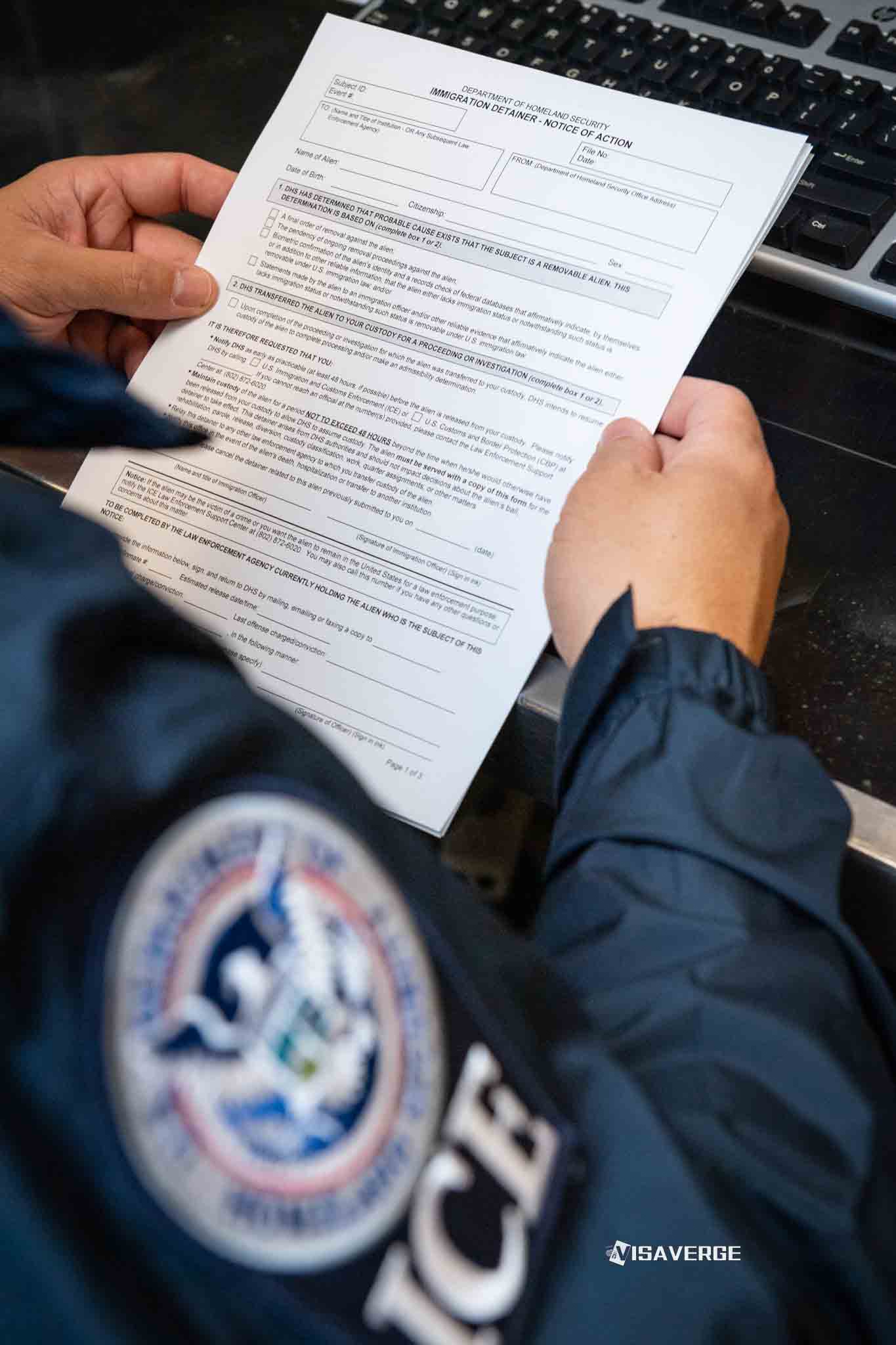
That policy backdrop matters because many people lose rights not on paper, but in the first hours after arrest. The most common waiver is a signature on a “voluntary departure,” stipulated removal, or other document the person does not fully understand. In some facilities, including those named in recent reporting such as Adelanto Processing Center and North Lake, detainees have alleged pressure to sign forms quickly. A signed form can waive a hearing, waive asylum screening, or shorten the time available to contact a lawyer. The Fifth Amendment applies in removal proceedings, although those proceedings are civil rather than criminal, and due process still requires notice and a meaningful opportunity to be heard. See Reno v. Flores, 507 U.S. 292 (1993); Mathews v. Diaz, 426 U.S. 67 (1976).
| India | China | ROW | |
|---|---|---|---|
| EB-1 | Feb 01, 2023 | Aug 01, 2023 ▲31d | Current |
| EB-2 | Nov 01, 2013 | Oct 01, 2021 | Apr 01, 2025 ▲90d |
| EB-3 | Jan 22, 2014 ▲21d | Jan 22, 2022 ▲14d | Jun 15, 2024 ▲31d |
| F-1 | Jan 22, 2021 ▲366d | Jan 22, 2021 ▲366d | Jan 22, 2021 ▲366d |
| F-2A | Oct 22, 2026 ▲30d | Oct 22, 2026 ▲30d | Oct 22, 2026 ▲30d |
The right to counsel in immigration court is real, but limited. INA § 292 and 8 C.F.R. § 1240.10(a)(1) provide that a respondent may be represented by counsel of choice at no expense to the government. That applies to lawful permanent residents, visa overstays, many undocumented immigrants, and others placed in removal proceedings. Children also may have counsel, but there is still no general government-funded right to appointed counsel in immigration court. In practice, representation can change the course of a case, especially where asylum, cancellation of removal, U visas, Special Immigrant Juvenile Status, or motions to reopen are possible.
The right to seek asylum or related protection also extends beyond one category of immigrant. A person who expresses fear of return, fear of torture, or fear of persecution should generally be referred for a credible fear or reasonable fear screening, depending on the procedural posture. INA § 208, INA § 241(b)(3), and protection under the Convention Against Torture remain available in many cases even after an arrest. An officer or agent does not decide the asylum claim at the roadside or in a holding cell. The person must clearly state fear of return and ask for asylum screening. Silence can be treated as the absence of a claim.
Recent enforcement patterns have raised distinct concerns for families. A June 2026 Associated Press investigation reported that nearly 15,000 children under age four were ordered deported in the first six months of the administration. Other reporting described dozens of children re-separated from parents after earlier reunifications. The government has also faced criticism over detention length, with an average stay for children in government facilities reported at 182 days, up from 37 days in late 2024. Parents of at least 11,000 U.S. citizen children have appeared in deportation data, underscoring that enforcement often reaches families without criminal records.
Warning: Do not sign any document you do not understand. Ask for an interpreter. Ask what the form does. Ask whether it gives up a hearing, asylum screening, appeal rights, or the chance to speak with a lawyer.
A person arrested by ICE or held for transfer should use plain, direct language. Say: “I want to speak with a lawyer.” Say: “I do not consent to sign anything until I understand it.” Say: “I am afraid to return to my country.” If the person has a prior order, prior deportation, or an old missed court date, that history may change the procedure, but it does not eliminate the need to state fear clearly. If a child is involved, family members should gather birth certificates, school records, medical records, and any custody papers immediately.
People often ask who has these rights at home, at work, and at the border. Inside the United States, many noncitizens have the right to remain silent when questioned by ICE and do not have to open the door without a judicial warrant signed by a judge. An administrative immigration warrant, such as Form I-200 or Form I-205, does not authorize agents to enter a home without consent. At a port of entry, the rules are narrower. Arriving noncitizens seeking admission may be inspected and searched under broader authority, and expedited removal may apply, but even there, a person who fears return may request protection screening under INA § 235.
There are exceptions and jurisdictional differences. Some long-term residents may be placed in full removal proceedings and can seek relief before an immigration judge. Others with reinstated orders may only receive a reasonable fear interview before an asylum officer and then limited review by an immigration judge. Circuit case law also affects detention and bond issues. Bond hearings, custody redetermination, and prolonged detention claims can differ across jurisdictions. A qualified immigration attorney needs the Notice to Appear, custody paperwork, and any prior orders to assess the exact path of the case.
Official policy changes have also created confusion for people who believed they were following government instructions. More than 900,000 immigrants reportedly lost legal footing after status or appointment pathways tied to the CBP One process were revoked or disrupted. Some had entered or checked in through government channels and later faced arrest after those channels changed. USCIS Policy Alert PA-2026-01 made deferred action harder to obtain by limiting it to unusual cases. Deferred action is not a legal status, but it has often been used to postpone removal in compelling circumstances. A narrower policy means fewer people may receive that temporary protection.
Warning: Missing an immigration court date can trigger an in absentia removal order under INA § 240(b)(5). Address changes must be reported promptly to the immigration court and, where required, to DHS.
The legal record around coercion and access to process remains contested. The administration says removals restore order and comply with court directives. Critics point to reports that more than 28,000 officers were diverted from agencies including the FBI, DEA, and ATF to support immigration enforcement, and to a House Judiciary Committee Democrats report titled Acquittal by Removal, which alleges that removals have disrupted criminal prosecutions by deporting victims and witnesses. If those allegations are proven in individual cases, they may support motions, suppression arguments, continuance requests, or requests for prosecutorial discretion, though outcomes remain fact-specific.
If rights are violated, speed matters. A detained person or family member should get the A-number, the detention location, and copies or photographs of every document. Check the Executive Office for Immigration Review automated case system and the ICE detainee locator. If the person was pressured to sign a form, note the time, language used, whether an interpreter was present, whether medication or illness was involved, and the names on badges if possible. Attorneys may use that record to seek reopening, rescission of an in absentia order, parole, habeas review, or emergency federal court relief, depending on the posture of the case.
People facing fear-based claims should preserve evidence early. Keep police reports, medical records, affidavits, country condition reports, threatening messages, photographs, and proof of family ties. Parents should also keep school enrollment records and medical documents for children. If a person has any criminal history, even an old conviction, immigration counsel should review the exact statute and disposition before any plea, admission, or waiver. Immigration consequences often turn on the record of conviction and can differ by circuit.
The federal government’s own publications remain the best starting point for current policy text. DHS posts enforcement statements in its newsroom, including the “Making America Safe Again” updates. USCIS posts policy alerts and manual changes, including PA-2026-01 on deferred action. The Federal Register contains the “Finding of Mass Influx of Aliens,” cited at 90 FR 45396, which has been in effect since January 23, 2025 and was extended through March 2026 and beyond. That finding invokes authority under 8 U.S.C. § 1103(a) to expand the use of state and local resources in immigration enforcement.
Official government references: DHS Newsroom, [USCIS Policy Manual](https://www.uscis.gov/policy-manual), Federal Register, [EOIR](https://www.justice.gov/eoir).
Low-cost and nonprofit legal help is often the difference between a rushed removal and a full review of available relief. National referral options include [AILA Lawyer Referral](https://www.aila.org/find-a-lawyer) and the Immigration Advocates Network legal directory. People in detention should ask facility staff for the legal orientation schedule and the current list of free legal service providers. Family members outside detention can contact local legal aid groups, accredited representatives recognized by the Department of Justice, and state bar immigration panels.
⚖️ Legal Disclaimer: This article provides general information about immigration law and is not legal advice. Immigration cases are highly fact-specific, and laws vary by jurisdiction. Consult a qualified immigration attorney for advice about your specific situation.