- The Justice Department sued Colorado on July 23 to block in-state tuition and aid for undocumented students.
- Federal prosecutors argue the policy violates a 1996 law by favoring noncitizens over out-of-state American citizens.
- This case marks the fourteenth lawsuit filed by the DOJ against state-level tuition equity programs in 2026.
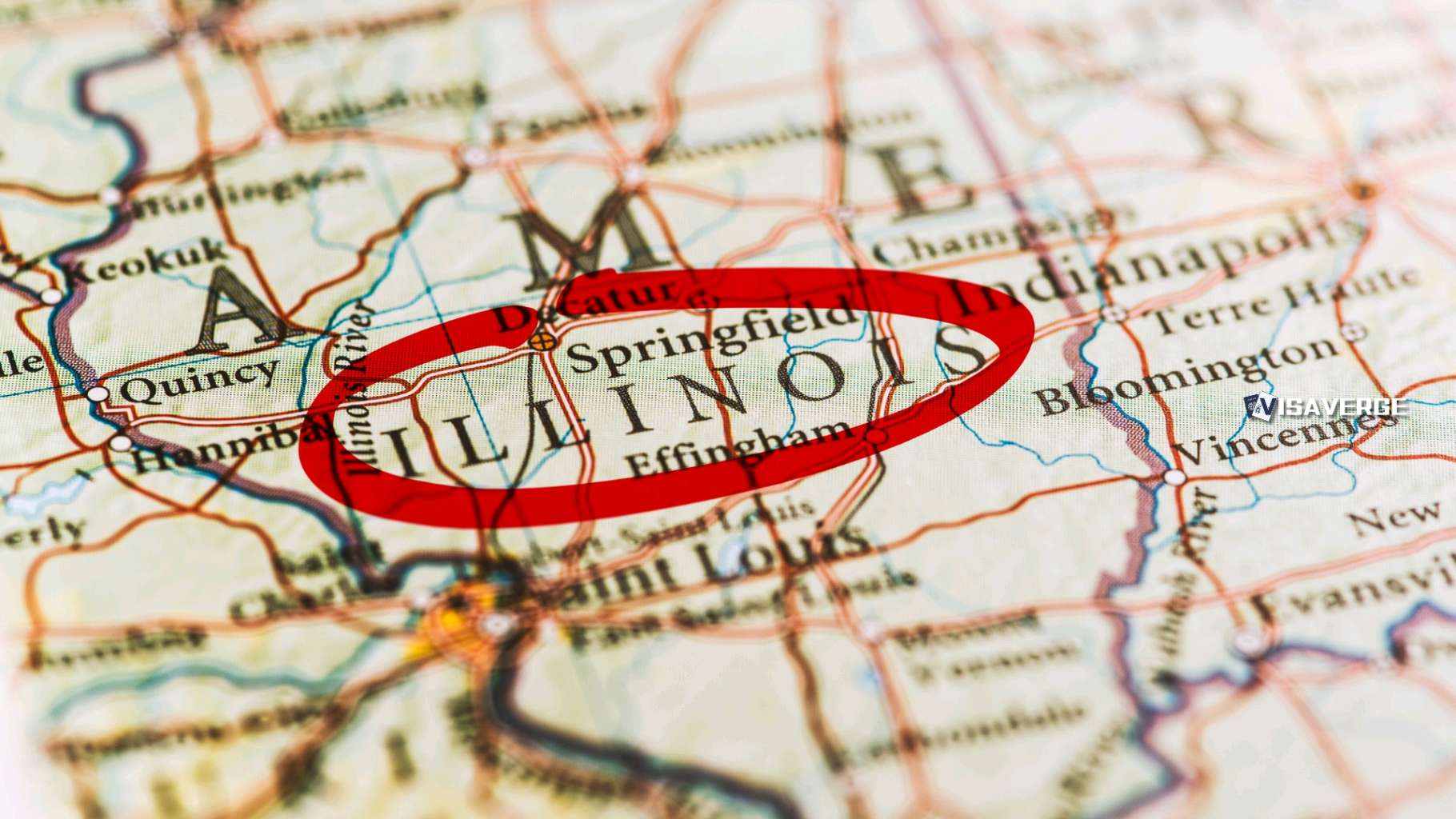
The Justice Department sued Colorado on July 23, 2026, challenging the state’s in-state tuition and financial aid for undocumented students and asking a federal court to block the policy.
The complaint targets Colorado’s ASSET Act, passed in 2013, which allows certain undocumented students who live in the state to pay in-state tuition and receive state-funded financial aid. The case, United States of America v. State of Colorado et al., carries Case No. 1:26-cv-03329.

The DOJ filed the lawsuit in the U.S. District Court for the District of Colorado. It named the State of Colorado, the Colorado Commission on Higher Education, the Colorado Department of Higher Education and JB Holston, the department’s executive director, as defendants.
The federal government argues that Colorado gives undocumented students a residency-based education benefit without offering the same benefit to every U.S. citizen, regardless of where that citizen lives. The complaint relies on 8 U.S.C. § 1623(a), a 1996 law addressing state postsecondary education benefits.
The complaint describes the policy in unusually forceful terms.
“These statutes constitute blatant unequal treatment favoring illegal aliens over U.S. citizens,”
It adds:
“Worse, such preferential treatment is squarely prohibited and preempted by Congress.”
Stanley E. Woodward, Jr., the DOJ’s associate attorney general, said the federal government considers the tuition benefit unlawful and costly to taxpayers.
“For three decades Congress has made clear that states cannot provide education benefits to illegal aliens unless those same benefits are available to all American citizens. By granting illegal aliens in-state tuition, Colorado is not only violating federal law but subsidizing education for illegal aliens at taxpayers’ expense.”
Brett A. Shumate, assistant attorney general for the Civil Division, said the department would oppose policies that place American students at a disadvantage.
“This Department of Justice will not tolerate American students being treated like second-class citizens in their own country.”
Colorado’s high school attendance rules are central to the dispute
Colorado expanded the program in 2022 through HB 22-1155. The measure reduced the required period of high school attendance from three years to one year.
The DOJ argues that the expansion creates “incentives for illegal immigration.” Colorado’s legal position takes a different route. Attorney General Phil Weiser has previously said the program rests on high school attendance, rather than a simple residency requirement, and is on “firm legal ground.”
That distinction will put the eligibility rules at the center of the case. The federal statute addresses benefits granted on the basis of residency, while Colorado’s program uses educational history as part of its qualification standard.
The lawsuit also reaches beyond tuition. It seeks to block the Colorado Application for State Financial Aid, known as CASFA, which lets qualifying undocumented students seek state-funded scholarships and grants.
The financial stakes can be large. An eligible undocumented student at an institution such as Colorado State University pays approximately $5,258 per semester at the in-state rate. Out-of-state tuition is typically three times higher.
| Benefit or rule | Colorado policy detail |
|---|---|
| Original law | Passed in 2013 |
| 2022 expansion | High school attendance requirement reduced from three years to one year |
| Tuition example | Approximately $5,258 per semester at Colorado State University |
| Financial aid route | Colorado Application for State Financial Aid, or CASFA |
| National reach | Colorado is one of 23 states offering similar benefits |
A federal victory could require qualifying students to pay nonresident rates and could cut off their access to state financial aid. Advocates warn that thousands of undocumented students and “DREAMers” could be pushed out of higher education.
Colorado’s tuition policy is part of a 14-case federal campaign
The Colorado filing is the 14th lawsuit in the DOJ’s campaign against state tuition-equity policies. The department sued Maryland on July 17, 2026, and filed cases involving Massachusetts and Rhode Island on July 1, 2026.
The Maryland policy provides approximately $9 million in annual tuition “subsidies,” according to the federal estimate cited in that litigation. The cases follow two executive orders President Trump signed in early 2025.
Executive Order 14218 is titled “Ending Taxpayer Subsidization of Open Borders.” Executive Order 14287, “Protecting American Communities From Criminal Aliens,” directs the attorney general to stop state laws that favor noncitizens over out-of-state U.S. citizens.
The department has already secured favorable orders in Texas, Kentucky, Oklahoma and Nebraska. Courts in those states declared analogous laws unconstitutional and issued permanent injunctions.
Those rulings give the DOJ prior court victories as it seeks relief in Colorado. The Colorado case will test whether the state’s attendance-based eligibility rules can withstand the federal government’s reading of the residency restriction.
Hickenlooper says the students built their lives in Colorado
U.S. Senator John Hickenlooper, the former Colorado governor who signed the law in 2013, defended the students affected by the complaint.
“Instead of actually working to fix our broken immigration system, the Trump administration is trying to reignite yesterday’s culture wars. These young people, many of whom have never had a home other than Colorado, want an education so they can build their lives.”
The case places the state’s higher-education officials directly before the federal court. Holston is named alongside the state and the two higher-education bodies.
The federal court will now consider the DOJ’s request to block the tuition and financial-aid provisions. The complaint was filed on July 23, 2026, the same day the department announced the Colorado challenge.