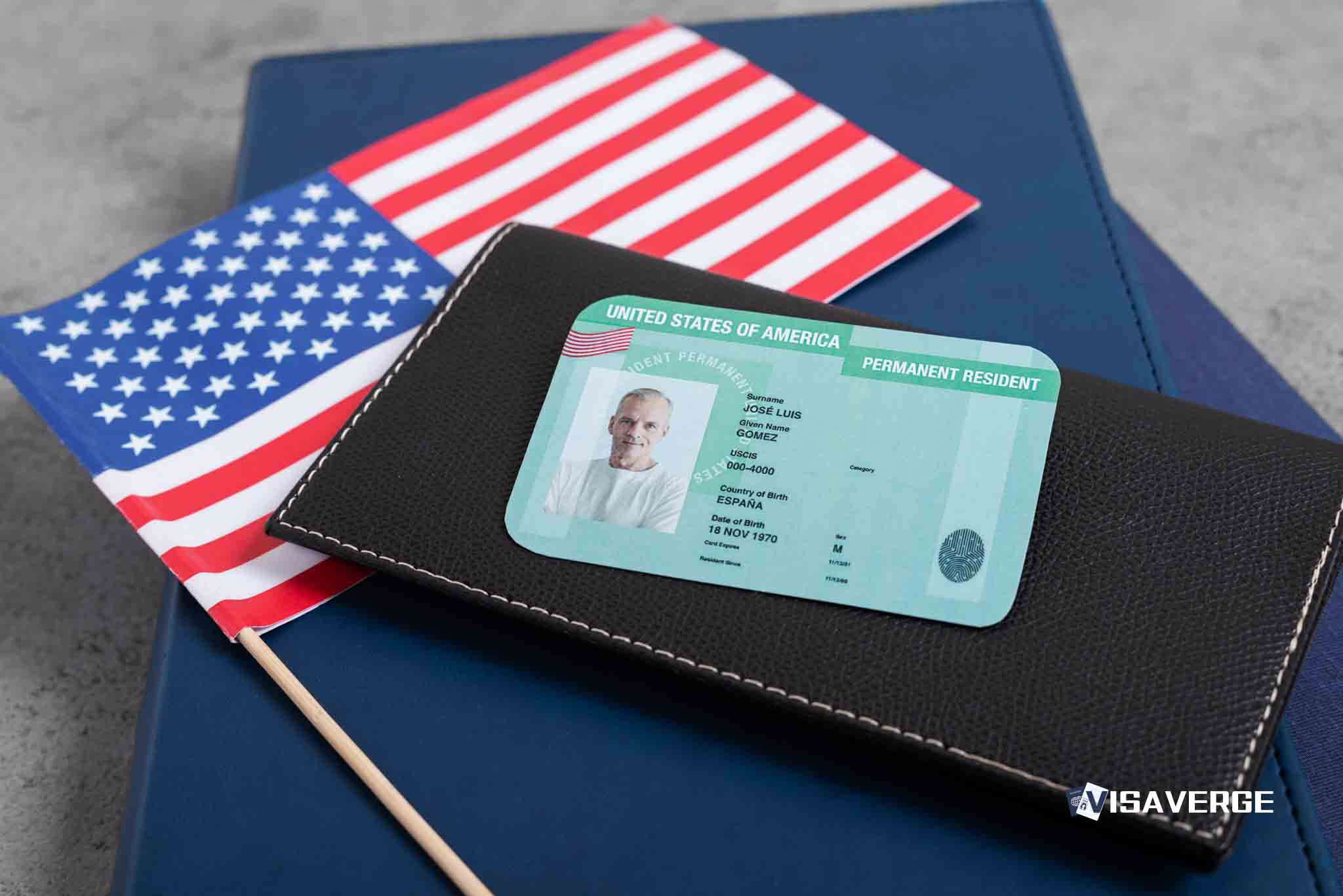
- The Department of Homeland Security restored broader public charge standards for green card applications starting September 2026.
- Immigration officers will now evaluate non-cash benefits including Medicaid, SNAP, and housing vouchers during the residency assessment.
- New policies redefine adjustment of status as extraordinary discretionary relief, prioritizing consular processing in home countries.
U.S. immigration officers will gain broader authority to deny green card applications under a restored Public Charge Ground of Inadmissibility standard, as the Department of Homeland Security moves away from the narrower 2022 framework. The new rule takes effect September 18, 2026.
DHS finalized the rule on July 16, 2026. The Federal Register published it on July 20, 2026. USCIS spokesperson Zach Kahler said the administration was returning to a broader assessment of whether an applicant could become dependent on public benefits.

"The Trump administration is upholding the rule of law and protecting American taxpayers from subsidizing aliens who may become dependent on public benefits. USCIS is committed to safeguarding the safety, security, and financial well-being of Americans."
Kahler made the statement on July 16. The rule removes the limited 2022 definition and directs officers to consider the totality of an applicant’s circumstances.
The review can include non-cash benefits. Medicaid, SNAP (Food Stamps), and housing vouchers may enter the officer’s assessment of a green card application.
The agency can also weigh age, health, family status, assets, education and skills when evaluating possible future reliance on government assistance. The assessment is individualized rather than tied to a single bright-line test.
The new rule broadens both benefits review and personal scrutiny
Applicants filing Form I-485 after the effective date will need to use a new edition. The rule requires that edition for applications postmarked on or after September 18, 2026.
The change raises the importance of evidence addressing both potential negative factors and positive ones. Applicants are encouraged to document private health insurance, high-level education and specialized job skills, which may help counter discretionary concerns.
The policy also creates less predictable outcomes. Two applicants with identical financial profiles could receive different decisions if officers exercise discretion differently.
Advocacy groups warn that some immigrant families may avoid health and nutrition programs they are legally entitled to use. They say fear of harming a future residency application could discourage enrollment.
A separate USCIS policy memorandum issued May 21, 2026, changes how officers are instructed to view adjustment of status from inside the United States. Memo PM-602-0199 describes that process as an "extraordinary form of relief" rather than a standard procedure.
Adjustment of status becomes a discretionary exception
The memorandum says consular processing abroad should be the default route. Adjustment from within the United States should be granted only in "meritorious cases."
Meeting statutory requirements will not guarantee approval under the memo. An officer may still deny an application based on negative discretionary factors.
Kahler addressed the issue in an earlier statement on May 22, 2026:
"We're returning to the original intent of the law to ensure aliens navigate our nation's immigration system properly. From now on, an alien who is in the U.S. temporarily and wants a Green Card must return to their home country to apply, except in extraordinary circumstances."
The statement describes a broad return-home expectation, with extraordinary circumstances as the stated exception. The memorandum separately identifies meritorious cases as the basis for granting adjustment in the United States.
The directives therefore affect more than public-benefits evidence. They also give officers a basis to assess whether an otherwise eligible applicant should receive adjustment inside the country.
A missing signature can now end a case outright
USCIS began applying another change on July 10, 2026. Under the new "One Signature" rule, the agency can deny an application outright when it finds a signature missing or invalid.
Previously, the filing could be rejected and returned. Under the new approach, the case can be treated as fully adjudicated and closed upon denial.
That difference carries practical consequences. Applicants may lose their filing fees and miss critical deadlines after an outright denial.
| Policy change | Date or effective date | Result described in the material |
|---|---|---|
| Public-charge final rule | July 16, 2026; effective September 18, 2026 | Broader review of benefits and personal circumstances |
| Federal Register publication | July 20, 2026 | Final rule published |
| Memo PM-602-0199 | May 21, 2026 | Adjustment of status treated as extraordinary relief |
| "One Signature" rule | Effective July 10, 2026 | Invalid or missing signatures may lead to outright denial |
The changes give officers several separate points at which discretion can affect a case: projected reliance on benefits, personal and financial circumstances, the choice between adjustment and consular processing, and filing formalities.
USCIS updated its Policy Manual on July 13, 2026. The agency’s public-charge announcement identifying the rescission of the 2022 regulation was released July 16, 2026, while the Federal Register notice appeared four days later.
The final rule applies on September 18, 2026. Applications postmarked from that date must use the new Form I-485 edition.
This article provides general information and is not legal advice. Consult a qualified immigration attorney about your specific case.