- Russian court ordered the deportation of American pastor Paul Guione for alleged unlawful missionary activity.
- Authorities used a secret audio recording of a May prayer session as primary evidence for charges.
- Guione is detained until August 27, 2026, the deadline for his final legal appeal in Kamchatka.
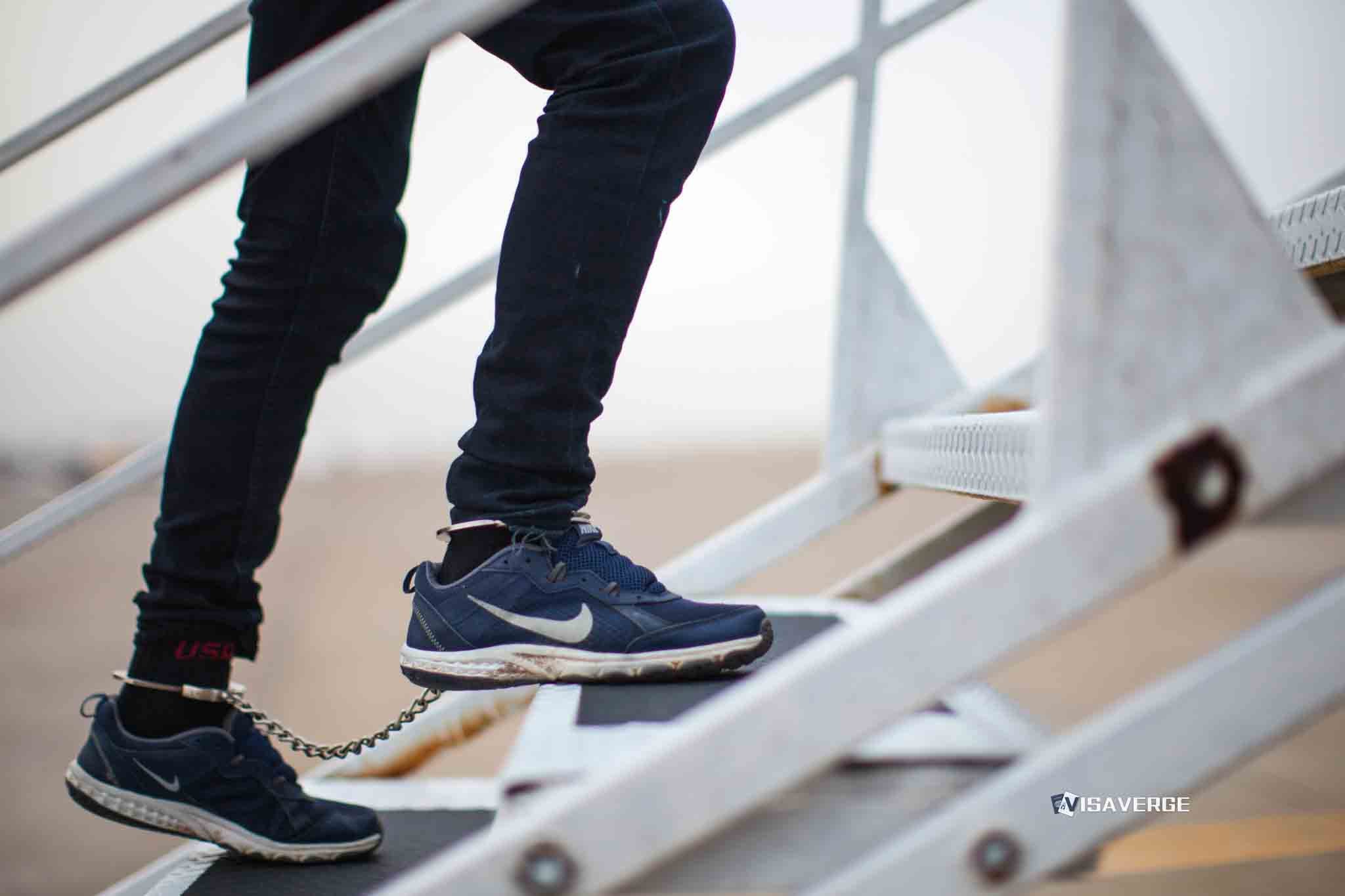
(KAMCHATKA PENINSULA, RUSSIA) — American pastor Paul Guione faces deportation from Russia after a court ruled he engaged in unlawful missionary activity. The Petropavlovsk-Kamchatsky City Court upheld the deportation order on June 18, 2026, imposing a fine of 30,000 rubles (approximately $400).
The case underscores escalating legal risks for foreign religious workers under Russia’s tightening religious regulations. Defense strategies require coordination between Russian appellate counsel, U.S. consular officials, and immigration attorneys. Family-based relief options under U.S. law may provide an alternative path for affected relatives.
Guione has visited the Kamchatka Peninsula nearly 60 times over 30 years. His work centered on charitable missions and assistance to local orphanages. The charges stem from a religious gathering on May 23, 2026 at the Church of the Full Gospel in Petropavlovsk-Kamchatsky.
Free toolUSCIS Receipt Number DecoderRussian authorities charged Guione under regulations governing foreign religious expression. The court’s official statement confirmed that Guione “conducted religious talks, specifically giving a lecture on Jesus Christ.” The statement noted his teachings included “the need to pray, including for the President of the United States.”
Authorities used a secret audio recording made by an unidentified witness during the prayer session as primary evidence. Defense counsel argued Guione had already booked a departing flight for June 4, 2026. The court rejected this argument and ordered him held in a detention center for foreigners until August 27, 2026.
Legal Basis and Defense Strategy
Russia’s religious regulations, strengthened by the Yarovaya Law in 2016, restrict missionary activity by foreign nationals. Foreign religious workers must operate under official authorizations from registered religious organizations. The law requires that all religious activity occur only in officially designated religious buildings. Activity outside these parameters can trigger administrative penalties, fines, and deportation orders.
Defense strategies in Russian deportation cases typically involve multiple approaches. Defendants may appeal to higher courts challenging procedural violations in the recording’s collection or chain of custody. Russian law permits covert recordings as evidence in administrative proceedings, but admissibility challenges remain available. Defense counsel may also argue that the gathering occurred within a registered church building, potentially contradicting the regulatory basis for the charge.
Diplomatic intervention through U.S. consular channels can apply political pressure on Russian authorities. The U.S. Embassy in Moscow maintains limited consular capacity due to ongoing diplomatic restrictions. Humanitarian arguments based on family ties and long-standing community presence may influence detention conditions, though they rarely overturn deportation orders outright.
Evidence and Factors Affecting Defense
The prosecution’s case relied heavily on the secret audio recording. Defense challenges may focus on witness identity, consent, and chain of custody. The identity of the witness who made the recording has not been disclosed by Russian authorities.
Factors that may strengthen the defense include long-standing community ties and family connections. Guione’s 30 years of humanitarian work and five Russian-citizen children are relevant to humanitarian arguments. Evidence of proper registration with local religious organizations could also support an appellate filing. Documentation of prior authorized religious activities may demonstrate a pattern of compliance.
Factors that weaken the defense include the explicit religious content captured in the recording. The court characterized the session as unlawful missionary activity under Russia’s religious regulations. The mention of praying for the U.S. President may have heightened political sensitivity in the current bilateral climate.
U.S. Government Policy and Context
The case occurs amid heightened U.S. attention to religious worker protections. On January 14, 2026, DHS issued an interim final rule supporting religious workers. Secretary Kristi Noem stated that DHS is “committed to protecting and preserving freedom and expression of religion.”
The State Department designates Russia as a Country of Particular Concern for religious freedom violations. This designation, under the International Religious Freedom Act, recognizes “particularly severe violations of religious freedom.” U.S. citizens traveling in Russia face documented risks of arbitrary law enforcement under this designation.
The State Department’s travel advisory warns of “arbitrary enforcement of local laws.” It specifically notes risks of “harassment or wrongful detention by Russian security officials.” These warnings contextualize the legal environment facing foreign religious workers throughout Russia.
Impact on Family and U.S. Immigration Options
Deportation threatens to separate Guione from his family and end three decades of humanitarian work. Guione is a father of eight children, five of whom are Russian citizens. U.S. immigration law provides potential pathways for family members seeking to relocate to the United States.
U.S. citizens can petition for foreign-born children under INA § 101(b)(1). Children of U.S. citizens may qualify for IR-2 immigrant visas if unmarried and under 21. The process requires filing Form I-130 with USCIS, followed by consular processing at a U.S. embassy or consulate.
Children under 18 living with a U.S. citizen parent may acquire citizenship automatically under INA § 320. A foreign spouse of a U.S. citizen may qualify for an IR-1 immigrant visa. These petitions require demonstrating the bona fide nature of the marital relationship through documentary evidence.
Religious worker visa categories may also apply. The R-1 nonimmigrant visa under INA § 101(a)(15)(R) allows religious workers to enter the United States temporarily. The special immigrant religious worker category under INA § 101(a)(27)(C) offers a path to permanent residency for qualifying individuals.
The DHS interim final rule issued January 14, 2026 may affect processing for religious workers facing persecution abroad. Applicants must demonstrate membership in a religious denomination having a bona fide nonprofit religious organization in the United States. Evidence typically includes proof of religious membership, employment letters, and documentation of the organization’s tax-exempt status.
Disqualifying Factors and Bars to Relief
Several factors may limit defense options in this case. Russia typically imposes re-entry bans following deportation orders, commonly lasting several years. The specific duration depends on the severity of the violation and the court’s final ruling.
U.S. immigration law contains potential bars for Guione’s family members seeking U.S. visas. Russian-citizen relatives must disclose any prior immigration violations on visa applications. Criminal convictions, even for religious activity, can trigger inadmissibility under INA § 212(a)(2). Waivers may be available under INA § 212(h) for certain grounds of inadmissibility.
Realistic Outcome Expectations
Russian appellate courts overturn deportation orders in a limited percentage of cases. Political factors and diplomatic tensions can influence outcomes unpredictably. The detention order provides the legal window for resolution through the appellate process.
If the appeal fails, Guione will be deported and likely barred from re-entering Russia. Family immigration to the United States then becomes the primary alternative. Processing times for family-based petitions typically range from 12 to 24 months, depending on the visa category and consulate backlog.
Diplomatic intervention may influence the timeline but rarely changes the legal outcome. The U.S. Embassy in Moscow operates with reduced staff and limited consular services. Visa processing for Russian nationals has shifted to other embassies in many cases, adding months to processing times.
Attorney Representation Is Critical
Cases involving foreign deportation and family separation require specialized legal expertise across multiple jurisdictions. Russian criminal defense counsel handles local proceedings, evidence challenges, and appellate filings. U.S. immigration attorneys manage family-based petitions, consular processing, and any waiver applications.
International family law attorneys address custody, guardianship, and cross-border family issues. No single attorney can handle all aspects of a case involving Russian religious regulations and U.S. immigration policy. Coordinated representation across multiple practice areas is essential for families facing these circumstances.
Official Government Sources
- USCIS Newsroom: uscis.gov/newsroom provides updates on religious worker policies and form processing.
- DHS Press Releases: dhs.gov/news covers Secretary Noem’s statements on religious liberty initiatives.
- State Department Travel Advisory: travel.state.gov details current warnings for U.S. citizens in Russia.
⚖️ Legal Disclaimer: This article provides general information about immigration law and is not legal advice. Consult a qualified immigration attorney for advice about your specific situation.