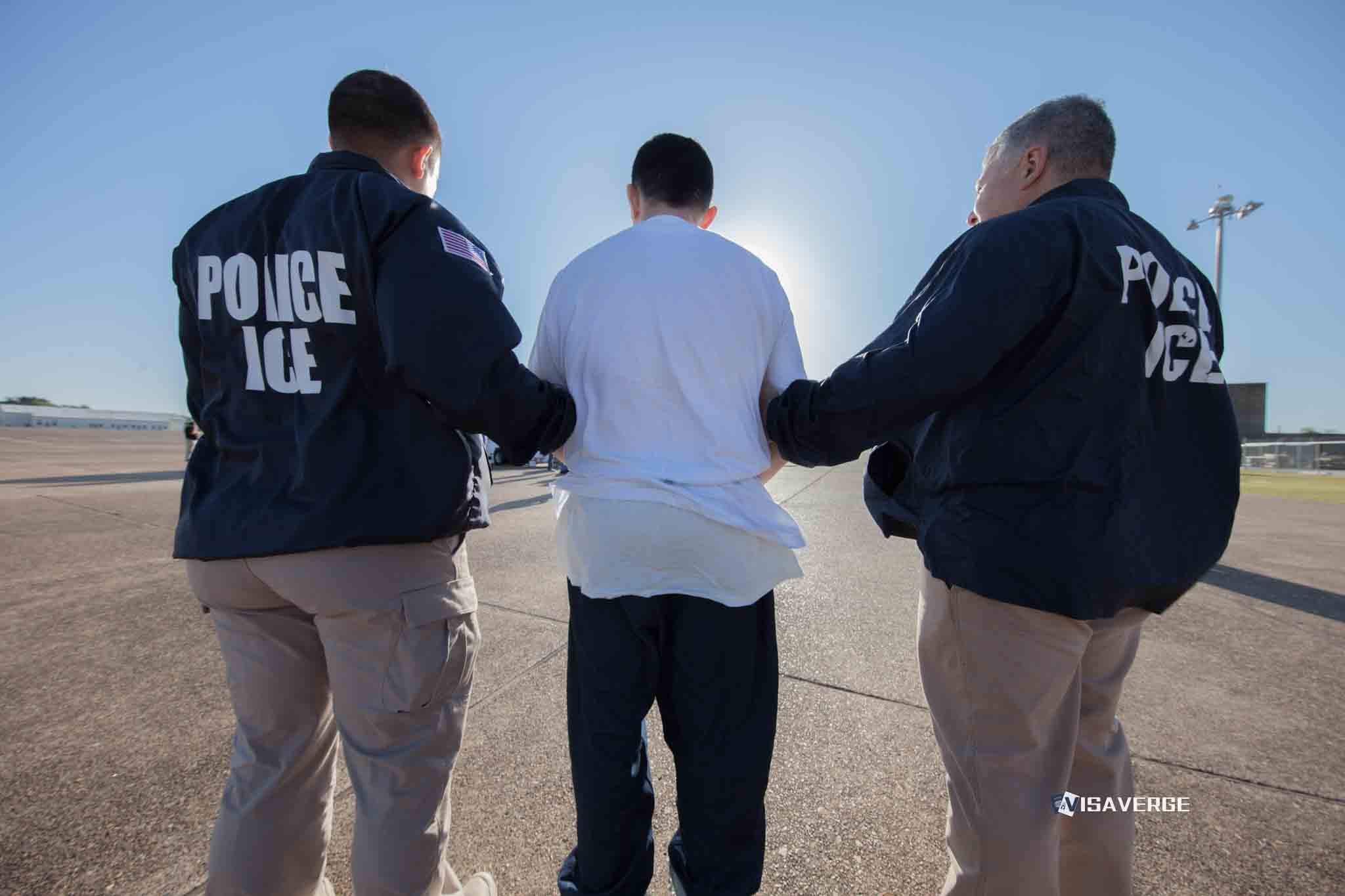
- U.S. officials designated Belarus as high-risk following the deportation of over 3,000 foreign nationals in 2025.
- Applicants must identify the correct legal forum between USCIS and Immigration Court to avoid procedural denials.
- Establishing a factual record with proof of document confiscation is critical for asylum and statelessness claims.
(BELARUS) — The immediate legal question for people expelled from Belarus is not the geopolitics. It is which U.S. immigration process fits the facts, what evidence will be required, and where the case will be heard. That question grew sharper after Belarusian authorities said over 3,000 foreign nationals were deported in 2025, while the United States placed Belarus on a high-risk list that triggered added review of immigration benefits.
The figure came from the Belarusian Ministry of Internal Affairs. On December 20, 2025, Interior Minister Ivan Kubrakou said that, since the start of the year, deportation measures, voluntary or forced, had been applied to three thousand foreign nationals. U.S. officials discussed the expulsions in a wider security context. A State Department briefing on November 24, 2025 described concern about “weaponized migration,” and DHS Assistant Secretary Tricia McLaughlin said on June 23, 2025 that DHS would remove noncitizens to countries willing to accept them.

That official record matters to several groups. It may affect Belarusian nationals applying for U.S. immigration benefits, non-Belarusians expelled through Belarus and later seeking protection here, and people in removal proceedings who argue that return would expose them to persecution, torture, or statelessness. The legal process changes depending on whether the person is abroad, at a port of entry, in expedited removal, or already in Immigration Court.
The U.S. government added another layer on December 16, 2025, when Presidential Proclamation 10998 designated Belarus a high-risk country. A [USCIS memo](https://www.uscis.gov/sites/default/files/document/memos/PM-602-0191.pdf) dated January 1, 2026 ordered hold-and-review procedures for applications involving nationals of listed countries. That does not create an automatic denial. It does mean longer screening, more requests for evidence, and closer review of identity and security records.
The underlying facts are broader than the deportation count. U.S. congressional discussions said attempted illegal crossings from Belarus into the European Union rose from 3 in 2018 to more than 25,000 in 2025. U.S., U.K., and E.U. sanctions announced in June 2026 cited an orchestrated migration crisis. UN experts said on December 8, 2025 that identity documents were being confiscated during expulsions, raising statelessness concerns.
People affected by those events usually enter one of three U.S. legal tracks. They may apply affirmatively with USCIS, seek asylum and related protection defensively before an immigration judge, or request protection against removal to a specific country. The governing provisions include INA § 208 for asylum, INA § 241(b)(3) for withholding of removal, and protection under the Convention Against Torture regulations at 8 C.F.R. §§ 1208.16 to 1208.18.
Warning: A high-risk designation does not replace normal filing rules. Missing a filing deadline, omitting identity records, or giving inconsistent travel dates may still lead to denial or referral to Immigration Court.
1. Identify the correct forum before filing anything. A person physically present in the United States who is not in removal proceedings may file Form I-589 with USCIS for asylum, withholding, and CAT protection. A person already in removal proceedings files the same form with the Immigration Court under EOIR procedures. Someone abroad generally cannot file asylum from outside the United States, though refugee processing or parole may exist in limited circumstances through separate channels.
2. Build the factual record around the removal from Belarus. The core documents usually include a passport, national ID, birth certificate, entry records, visa records, proof of residence in Belarus, and any deportation order, police notice, detention paper, or release document. If identity papers were seized, that fact should be documented with affidavits, consular correspondence, detention records, or credible secondary evidence. In many cases, country conditions reports and NGO findings become central because official records are incomplete.
3. Address timing immediately. Asylum applicants generally must file within one year of the last arrival in the United States under INA § 208(a)(2)(B). Exceptions exist for changed or extraordinary circumstances, but they are fact-specific and often litigated. A recent expulsion from Belarus, confiscation of documents, or a later placement in proceedings may support an exception, but the explanation must be documented and filed promptly.
4. Explain the legal theory with precision. Asylum requires past persecution or a well-founded fear of future persecution on account of race, religion, nationality, political opinion, or membership in a particular social group. Withholding of removal has a higher burden. CAT does not require a protected ground, but it requires proof that torture is more likely than not with government involvement or acquiescence. If the record shows forced exile, detention, or document confiscation, counsel will usually analyze all three forms of protection.
5. Prepare for security and credibility review. USCIS and EOIR will examine identity, travel history, military service, prior immigration filings, social media, and any criminal record. The Travel Advisory for Belarus and the high-risk review memo make careful consistency especially important. Dates that do not match, unexplained stays in third countries, or vague answers about how a person left Belarus often trigger requests for evidence or adverse credibility findings.
Deadline: If Form I-589 is late, the applicant should submit the filing anyway with a written explanation and supporting proof for any one-year filing exception.
6. Anticipate the third-country issue. DHS has stated that it may remove people to countries other than their country of nationality if another country will accept them. That makes country-specific fear evidence essential. If Lithuania, Latvia, or another transit country is part of the travel history, the record should address legal status there, risk of refoulement, detention history, and whether return there would be lawful and safe. Removal law in this area is technical and may vary with the posture of the case.
7. Track the case after filing. USCIS asylum cases may take months or longer, especially where additional vetting applies. Immigration Court cases often take much longer because of docket backlogs. Work authorization timing depends on the type of filing and any applicant-caused delay. If USCIS does not grant asylum and the applicant lacks lawful status, the case is typically referred to Immigration Court rather than denied outright.
Several mistakes recur in cases tied to Belarus. Applicants sometimes describe the expulsion in political terms but omit the documents that show detention, release, or forced departure. Others file only for asylum and do not develop withholding or CAT theories. Some treat confiscated identity documents as a minor detail; in practice, that fact may affect identity proof, credibility, removability, and statelessness claims. Human rights reporting from Amnesty International, Genocide Watch, and the UN OHCHR may help corroborate those points, but individualized evidence still matters most.
Anyone with criminal history, prior removal orders, firm resettlement issues, travel through multiple countries, or alleged ties to security concerns should get legal help early. Those facts may trigger bars to asylum, detention issues, or country-of-removal disputes. The legal standard may also shift by jurisdiction when a Circuit Court has interpreted asylum bars, credibility rules, or CAT evidence differently. Consultation with qualified counsel is especially important where expedited removal, detention, or third-country transfer is involved.
Legal resources: [AILA Lawyer Referral](https://www.aila.org/find-a-lawyer) | Immigration Advocates Network | [EOIR](https://www.justice.gov/eoir) | [USCIS](https://www.uscis.gov)
⚖️ Legal Disclaimer: This article provides general information about immigration law and is not legal advice. Immigration cases are highly fact-specific, and laws vary by jurisdiction. Consult a qualified immigration attorney for advice about your specific situation.