- Eurodac recorded one million one hundred thousand fingerprint datasets in twenty twenty-five, marking an eighteen percent annual decrease.
- The U.S. set a December twenty twenty-six deadline for Visa Waiver countries to share biometric data or risk suspension.
- A June twenty twenty-six update expanded Eurodac to include facial images and biographical data for children from age six.
(EUROPEAN UNION) – The European Union’s Eurodac system logged 1,141,160 fingerprint datasets in 2025, an 18% decrease from 2024, as U.S. and European officials pressed ahead with talks on wider biometric data sharing and tighter immigration vetting.
eu-LISA, the European Union Agency for the Operational Management of Large-Scale IT Systems, published the Eurodac Annual Statistics Report 2025 on June 9, 2026. The figures showed asylum-related fingerprint transmissions remained the largest share of the system, while records tied to illegal stay and irregular border crossings made up the rest.

Asylum applications, listed as Category 1, accounted for 686,054 transmissions, or 60% of the total. Illegal stay cases, listed as Category 3, accounted for 283,879 transmissions, and irregular border crossings, listed as Category 2, accounted for 171,227.
Free toolUSCIS Receipt Number DecoderEven with the annual drop, the cumulative Eurodac archive rose to 7.1 million fingerprint sets by the end of 2025.
The decline in fingerprint transmissions came as the U.S. Department of Homeland Security set a deadline of December 31, 2026, for countries in the Visa Waiver Program to conclude Enhanced Border Security Partnership agreements. Those agreements require participating countries to grant U.S. authorities direct, reciprocal access to national biometric databases.
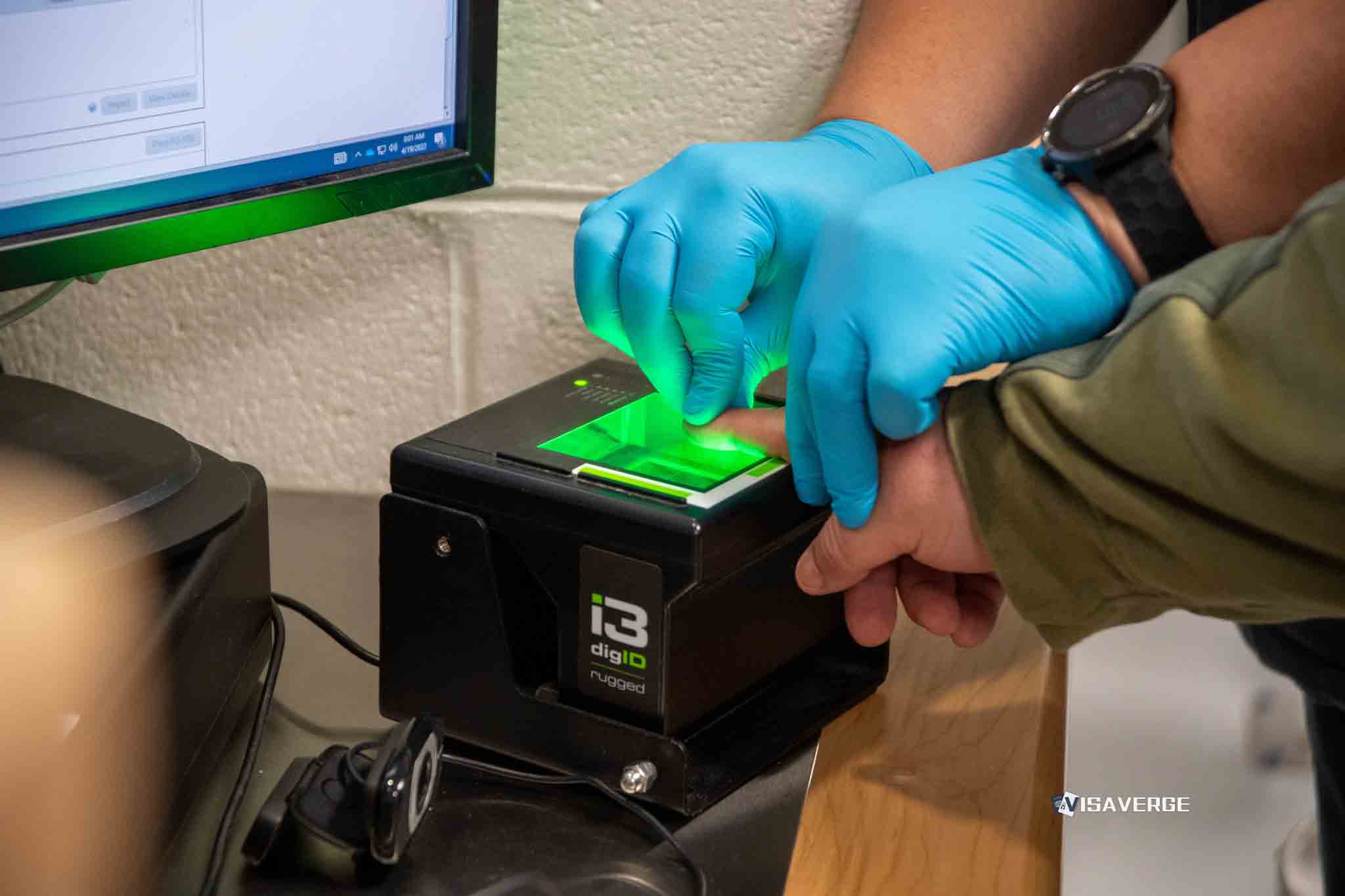
USCIS also introduced a separate change on April 27, 2026, with enhanced security vetting that requires the resubmission of fingerprints for many pending cases in which biometrics were collected before that date. The policy affected adjudications in immigration benefit categories that rely on background checks, including adjustment of status and asylum.
That resubmission rule created delays inside the U.S. system. USCIS said “issuance of approvals is largely paused until the new vetting process is completed” for cases that require those checks.
The U.S. policy shifts and the Eurodac figures emerged on parallel tracks, but both point to the same operational pressure: governments want broader biometric coverage, faster screening and more direct access to records.
Eurodac, long centered on fingerprint transmissions tied to asylum and border enforcement, is now part of a wider debate over how biometric information moves across borders and how quickly authorities can use it.
European governments already feed asylum, border and illegal stay data into Eurodac, which helps member states check whether a person has applied for asylum elsewhere in the bloc or crossed an external border irregularly.
The system’s 2025 totals showed lower annual inflows, but the long-term database kept growing because historic records remained in place and new entries continued to accumulate.
Another change took effect on June 12, 2026, when the Eurodac revamp expanded the database beyond fingerprint transmissions alone. The updated system now includes facial images and biographical data for children as young as six, widening the range of information available for identity checks.
This brings the system closer to the kind of broader biometric coverage U.S. officials have sought in their own vetting arrangements.
Officials on both sides of the Atlantic tied those changes to enforcement and security. In a DHS statement on 2025 enforcement metrics issued on Dec 10, 2025, Secretary Kristi Noem said increased enforcement and deterrence led to more than 2.5 million illegal aliens leaving the United States in 2025.
The deadline attached to the Enhanced Border Security Partnership has raised the stakes for European countries that participate in the U.S. visa-free travel system. Citizens of 24 EU countries currently use ESTA for visa-free travel to the United States, and those countries face the prospect of suspension from that arrangement if they do not comply with U.S. biometric-sharing demands by the end of 2026.
That threat sits alongside the procedural strain already created by the USCIS fingerprint resubmission policy. Cases that were already pending entered another review cycle after April 27, 2026, forcing applicants to provide fresh biometrics before adjudications could move again. In practical terms, the new vetting model added time to already existing backlogs.
European institutions have been weighing the same issues through their own legislative and technical channels. The European Parliament’s work on Enhanced Border Security Partnership negotiations in April 2026 unfolded as the bloc prepared to launch the expanded Eurodac framework and as U.S. officials pressed for reciprocal database access under the Visa Waiver Program.
The underlying numbers from Eurodac remain central to that debate because they show how the system is used in practice. Category 1 asylum entries still dominate the database, at 686,054 transmissions, while illegal stay entries at 283,879 and irregular border crossing entries at 171,227 reflect the law-enforcement side of the platform.
Together, those figures define the operational base on which any future transatlantic data-sharing arrangement would rest.
U.S. agencies have framed their own changes as part of a broader tightening of immigration controls. USCIS detailed the new procedures in its Enhanced Security Vetting and Adjudication Updates published on May 8, 2026, after the agency implemented the resubmission requirement in late April.
On the European side, eu-LISA’s Eurodac Annual Statistics 2025 Report published on June 9, 2026 supplied the clearest snapshot yet of how much data moved through the system last year. The report recorded the 18% decrease in annual transmissions while also showing that the total database kept expanding, a combination that suggests slower annual inflows but a steadily deeper archive.
That expanding archive matters for future screening because a larger stored database increases the amount of material available for cross-checking, even in a year with fewer new records. By the end of 2025, Eurodac held 7.1 million fingerprint sets, and by June 12, 2026 the system had already widened its reach to facial images and data on younger children.
The next pressure point now sits on December 31, 2026, when the U.S. deadline for biometric-sharing agreements with Visa Waiver Program countries expires.