- TSA checkpoint facial scans remain voluntary for all travelers in 2026.
- The CBP biometric exit-entry system requires scans for non-citizens.
- United States citizens may request manual identity verification instead.
The Transportation Security Administration and U.S. Customs and Border Protection are expanding facial recognition across airport checkpoints, international arrivals and departures in 2026. Travelers may see similar cameras, but the rules differ sharply depending on which agency operates the system and why the image is being taken.
At a standard TSA security checkpoint, passengers can request manual identity verification instead of a facial photograph. That option does not automatically carry over to CBP immigration processing.
Free toolUSCIS Receipt Number Decoder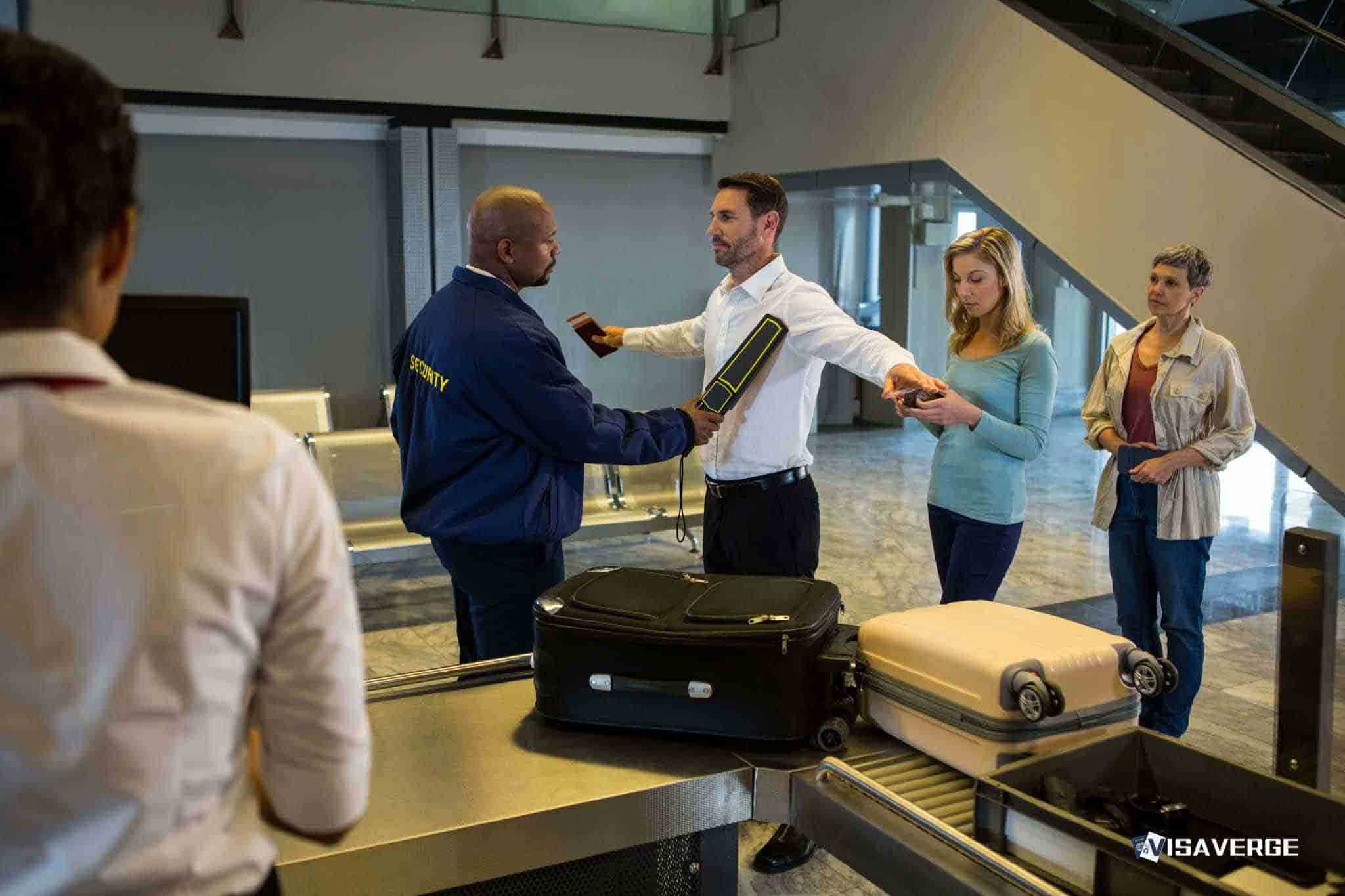
The distinction is especially important for visa holders, permanent residents and other foreign nationals. A new Department of Homeland Security rule effective December 26, 2025, expanded CBP authority to collect facial biometrics from non-U.S. citizens entering and departing the United States.
The airport now presents several separate biometric encounters. They can look alike. Their legal and privacy rules do not.
At many checkpoints, the Transportation Security Administration uses Credential Authentication Technology with a camera, commonly called CAT-2. The device reads a passport, driver’s licence or other acceptable identification, captures a live image and compares it with the photograph on that document.
The process is a one-to-one comparison. It checks whether the traveler appears to be the person shown on the identification document, rather than searching an unrestricted photograph database. It does not replace passenger or baggage screening.
Four airport camera systems follow different rules
| System | Main purpose | What the camera compares | Declining or alternative processing |
|---|---|---|---|
| TSA checkpoint CAT-2 | Identity verification before security screening | Live image and the photograph on the presented identification | Passenger may request manual verification |
| TSA PreCheck Touchless ID | Expedited identity verification in designated lanes | Live image linked to an eligible traveler’s identity record | Voluntary, advance opt-in required |
| CBP Traveler Verification Service | International entry, departure and immigration inspection | Live image and government-held images, including passport, visa or prior immigration photographs | U.S. citizens may request alternatives; non-U.S. citizens may be required to provide biometrics |
| Airline or airport biometric boarding | Identity confirmation before boarding | May use the CBP system or a separate airline arrangement | Depends on the program and the traveler’s status |
The ordinary checkpoint photograph is voluntary. A passenger who declines can tell the TSA officer and request a manual comparison of the person and the identification document.
TSA says the traveler should make that request before stepping in front of the camera or inserting the document. A simple request works: “I would like to opt out of the facial photograph and use manual ID verification, please.”
Declining should not cost the passenger a place in line or trigger a penalty, according to the agency. The traveler must still present acceptable identification and complete every other required security procedure.
TSA says images captured during ordinary CAT-2 verification are deleted after the immediate identity check. That statement applies to standard checkpoint operations, not every digital-identity demonstration or biometric travel program.
Touchless lanes require advance enrollment
TSA PreCheck Touchless ID lets eligible travelers enter designated identity-verification lanes by looking at a camera instead of routinely presenting a physical identification document or boarding pass. The service is voluntary.
TSA reported in 2026 that the program was available at 65 airports. Access can still depend on the terminal, participating airline, individual flight and the lane operating that day.
A traveler generally needs all of the following:
- Active TSA PreCheck eligibility.
- A Known Traveler Number attached to the reservation.
- A valid passport or qualifying identity record.
- An account with a participating airline or supported provider.
- A participating flight and airport.
- An affirmative opt-in.
Travelers should carry a physical passport or other acceptable identification anyway. A technical failure, itinerary change or unavailable lane can send the passenger back to ordinary document verification.
The service changes the identity check, not the security screening. Passengers remain subject to baggage screening, metal detection, body-scanner screening and any additional procedure required by TSA.
CBP uses biometrics during border processing
CBP’s Traveler Verification Service serves a different function from the checkpoint camera. The system can compare a live photograph with government-held images from a passport, visa or previous immigration record to confirm identity and create or verify an entry or departure record.
The agency may assemble a flight-related gallery of expected travelers instead of comparing the passenger only with the document presented at the counter. The technology can appear at international arrival inspections, passport-control kiosks, Global Entry processing, international boarding gates, U.S. preclearance facilities outside the country and certain land and sea ports.
The facial comparison supports identity verification, immigration inspection and the biometric entry-exit system. It is therefore connected to border processing, not simply to faster movement through an airport lane.
U.S. citizens who do not want facial-photo capture may request alternative identity verification. At an international boarding gate, they can notify the airline or airport representative. During arrival processing, they can ask the CBP officer for manual document inspection.
CBP says photographs of U.S. citizens captured through its biometric travel process are discarded within 12 hours after successful identity verification. The underlying arrival or departure record can remain in ordinary government travel and border records.
Limited categories of foreign nationals may also have alternatives when the law does not require them to submit biometrics. Eligibility depends on immigration status and the particular operation.
Foreign nationals should prepare for required scans
Visa holders and other non-U.S. citizens should not treat the voluntary TSA checkpoint process as a right to refuse a photograph during CBP inspection. Facial capture during entry or departure may be required under the expanded rules.
Anyone who objects to or cannot complete the capture should speak with the CBP officer. The agency may use another authorized identity method, but a non-U.S. citizen should not assume an unconditional right to avoid biometric processing.
A successful face match also does not decide admission. Travelers may still need a valid passport, visa or other travel authorization, an approved petition where relevant, permanent resident documentation, advance parole, an Employment Authorization Document or evidence supporting the trip’s purpose.
CBP officers retain authority to inspect documents, ask questions and determine admissibility. That applies to H-1B, F-1, B-1/B-2 and other visa holders.
A mismatch does not automatically cancel a visa or establish inadmissibility. It may lead to manual identity verification or secondary inspection.
Departure records can affect later immigration matters
The biometric entry-exit system helps produce more reliable records of when foreign nationals enter and leave the country. Those records can matter when officials assess whether a person overstayed, followed the terms of admission or departed within a voluntary-departure or other legal period.
They can also help resolve an apparently missing departure and support reviews of future visa or immigration-benefit eligibility. A biometric departure check does not change the authorized stay period.
For most nonimmigrants, that period comes from the admission record, often shown through the individual’s Form I-94, rather than simply from the visa-expiration date. Travelers should review their latest I-94 after international travel and keep boarding passes or other travel evidence when a record appears incorrect.
Airline boarding may connect to the government system
Some airlines and airports allow passengers to board international flights by looking into a camera rather than handing a boarding pass and passport to a gate agent. The gate location does not by itself show who controls the system.
When an airline participates in CBP’s biometric exit program, the image may pass through the government’s Traveler Verification Service. The airline receives confirmation that the passenger may board after identity verification.
Other airline biometric services can operate under separate enrollment agreements and privacy policies. Before accepting or declining a scan, travelers should ask five questions:
- Is TSA, CBP, the airline or the airport operating the camera?
- Is the encounter a domestic identity check or an international border process?
- Is the passenger a U.S. citizen or a foreign national required to provide biometrics?
- Is manual boarding or document inspection available?
- Which organization will process or retain the image?
A failed match can have ordinary causes, including an old passport or driver’s licence photograph, changes in appearance, poor lighting, camera positioning, head coverings, glasses, document damage, image-quality problems or a technical or network failure.
TSA can examine the traveler and document directly. International passengers may be referred to a CBP officer for additional review. That referral is an identity-resolution step, not by itself a finding that the document is fraudulent or the traveler is inadmissible.
Privacy questions remain part of the process
Facial comparison raises questions about consent, notice, accuracy, data sharing and retention even when it speeds up identity checks. The U.S. Government Accountability Office previously identified shortcomings in the clarity and consistency of CBP notices about facial recognition and opt-out procedures.
The office also recommended stronger monitoring of privacy protections and system performance. Agencies have changed technology and procedures since that review, but travelers still need to know who collects the image, why it is collected and whether declining is allowed.
No biometric system matches every traveler perfectly. Manual verification remains necessary when a passenger declines, a camera fails or the system cannot produce a reliable result.
Travelers should carry physical immigration and identity documents, allow extra time for manual processing and ask which program is operating before an image is captured. Non-U.S. citizens should generally expect facial processing during international entry or departure, while U.S. citizens can request an alternative identity check. This information is general travel and immigration guidance, not legal advice.