On May 29, 2026, Homeland Security Secretary Kristi Noem said she is re-evaluating the liquids policy, signaling that a change to TSA’s carry-on liquid limits could be next. The 3-1-1 rule remains in effect nationwide for now, with no new TSA limit announced.
- At a conference organized by The Hill on Wednesday, May 29, 2026, Kristi Noem said, “I am re-evaluating the liquids policy. The next significant announcement may concern the size of liquids that can be carried”.
- The current TSA standard still limits most carry-on liquids to containers of 3.4 oz (100 ml) placed in a one-quart bag.
- Travelers using airports with computed tomography (CT) scanners can keep liquids and laptops in their bags during screening, but that flexibility does not change the nationwide liquid rule.
- TSA has deployed over 1,200 CT scanners across 250 airports as of March 2026.
- The 3-1-1 liquids rule remains the national standard despite the rollout of new technology.
- Travelers may experience inconsistent screening procedures between different airport terminals and lanes.
(UNITED STATES) — The Transportation Security Administration is expanding advanced CT scanners at airport checkpoints across the United States, but travelers in 2026 still face a split system in which liquids rules remain in force and screening procedures can change from one lane to the next.
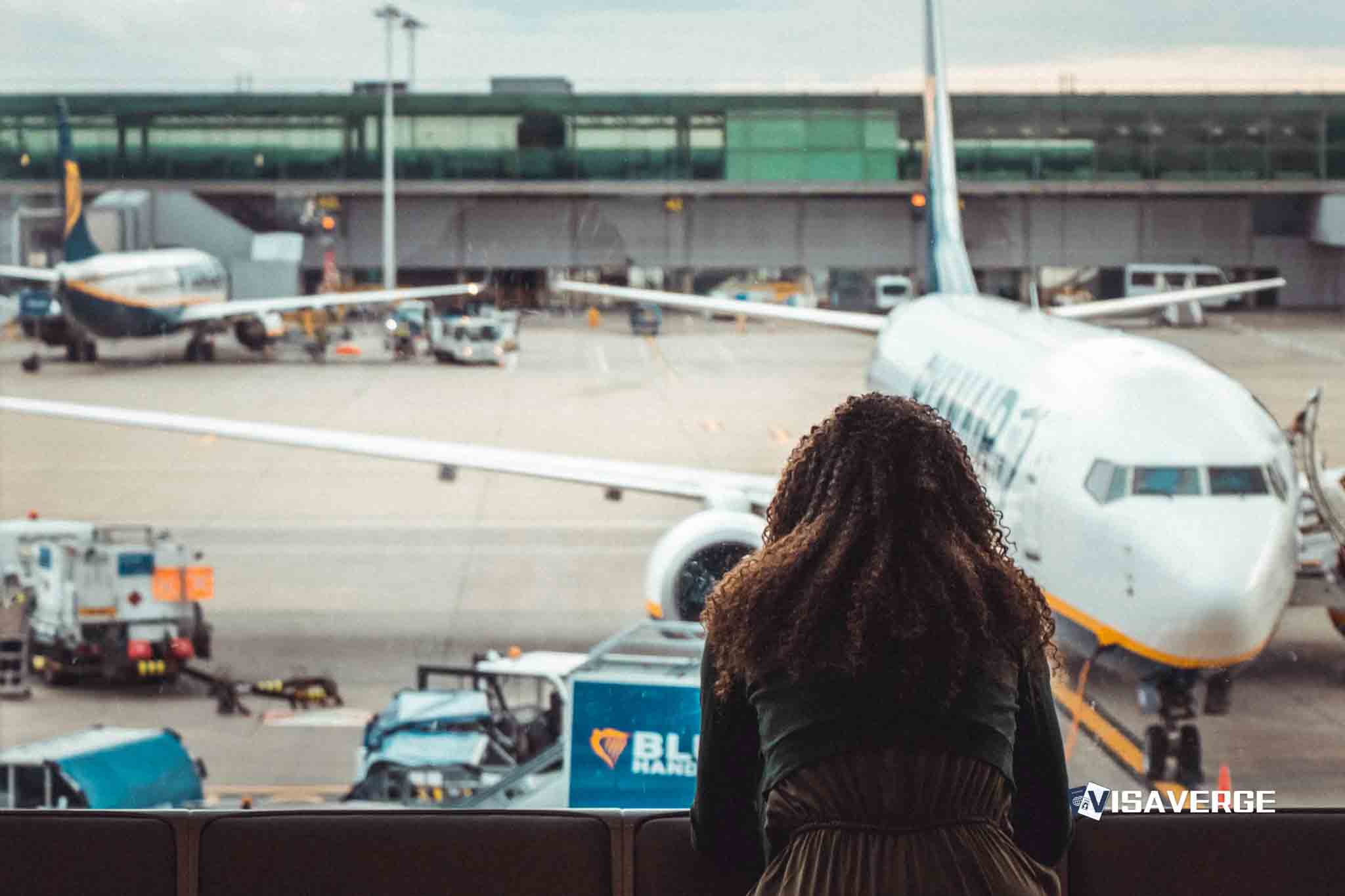
The agency has committed approximately $1.3 billion to deploy over 1,200 CT scanners across the nation’s checkpoints, with roughly 250 airports now equipped with the technology as of March 2026. Even at large hubs such as Atlanta Hartsfield-Jackson, Chicago O’Hare, and select international gateways, not every checkpoint has been upgraded.
Free toolB1/B2 Tourist Visa Stay Calculator onlineThat uneven rollout means passengers can encounter very different instructions on the same trip. One terminal may let travelers keep some carry-on items packed, while another still requires them to remove liquids and electronics for screening.
The 3-1-1 Liquids Rule Still Applies
For most travelers, the baseline rule has not changed. The TSA’s 3-1-1 standard still governs liquids at U.S. airports as of March 2026, limiting containers to 3.4 ounces (100 milliliters) and requiring them to fit in 1 quart-sized, clear, resealable bag, with 1 bag per passenger.
The rule applies to liquids, gels, and aerosols, including lotion, mascara, shampoo, conditioner, sunscreen, and beverages. The limit applies to the container size, not how much product remains inside it.
What has changed at some checkpoints is the process, not the rule itself. Where CT scanners are in use, travelers may not need to remove liquids from their carry-on bags because officers can inspect three-dimensional images of bag contents from multiple angles.
Passengers still need to watch for instructions at the checkpoint. Signs such as “CT checkpoint” or “keep items in bag” indicate that travelers can usually leave items packed, and the new machines typically have a larger, boxy shape with a blue LED light strip.
How CT Scanners Differ From Older Machines
The new CT scanners work differently from older 2D X-ray machines. They create 3D images that officers can rotate and zoom, giving a clearer view of what is inside bags.
That extra visibility was supposed to make screening easier. Instead, the transition has produced a more mixed experience as airports run multiple generations of equipment at the same time.
One result is inconsistency. A passenger may clear security in one lane with more relaxed procedures, then return through another lane in the same airport and face older screening rules.
That patchwork also affects carry-on items beyond toiletries. Electronics and other dense objects may receive different treatment depending on the machine in use and the checkpoint’s procedures.
The most common misconception centers on liquids. At CT-equipped lanes, travelers may keep compliant items inside their bags, but the 3-1-1 rule remains fully in effect unless an item falls within an established exemption.
Current Exemptions to the Liquids Rule
Several exemptions remain in place in 2026. Medically necessary liquids, including insulin, saline solution, prescription creams, and other medical liquids, are allowed in any quantity if travelers declare them and may receive additional screening.
Baby formula, breast milk, and baby food are also permitted in “reasonable quantities” and do not need to fit in the quart-sized bag. Travelers do not need to have the child with them to transport breast milk.
Frozen liquids present another exception. If a liquid is frozen solid at the time of screening, TSA treats it as a solid and permits it, but slushy or melting items can be confiscated.
Operational Issues and Screening Delays
The modernization drive has also brought unexpected operational problems. Despite the promise of smoother checkpoint flow, CT scanners operate more slowly than traditional X-ray machines because they process much larger amounts of data.
That slower pace has created bottlenecks at some airports rather than shorter lines. The mismatch between newer equipment and older procedures has added to traveler confusion as officers adjust lane by lane.
Medication has emerged as a frequent trigger for extra screening. Dense items such as pill organizers holding multiple medications can appear suspicious to the scanner’s algorithm, even though medications are expressly permitted.
A 68-year-old traveler from Minneapolis encountered that problem when daily medications were flagged for extended inspection. The issue has become one of the more noticeable side effects of the CT rollout.
The scanners are also spotting items older machines often missed. Loose batteries buried in checked luggage now draw more consistent attention, even when they are tucked under clothing or into bag corners.
Electronic devices also face more detailed inspection. The clearer imaging can expose anomalies inside electronics that older scanners would not have shown as clearly.
Other TSA Changes Travelers Need to Know
Travelers are also adjusting to other TSA policy changes that now intersect with the scanner rollout. As of February 1, 2026, passengers arriving at checkpoints without a REAL ID, marked with a star, or a valid passport must pay a $45 fee to use the “ConfirmID” verification system.
That process can add up to 30 minutes to screening time. For travelers already dealing with uneven checkpoint procedures, the extra verification step adds another variable to trip planning.
Footwear rules have loosened, though not everywhere. In July 2025, TSA announced that passengers can keep their shoes on during screening at most checkpoints, a practice that is becoming more common, especially in lanes with newer CT scanners.
TSA PreCheck members can consistently keep their shoes on. Standard screening still varies by airport and by lane, so passengers may still be told to remove shoes at some checkpoints.
The agency has also expanded restrictions in checked bags. Three items are prohibited from checked luggage as of 2026: cordless curling and straightening irons that use gas cartridges, butane-filled curling and straightening irons, and extra gas cartridges for those devices.
Other screening changes are still in testing. Some airports are using facial recognition technology to speed ID checks, while others are testing automated screening lanes and self-service screening kiosks.
What Travelers Can Bring
For passengers trying to decide what they can bring, the broad rules remain familiar. Toiletries such as shampoo, conditioner, body wash, lotion, and sunscreen are allowed in carry-on bags if they comply with the 3-1-1 rule, as are gels and aerosols such as hairspray and deodorant.
Cosmetics, including mascara, foundation, and lipstick, also fall under the same liquids framework. Beverages bought after security screening are permitted.
Several categories can exceed those limits if travelers declare them. Prescription and over-the-counter medications in any quantity, infant formula and breast milk in reasonable quantities, baby food and drinks, medical ice packs or gel packs, and saline solution and other medical liquids all qualify.
Duty-free liquids such as alcohol and perfume may also be carried through if they are purchased in airport shops and remain in tamper-evident bags with a receipt. Travelers still need to account for the rules that apply at later checkpoints and at their destination.
Some items remain prohibited or tightly restricted. Cannabis remains illegal under federal law, even in states where it is legal, and large bottles of non-medical liquids are barred from carry-on bags.
Reusable water bottles with hidden compartments or opaque linings may also be confiscated. Hair styling tools that use butane or gas cartridges face the checked-bag restrictions added this year.
Preparing for Screening
For passengers with medical needs, preparation can make a difference. Keeping medications in original packaging with labels and declaring them at the start of screening may reduce delays, though pill organizers can still trigger extra inspection under CT scanner algorithms.
Travelers with complex medical needs can contact TSA Cares at 855-787-2227 before a trip. The same advance planning can help families carrying formula, breast milk, or baby food.
International travelers face another layer of uncertainty. U.S. checkpoint procedures may be changing, but other countries and airlines can apply different liquid restrictions and packing rules.
That makes prior experience less reliable than it once was. A traveler who passed easily through one airport may encounter a stricter interpretation on the return trip or during a layover.
The people who may benefit most from current procedures are those carrying exempt items. Parents and caregivers at CT-equipped checkpoints can often leave formula, breast milk, and baby food inside their carry-on bags, while people with medical conditions can travel with necessary liquids in full sizes.
Students and researchers also have some flexibility. Biological specimens can be transported in carry-on bags if they are packed according to TSA requirements.
Still, the overall picture in March 2026 is a security system in transition rather than a settled national standard. TSA is investing heavily in CT scanners and other screening technology, but the traveler experience depends heavily on whether a specific airport, terminal, or lane has adopted the new equipment.
Until deployment becomes universal and procedures are standardized, passengers are likely to keep encountering different instructions for the same types of carry-on items. Travelers who assume the strictest rules still apply unless signs say otherwise are most likely to move through screening with fewer surprises.
For now, the clearest message for flyers is also the simplest: the TSA’s liquid limits remain the national baseline, CT scanners may change how bags are screened but not what is allowed, and the checkpoint in front of you matters more than the one you used on your last trip.