- Nepal will launch a five-year digital nomad visa in 2026 to attract long-term remote workers.
- Applicants must show $1,500 monthly income or $20,000 in savings plus international health insurance.
- Remote workers staying over 186 days benefit from a flat 5% income tax on foreign earnings.
(NEPAL) – Nepal plans to launch a five-year, multiple-entry digital nomad visa in 2026, widening its tourism strategy to target remote workers who want longer stays than current visitor rules allow.
The framework was outlined in May 2025 as part of the Economic Reform Implementing Work Plan 2025, with implementation expected within a year of that announcement. The plan would give eligible foreign remote workers a route to live and work in Nepal on terms far longer than a standard tourist permit.
Under the proposal, each entry would allow a stay of up to one year, with annual renewal options available during the visa’s five-year validity. That structure sets it apart from Nepal’s traditional tourist visas, which typically allow stays of 15, 30, or 90 days.
Many digital nomad programs in Europe require more frequent exits or periodic renewals tied to shorter residence windows. Nepal’s model, as outlined, would let approved visa holders remain in the country for extended periods without leaving every few months.
Applicants would need to meet one of two financial thresholds: a minimum monthly income of $1,500 or a bank balance of at least $20,000. They also would need international health insurance worth at least $100,000, valid for treatment in Nepali hospitals.
Eligibility would turn on the source and nature of the applicant’s work. The plan requires proof of remote work as a freelancer, employee, or business owner with clients or companies outside Nepal, along with foreign-sourced income and a clean criminal background.
That combination shows how Nepal is trying to separate the proposed visa from ordinary tourism. The government is aiming at foreigners who earn abroad, spend locally, and stay long enough to rent homes, use local services, and settle into day-to-day life without entering the domestic labor market.
Tax treatment is a central part of the offer. Digital nomads who stay in Nepal for more than 186 days per year would qualify for a flat 5% income tax on foreign-sourced earnings.
The plan also includes financial privileges that go beyond residence status. Visa holders would be allowed to open local bank accounts with commercial banks, transfer surplus savings above $50,000 to foreign banks, and withdraw the full balance if the visa lapses after five years.
Mobility rules would also shift for long-term foreign residents. The visa would permit digital nomads to own and register vehicles in their own names, while foreign driver’s licenses would remain valid for legal use in Nepal.
Kathmandu is expected to remain the main base for many of those arrivals. The capital already has coworking spaces such as Rem.Work and Work Around, and tourist districts including Thamel offer reliable WiFi that supports day-to-day remote work.
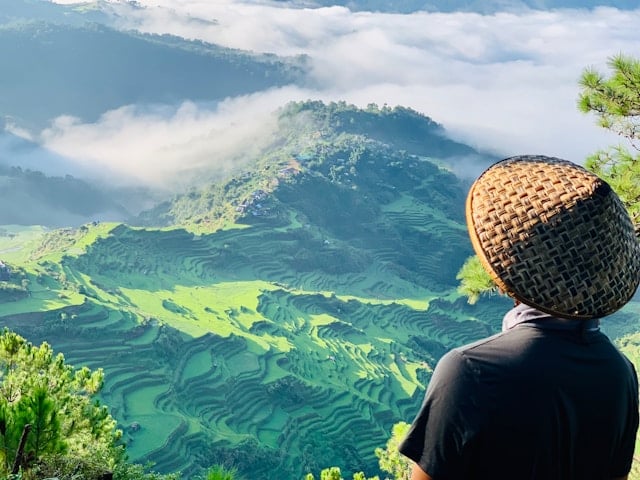
Pokhara presents a different version of the same pitch. Set beside a lake and framed by mountain views, the city offers a slower pace that suits remote workers drawn to nature-focused routines rather than a capital city schedule.
Beyond those urban hubs, Nepal’s telecommunications reach gives the plan a wider geographic base. Its 4G network covers all 77 districts, though telecom operators have said scaling to 5G will require additional government support.
The proposed visa responds to a mismatch that tourism officials have identified for several years. Existing tourist visa rules fit short leisure trips, but they do not work well for people who want to remain for months while continuing jobs or freelance contracts based overseas.
Deepak Raj Joshi, CEO of Nepal Tourism Board, has said current tourist visa rules have prevented extended stays for the growing digital nomad segment. He has also described digital nomads as visitors with strong earning potential and disposable incomes, a group Nepal sees as capable of contributing more steadily to the economy than short-stay travelers.
That strategic calculation has become common across countries trying to capture a share of post-pandemic remote work. Nepal is positioning itself against established digital nomad destinations such as Thailand, Spain, and Estonia, using a package built around long stays, lower tax on foreign income, and rules that recognize the practical needs of residents rather than tourists.
Nepal’s appeal in that competition rests on a mix of cost, culture, and geography. The visa plan ties those advantages to a more formal policy structure, giving remote workers a route that matches the way many of them already travel: staying for months, working online, and choosing places with reliable internet, manageable living costs, and a strong local setting.
The proposal also reflects a broader shift in how Nepal is trying to define tourism growth. Instead of relying only on short-term arrivals, the country is moving toward a model that values visitors who remain longer, spend more across local businesses, and use Nepal as a temporary base rather than a quick stop.
That approach favors what tourism planners increasingly describe as slow travel, with longer stays spread across cultural and natural destinations rather than rapid itineraries. In Nepal’s case, the mix ranges from Kathmandu’s dense urban neighborhoods and coworking sites to Pokhara’s quieter rhythm and access to lake and mountain scenery.
The five-year structure gives the proposal an unusually long horizon for Asia, especially with annual renewal options built into the validity period. A nomad approved under the plan could, in practice, establish a repeated pattern of one-year stays without having to rebuild a visa strategy from scratch after a single season.
Financial rules appear designed to reinforce that stability. Income thresholds set a floor for entry, insurance requirements reduce pressure on local healthcare costs, and bank account access gives residents tools to manage everyday expenses inside the country rather than depending entirely on overseas accounts.
Permission to move savings above $50,000 back to foreign banks, and to withdraw balances fully if the visa lapses after five years, addresses another issue that often shapes long-stay decisions: whether a host country allows foreign residents to bring money in and out without trapping funds in the local system.
Vehicle ownership rights point in the same direction. Allowing visa holders to register vehicles and use foreign driver’s licenses recognizes that someone staying up to one year per entry will often need more than hotel-and-taxi arrangements, especially outside the capital.
If Nepal meets the implementation timetable set after the May 2025 policy announcement, the country will enter 2026 with a visa aimed directly at freelancers, remote employees, and overseas business owners looking for a legal long-stay option in South Asia. The plan turns a tourism pitch into an immigration framework, pairing Himalayan scenery and urban work hubs with tax rules, banking access, and a residence period long enough to make remote work from Nepal a realistic proposition rather than a short-term experiment.