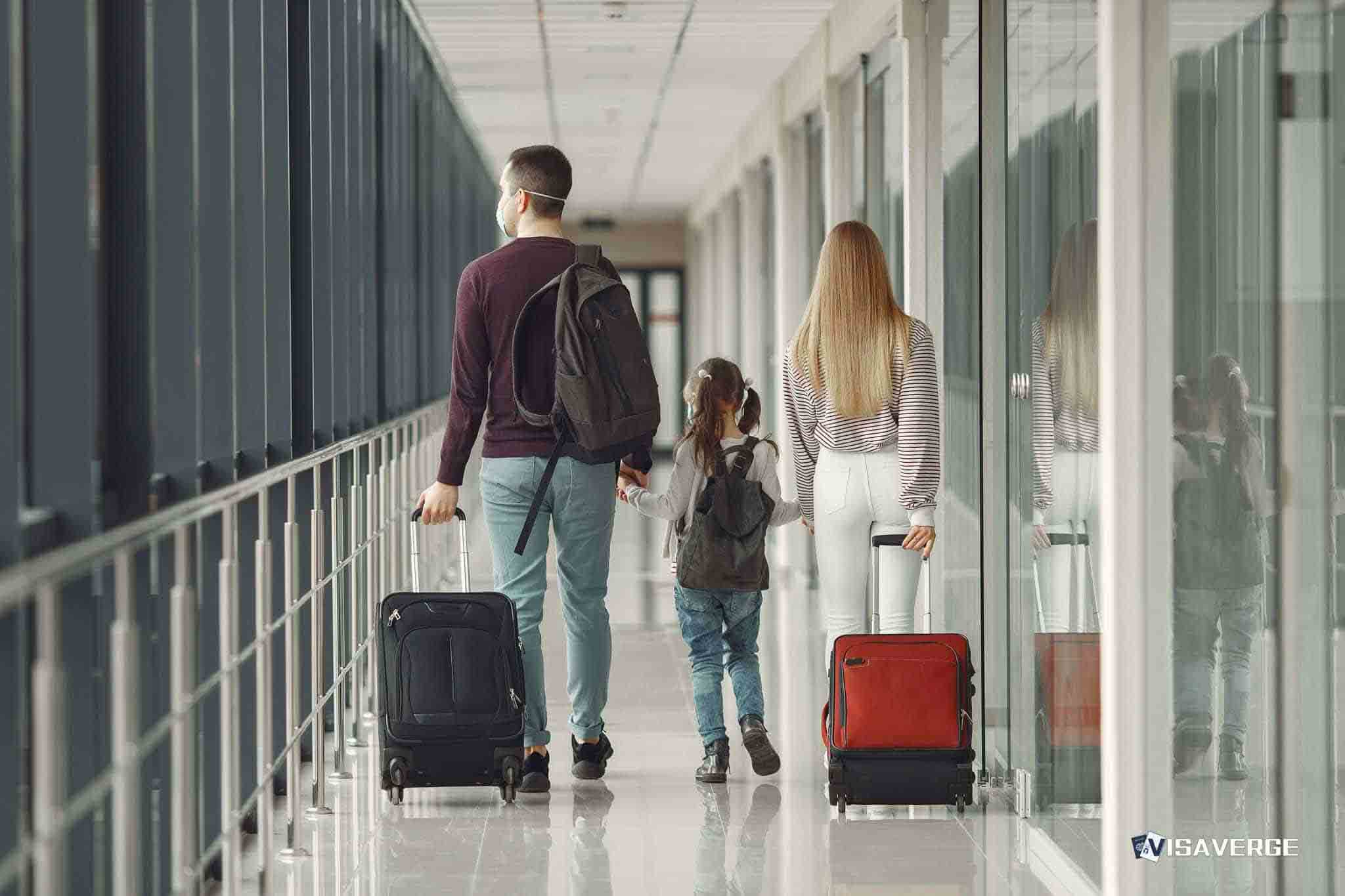
- Airlines must seat children under fourteen next to an accompanying adult at no extra charge.
- The deal mandates full price transparency by prohibiting hidden fees during the booking process.
- Passengers can now claim delay compensation for flights arriving three hours or more behind schedule.
(EUROPEAN UNION) — Airlines operating in the European Union must seat children under 14 next to an accompanying adult at no extra charge under new rules approved by EU lawmakers.
The European Parliament confirmed the deal in a June 15, 2026 press release. It marks the most sweeping update to EU air passenger rights in over a decade.
Free toolB1/B2 Tourist Visa Stay Calculator online
The rule applies across all EU-operated flights regardless of ticket type or fare class. Airlines must place children under 14 next to a parent or accompanying adult without charging seat selection fees.
Families who routinely pay €4 to €25 per seat on low-cost carriers will see the change eliminate a recurring expense. A family of four with two young children could save €50 or more roundtrip on seat selection alone.
The requirement covers all flights departing from EU airports and all flights operated by EU-based carriers arriving into the bloc. It applies to both direct and connecting itineraries.
Travelers connecting through EU hubs on partner airlines will also benefit, provided at least one segment falls under EU jurisdiction.
The package extends well beyond child seating. Airlines must provide compensation for flights delayed by three hours or more, bringing delay claims in line with existing cancellation rules.
The amount depends on flight distance, with short-haul delays triggering lower payouts and long-haul delays generating higher compensation. Reimbursement timelines tighten, forcing carriers to issue refunds more quickly.
The rules also mandate greater flight price transparency, prohibiting hidden fees from surfacing only at final checkout.
Under the transparency provisions, airlines must display the full ticket price from the start of the booking process. This includes taxes, baggage fees, and seat selection charges.
Carriers can no longer advertise a base fare and add mandatory surcharges later in the purchase flow. The change targets drip pricing, where the final checkout total far exceeds the initially displayed price.
Low-cost carriers face the biggest operational shift. Ryanair, Wizz Air, and easyJet generate substantial ancillary revenue from paid seat selection, often charging families extra to guarantee adjacent seats.
The new rules require these airlines to implement automated seating algorithms that keep families together without upselling. Full-service carriers like Lufthansa, Air France, and KLM already offer free adjacent seating for families with young children on most routes.
Their adjustment burden is minimal.
In the United States, no federal law currently mandates free family seating. The Department of Transportation has pressured airlines to adopt voluntary policies.
Carriers including JetBlue, Alaska, and American allow free adjacent seating for children under 13 on at least some fares. The EU rules set a stricter standard that US regulators may reference in future rulemaking.
The DOT has explored similar requirements but has not yet issued binding regulations.
Elite status members on EU carriers may see seating dynamics shift. If airlines must hold adjacent seats for families, fewer complimentary seats may remain for elites who select seats at booking.
The impact will vary by carrier and route density. Business travelers booking close to departure could find fewer free seat options on family-heavy routes, particularly during school holiday periods.
The deal still requires formal adoption through the EU legislative process before it takes effect. That step typically takes several weeks to months.
Once adopted, member states will transpose the rules into national law, with an implementation period before enforcement begins. Airlines will need time to update booking systems, train staff, and adjust seating algorithms to comply.
Passengers should not expect immediate changes when booking summer 2026 flights. The rules will not apply to tickets purchased before the adoption and implementation timeline completes.
The broader package builds on Regulation 261/2004, known as EU261. That regulation set compensation between €250 and €600 depending on flight distance for cancellations and denied boarding.
The new rules expand that framework with delay claims and faster refund processing.
Families planning European travel for late 2026 or beyond should monitor the EU’s official adoption timeline. Once the rules take effect, booking through EU-based carriers or on routes departing from EU airports will trigger the free child seating guarantee automatically.
No special request or fare code will be needed.