- Internal documents reveal Canadian officials pressured the transportation regulator to weaken airline passenger compensation rules.
- The shift favors carriers by expanding exemptions for disruptions linked to mechanical issues and labor strikes.
- U.S. Democratic senators introduced a bill to mandate cash compensation following a recent federal rollback of protections.
(CANADA) — Feds pressed the Canadian Transportation Agency to weaken proposed airline passenger compensation rules, internal documents from November 2024 show, widening exemptions that shield carriers from paying travelers for some delays and cancellations tied to mechanical issues or labour strikes.
The records show the federal government, led by then-Transport Minister Anita Anand, pushed the regulator to give airlines more latitude after the agency had drafted tougher rules in 2023. Those earlier proposals would have removed some airline exemptions for safety-related disruptions.
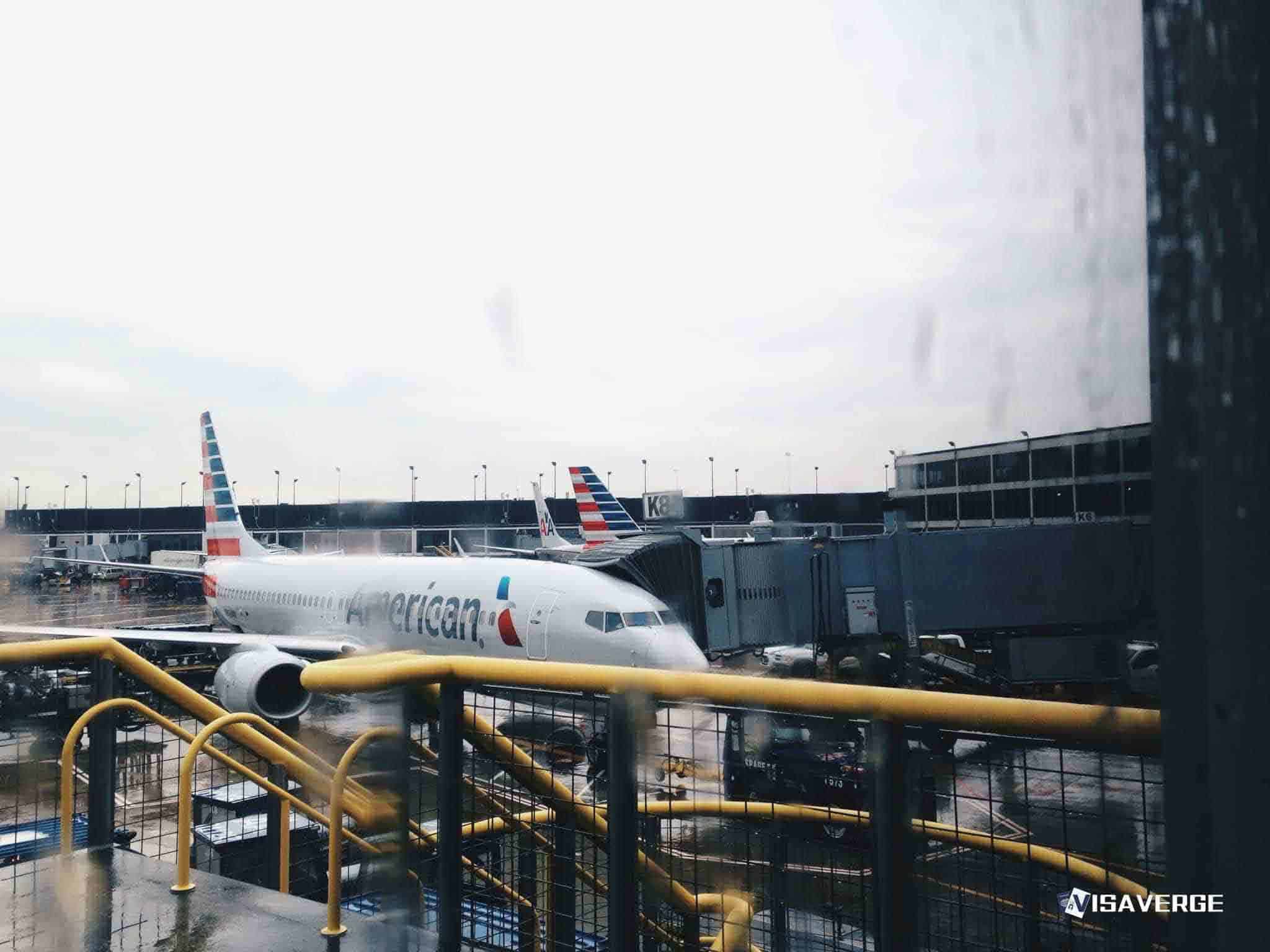
The shift put the federal government at odds with resistance inside the regulator and added a new flashpoint to a long-running fight over how much protection passengers should receive when flights are disrupted for reasons within an airline’s control.
Briefing notes obtained through the Access to Information Act show the government rolled back the Canadian Transportation Agency’s proposed changes after airlines lobbied heavily for broader carveouts. The documents say Anand was “disappointed” with the head of the Canadian Transportation Agency for raising the issue again.
That intervention mattered because the regulator had been moving toward tighter rules on disruptions that airlines often link to operational and safety concerns. Instead, the government clarified exemptions in ways that favored carriers.
The outcome left Canada with a narrower regime than some passenger advocates had sought. It also fed criticism that the regulator’s framework still leaves airlines too much room to avoid compensation when flights are delayed or canceled.
Gabor Lukacs, a passenger rights advocate, said the Canadian result created loopholes that fell short of European standards. His criticism captured a broader dispute over whether air traveler protections should mirror tougher systems abroad or preserve airline discretion in cases involving safety, staffing and maintenance.
The Canadian documents emerged as a similar debate unfolded in the United States, where the Department of Transportation under President Trump dropped a Biden-era proposal that would have required cash compensation for controllable flight disruptions.
That shelved rule, introduced in December under Transportation Secretary Pete Buttigieg, would have required airlines to pay up to $300 for 3-6 hour domestic delays and $775 for 9+ hour delays to “mitigate passenger inconveniences.”
A spokesperson for the U.S. Transportation Department said the proposal exceeded congressional mandates and that the department was prioritizing operational realities rather than extra-statutory rules. The department kept refund requirements enacted in the FAA Reauthorization Act.
Airlines for America, which represents major U.S. carriers, had opposed the measure, saying it would raise ticket prices and harm operations. The group welcomed its reversal as part of “President Trump’s deregulatory agenda.”
Taken together, the Canadian and U.S. moves point to a common pressure point in aviation policy: how governments balance industry concerns about cost and operations against demands for stronger passenger compensation when trips go wrong.
In Canada, the conflict centered on what should count as grounds for an exemption. The Canadian Transportation Agency had drafted rules in 2023 that aimed to eliminate some exemptions tied to safety-related disruptions, but the government intervened before those plans moved ahead.
The internal documents show that regulators did not simply arrive at the final language on their own. Federal pressure shaped the result, and airline lobbying helped steer the discussion.
That sequence matters for passengers because the broader the exemption, the harder it can be to claim compensation after a canceled or delayed flight. Mechanical issues and labour disruptions can affect large numbers of travelers, and whether those events trigger compensation often determines who absorbs the financial cost of a disrupted trip.
Those costs can go beyond the ticket itself. Missed connections, hotel nights, meals and ground transportation can all pile up quickly when flights unravel, which is why compensation standards have become a political issue as well as a regulatory one.
U.S. Democratic senators responded this week with a legislative push meant to revive and expand protections after the Trump administration’s rollback. Senators Jack Reed of Rhode Island, Sheldon Whitehouse of Rhode Island, Mark Kelly of Arizona, Richard Blumenthal of Connecticut and Ed Markey of Massachusetts, joined by more than a dozen co-sponsors, introduced the Flight Delay and Cancellation Compensation Act, or S.3347, on April 1-2, 2026.
The bill would direct the Department of Transportation to form an Aviation Rulemaking Committee with consumer groups to develop recommendations on cash compensation, free rebooking, meals, lodging and transportation for affected passengers.
It would also align U.S. standards with the Canadian Transportation Agency and EU Regulation (EC) No 261/2004, placing the measure squarely inside a wider North American and European debate over what travelers should receive when airlines disrupt their plans.
Under the proposal, airlines would owe at least $300 for delays over 3 hours and under 6 hours, and $600 for delays of 6+ hours. Those figures differ from the abandoned Biden administration proposal, which had set compensation at up to $300 for 3-6 hour domestic delays and $775 for 9+ hour delays.
Kelly framed the bill as a response to the direct financial hit travelers face when they are stranded. “We’re working to make sure that passengers are protected so that cancellations and delays don’t cost them money out of their own pockets,” he said.
Reed said the measure would restore “common-sense compensation.” Backers cast the legislation as a direct answer to the administration’s decision to cancel the earlier DOT plan.
The contrast between the two proposals also shows how lawmakers are trying to build a more durable system through legislation after regulators pulled back from a broader administrative rule. By requiring the Aviation Rulemaking Committee to include consumer groups, the bill’s sponsors are trying to give passenger advocates a formal role in shaping the standards.
That matters because the fights in both countries have highlighted how strongly airline groups can influence policy. In Canada, internal government records showed the federal government echoing industry concerns as it pressed for wider exemptions. In the United States, Airlines for America openly argued that mandatory compensation would increase fares and disrupt operations.
Passenger advocates have long argued that such claims can overshadow the burden that delays place on travelers. Lukacs’ criticism of Canada’s final direction reflects that view, especially in comparison with European rules that are often treated as the toughest benchmark for airline accountability.
The mention of EU Regulation (EC) No 261/2004 in the senators’ bill shows how much that benchmark still shapes the debate. Supporters of stronger rules often point to Europe as proof that standardized compensation can be written into law, while airline opponents argue that the costs and operational knock-on effects can be steep.
Canada now sits in an awkward middle ground in that debate. The government did not move to abolish passenger compensation, but the internal documents show it chose to preserve broader airline defenses in categories that frequently become contested after disruptions.
For travelers, those legal distinctions can determine whether a delay is treated as compensable or exempt. For airlines, the same distinctions can mean the difference between routine payouts and a more limited obligation.
The Canadian Transportation Agency’s role also comes under sharper scrutiny because the documents indicate the regulator had drafted a more demanding approach before the government pushed it back. That tension raises questions about how independent rulemaking operates when elected officials and industry groups apply pressure behind the scenes.
In Washington, the Trump administration made its own priorities plain by dropping the compensation proposal while retaining refund rules required by Congress. The department’s reasoning drew a line between obligations expressly mandated by statute and measures it viewed as outside that boundary.
That explanation did little to satisfy lawmakers now trying to reopen the issue. Their bill takes a broader view of airline responsibility, one that goes beyond refunds and addresses the out-of-pocket costs travelers can face when airlines cancel or delay flights for reasons within their control.
The political divide is now clear on both sides of the border. Feds in Canada pushed the Canadian Transportation Agency toward more airline-friendly exemptions, while U.S. Democrats are trying to move policy the other way through S.3347.
What happens next will shape not just rulebooks but the everyday experience of flying. For passengers waiting out a long delay, the dispute is no longer abstract: it comes down to whether the airline covers the cost, or whether, as Kelly put it, cancellations and delays “cost them money out of their own pockets.”