- Dubai International Airport remains operational today despite recording 1% cancellations and 12% flight delays.
- Regional travel to Kuwait and Saudi Arabia faces heavy disruption with several Emirates and Etihad services cancelled.
- Major international airlines have extended flight suspensions to Middle Eastern hubs through late October 2026.
Dubai International Airport remained operational on July 19 as US-Iran tensions disrupted selected routes, delayed some passengers and triggered short-notice schedule changes. Most departures were on time, while incoming flights generally arrived normally.
A recent operating snapshot recorded 1% cancellations and 12% delays at the hub. The disruption has centered on individual services rather than a full airport shutdown.

Travelers should check their flight status before leaving for the terminal. Schedules can change quickly.
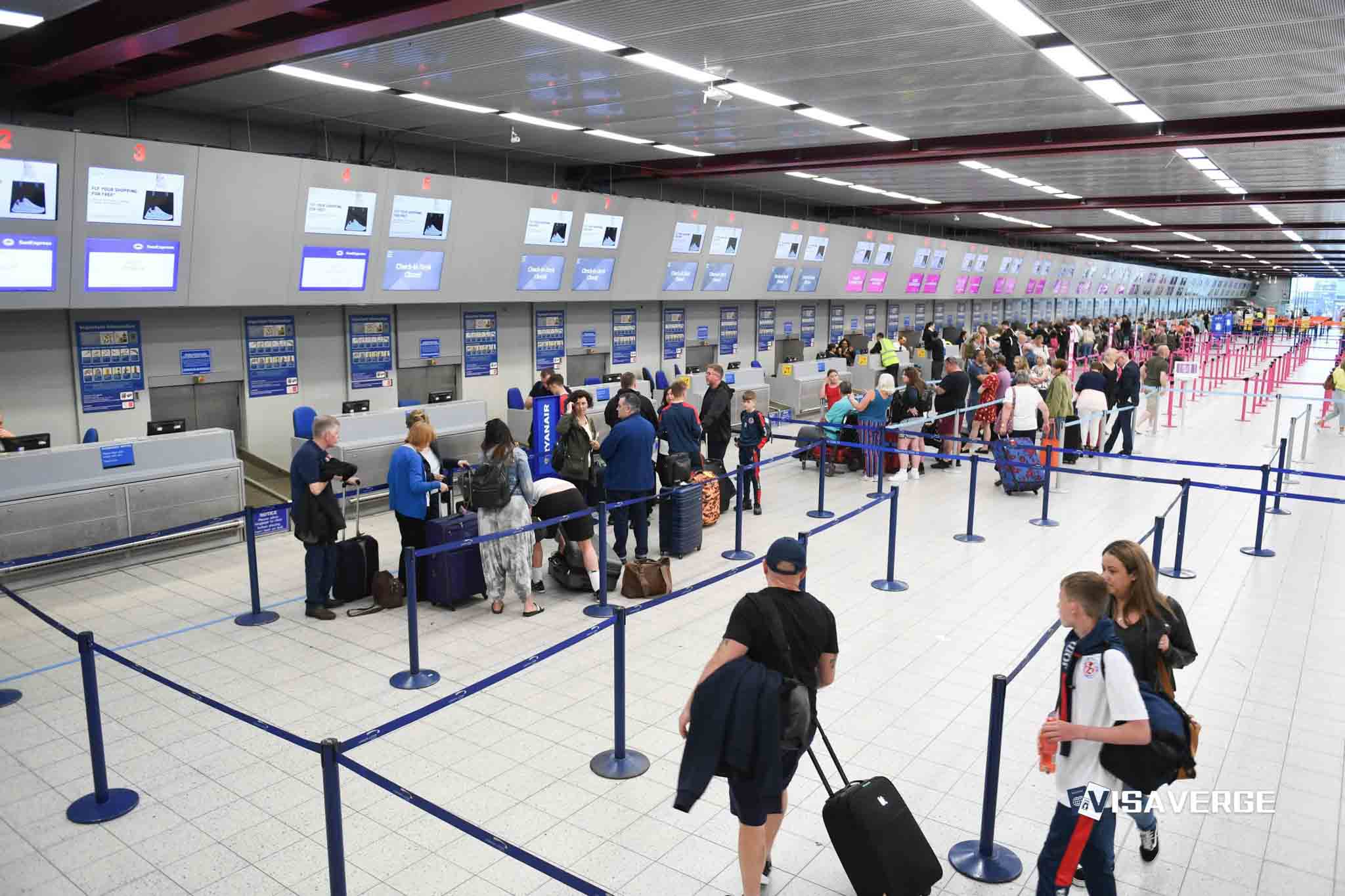
Emirates, flydubai and other UAE carriers continued broad network operations, although several regional services were cancelled. Passengers also faced longer queues linked to regulatory delays and security screening.
The affected flights include Emirates services EK853, EK855, EK857 and EK860 between Dubai and Kuwait. Services FZ811 and FZ815 between Dubai and Abha, Saudi Arabia, were also listed among the cancellations on July 19.
The low-cost carrier urged passengers to arrive at least four hours before departure. That guidance comes as travelers report longer processing times at the airport and some routes face changes with little notice.
Kuwait services are seeing the heaviest immediate disruption
Free toolB1/B2 Tourist Visa Stay Calculator onlineAir travel between the UAE and Kuwait has recorded the highest volume of immediate cancellations in the latest updates. Etihad Airways cancelled EY653 and EY654 for July 19 and 20.
Other regional alerts have added to the uncertainty. Kuwait, Bahrain and Israel reported fresh missile and drone activity within the previous 48 hours, prompting further airspace closures.
| Carrier or route | Service affected | Date or extension |
|---|---|---|
| Emirates, Dubai-Kuwait | EK853, EK855, EK857, EK860 cancelled | July 19 |
| Dubai-Abha | FZ811, FZ815 cancelled | July 19 |
| Etihad Airways, UAE-Kuwait | EY653, EY654 cancelled | July 19 and 20 |
| Air Canada, Dubai services | All services cancelled | Through October 24, 2026 |
| airBaltic, Dubai services | All services cancelled | Through October 24, 2026 |
A cancellation on one segment can disrupt an itinerary that still shows another flight as scheduled. Passengers connecting through the hub should check each leg of the journey separately.
Airspace detours are lengthening some journeys
Several airlines continue to avoid airspace affected by the regional conflict. Finnair is avoiding airspace over Iran, Iraq, Syria and Israel, creating longer flight times and higher fuel costs for flights transiting Dubai.
Those restrictions can put pressure on schedules. Longer routes require additional planning, while a delayed inbound flight can affect the next departure in an aircraft’s rotation.
Lufthansa, British Airways and Singapore Airlines have extended route suspensions to Middle Eastern hubs into late 2026. Air Canada and airBaltic cancelled all Dubai services through October 24, 2026.
The airport remains usable, but some international travelers have fewer route choices. A suspended service can also leave passengers with longer connections or a rebooking requirement.
The latest escalation followed an attack in Jordan
The latest wave of disruption followed a July 17 attack in Jordan. U.S. Central Command confirmed that two U.S. service members were killed, four were injured and one remained missing.
The command said the incident occurred during an “Iranian missile and drone barrage that U.S. and partner forces intercepted.”
The crisis followed the collapse of a brief ceasefire mediated by Pakistan earlier this year. The wider Iran war reportedly restarted on February 28, 2026, after which tens of thousands of flights were cancelled across the region.
The U.S. Department of State issued a “Worldwide Caution” advisory on July 18. It described the security environment as complex and warned of possible escalation.
“Due to heightened tensions in the Middle East, the security environment remains complex with the potential for unforeseen escalation. We remind Americans in the region of the continued need for caution.”
The advisory told Americans to register with the Smart Traveler Enrollment Program, or STEP, and to “reconsider travel to or through the Middle East.”
False reports about Dubai explosions led to an investigation
False reports of witnessed explosions in Downtown Dubai circulated on July 16. The Dubai Media Office denied the reports.
UAE Attorney-General Dr. Hamad Saif Al Shamsi said the UAE Public Prosecution was questioning people involved in publishing the information. The questioning will “examine whether legal and professional verification procedures were followed.”
The reports added a local misinformation concern to an already unsettled travel environment. Travelers may encounter conflicting claims about incidents, airspace conditions or airport operations.
Live airport updates on July 19 continued to show most departures on time and incoming flights typically arriving normally. The operating picture, however, remains subject to route-level changes.
Passengers should allow extra time and verify every segment
Travelers heading to the airport should build additional time into their plans because of security screening and regulatory delays. The four-hour arrival recommendation applies to passengers using the affected low-cost carrier.
Passengers connecting through Dubai should verify both their arrival and onward flights. A functioning airport does not guarantee that every regional route or individual service will operate.
- Check the latest flight status before traveling to the airport.
- Allow extra time for queues, security screening and document checks.
- Confirm each segment of a connecting itinerary separately.
- Review the airline’s latest schedule if a route passes through affected regional airspace.
The United Arab Emirates hub has continued to process flights despite the surrounding security alerts. Its live operating data shows disruption, but not a general closure.
Diplomatic warnings are shaping airline planning
Secretary of State Marco Rubio cited growing threats from Iranian proxy networks, saying they are “increasingly intimately tied to leftist militant groups around the world.” He also pointed to the targeting of U.S. diplomatic facilities.
President Trump announced on July 18 that Dena Karari, an American woman wrongfully detained in Iran since 2024, had been released and was “safely outside of Iran.”
Those developments form part of the security conditions airlines are assessing as they plan routes and schedules. The airport’s current operations therefore do not remove the possibility of further cancellations.
Several service suspensions already run into late 2026. Passengers traveling on July 19 should verify their individual departure and connection status before setting out, while those with later bookings should monitor for schedule changes.