- The State Department issued a worldwide caution alert due to rising Middle East tensions.
- Iran-supported groups may target U.S. interests globally, following a deadly attack in Jordan.
- Travelers should expect frequent flight cancellations and periodic airspace closures throughout 2026.
The State Department issued a worldwide caution Saturday, warning Americans that groups supportive of Iran could target U.S. interests and locations associated with the United States anywhere abroad. The alert came after an Iranian missile and drone attack killed two American service members in Jordan and left one missing.
The agency said the security environment remains unpredictable as U.S.-Iran tensions escalate. It urged Americans, especially those in the Middle East, to follow security alerts from the nearest U.S. embassy or consulate.
The Worldwide Caution, dated July 18, 2026, described the regional situation as “complex with the potential for unforeseen escalation.” It also warned that U.S. diplomatic facilities outside the Middle East had been targeted.
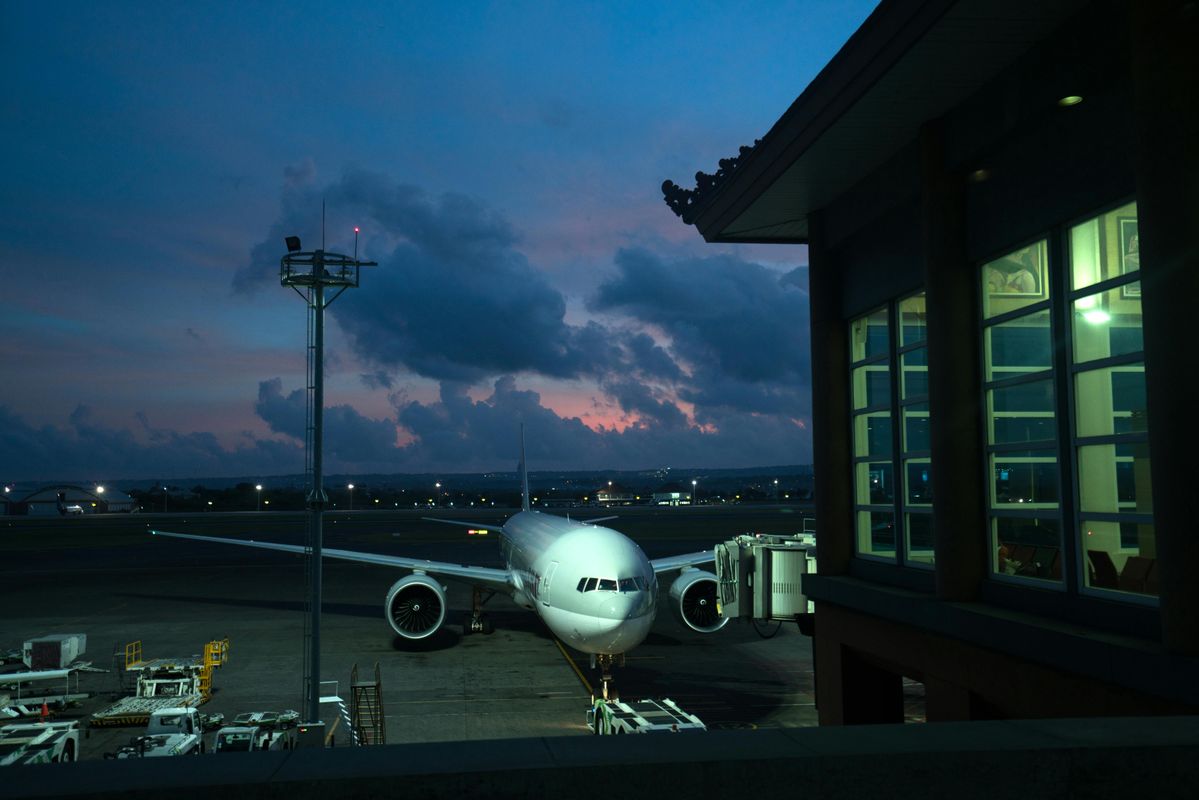
Air travel could change quickly. The advisory cited flight cancellations and periodic airspace closures, telling Americans to check directly with their airlines before traveling.
The Jordan attack occurred July 17 as Iranian ballistic missiles and drones targeted the Al-Azraq/Muwaffaq Salti Air Base. U.S. Central Command said two service members were “killed in action,” one was “currently missing in action,” and four others were medically evacuated.
Iran’s Supreme Leader Ayatollah Mojtaba Khamenei warned Saturday that the United States would face “unforgettable lessons.” U.S. Central Command entered its 8th consecutive night of retaliatory airstrikes on July 19, targeting IRGC facilities, missile storage sites and air defenses across Iran.
The alert reaches Americans outside the conflict zone
The new travel warning does not limit its concern to countries directly involved in the fighting. The department said Iran-supporting groups may target U.S. interests overseas or sites associated with the United States and Americans “throughout the world.”
That warning covers more than government buildings. Americans abroad were advised to remain alert, monitor embassy and consulate security messages, and enroll in the Smart Traveler Enrollment Program, known as STEP.
The advisory also points to a practical risk at airports. Airlines can cancel flights or reroute aircraft when governments close airspace, sometimes with little notice.
| Risk identified in the alert | Guidance for Americans |
|---|---|
| Potential attacks by groups supportive of Iran | Follow security alerts from the nearest U.S. embassy or consulate |
| Targeting of U.S. interests or locations associated with the United States | Exercise caution, including outside the Middle East |
| Flight cancellations and periodic airspace closures | Check with air carriers before departure |
| Targeting of U.S. diplomatic facilities | Monitor local security information and embassy messages |
Kuwait Airways, Singapore Airlines and Qatar Airways have suspended or rescheduled flights at regional hubs including Kuwait International Airport. Tens of thousands of flights have been affected since the conflict reignited in early 2026.
The maritime effects are also spreading. Approximately 6,000 seafarers remain stranded aboard vessels in and around the Strait of Hormuz because of the hostilities and a reimposed U.S. naval blockade.
Military losses pushed the alert into effect
The attack in Jordan produced the most immediate trigger for the advisory. Two U.S. service members died, one remains missing, and four others were medically evacuated.
Defense Secretary Pete Hegseth responded to the deaths by saying, “Godspeed, heroes. Their sacrifice only stiffens our resolve.”
The wider conflict has caused 16 deaths and more than 420 wounded overall, according to the material accompanying the alert. Separate reports in the research described at least 50 people killed and over 500 wounded in Iran by U.S. strikes during the last three weeks.
Iranian officials have paired military threats with warnings of a wider confrontation. Mohsen Rezaei, an adviser to Khamenei, said that if U.S. strikes continue, “we will enter the stage of the enemy's 'full-scale invasion and annihilation.'”
The language has hardened as retaliatory operations continue. Khamenei said the “noble nation of Iran and the Resistance Front have unforgettable lessons in store” for the “American enemy.”
A collapsed ceasefire left no clear diplomatic off-ramp
The latest escalation followed the collapse of the Islamabad Memorandum of Understanding, signed June 17, 2026, at the Palace of Versailles. Pakistan brokered the agreement, which was intended to end a war that began February 28, 2026, when U.S.-Israeli strikes killed former Supreme Leader Ali Khamenei.
The agreement’s 60-day ceasefire collapsed early in July. President Donald Trump declared the deal “over” after the IRGC targeted commercial vessels in the Strait of Hormuz.
Iran’s Deputy Foreign Minister Kazem Gharibabadi said Iran was “no longer implementing” its commitments under the agreement because of alleged U.S. “violations.” No further peace talks are currently scheduled.
United Nations Secretary-General António Guterres said the war had “spun beyond all boundaries” and called on both sides to “urgently resume negotiations.”
The absence of scheduled talks leaves military and security decisions driving the next phase. Officials have warned that additional travel alerts and security restrictions remain possible while the fighting continues.
Airlines and civilian infrastructure face mounting disruption
The fighting has reached transportation and essential services far beyond the battlefield. Iranian strikes targeted a water desalination plant in Kuwait that provides 90% of the country’s drinking water, while power grids in southern Iran also came under attack.
More than one-sixth of Lebanon’s population has been displaced, according to the additional research. The conflict has also stranded commercial crews around one of the world’s most sensitive maritime passages.
Airports remain subject to changing conditions. Jordan denied reports that it was evacuating Aqaba airport on July 19, even as the threat level rose across the region.
Secretary of State Marco Rubio cited “growing and deeply alarming” threats from Iranian proxy networks and warned of their ties to “leftist militant groups around the world.” His comments align with the advisory’s warning that risks may extend beyond the countries exchanging fire.
The department’s message gives travelers one immediate checkpoint: verify the status of a flight with the carrier before heading to the airport. Security alerts from U.S. diplomatic posts can add local restrictions after the worldwide notice.
The Worldwide Caution remains in place as U.S. airstrikes continue into July 19 and airlines adjust operations around regional closures. Americans already overseas should monitor their carrier and the nearest U.S. embassy or consulate before making their next journey.