- Judge Ramón Reyes dismissed the federal lawsuit on October 15, 2026, leaving New York City’s sanctuary policies in place.
- Reyes ruled federal law does not require local governments to assist with immigration enforcement or share custody information.
- The decision rejected the administration’s Supremacy Clause claims and found it lacked legal standing to sue.
U.S. District Judge Ramón Reyes dismissed the Trump administration’s lawsuit on October 15, 2026, leaving New York City’s limits on local cooperation with federal immigration enforcement in place. He found the federal government lacked legal standing to challenge the policies.
The decision also rejected the administration’s argument that federal immigration law displaced the city’s rules. The case was heard in Brooklyn.

The ruling in U.S. v. City of New York, E.D.N.Y., No. 1:25-cv-04084, addressed both the government’s authority to sue and its claims against the city’s policies. Reyes said federal law does not require states to assist with immigration enforcement.
The decision drew a sharp response from Mayor Zohran Mamdani. The city will keep its policies.
Reyes found the government could not force local participation
Reyes ruled that the federal government lacked standing to bring the case. He also considered the administration’s legal claims and rejected them.
“All of the United States' preemption claims — express, conflict and field — fail because the relevant federal statutes do not regulate private actors,” Reyes wrote.
The Justice Department had argued that the city’s rules violated the Supremacy Clause by interfering with federal authority over immigration. Reyes concluded that the relevant statutes did not require local governments to share custody information or participate in federal enforcement.
He described the administration’s approach as “nothing more than a backdoor around the Tenth Amendment.” The Constitution does not let federal agencies commandeer local personnel, he wrote.
“There is nothing within federal law that obligates states to participate in federal immigration enforcement or compels states to comply,” Reyes wrote.
The judge said a ruling for the government could leave city agencies and individual employees deciding whether to follow state and local law. That would undermine the city’s control over its own agencies, direct municipal spending and disrupt uniform procedures, he wrote.
The Justice Department sought an injunction against city agencies
The Department of Justice filed suit in July 2025 in federal court in Brooklyn. It asked for a permanent injunction against city policies limiting the use of municipal resources for immigration enforcement.
The complaint argued that the federal government has “well-established, preeminent, and preemptive authority to regulate immigration.” It asked the court to invalidate the city’s restrictions and claimed New York had “long been at the vanguard of interfering with enforcing this country's immigration laws.” Those were the administration’s allegations, not the judge’s findings.
The suit named the city, then-Mayor Eric Adams, former Council Speaker Adrienne Adams, the NYPD and the Department of Correction. It challenged restrictions on city agencies honoring civil immigration detainers issued by ICE and other federal agencies.
The complaint also cited the shooting of an off-duty Customs and Border Protection officer in Fort Washington Park and the arrest of two migrants who were in the country illegally. The administration argued that city officials were obstructing federal immigration policy.
Reyes separately addressed the government’s request to challenge the detainer restriction. He said the practice of detaining people at federal request was already prohibited by state law.
City rules restrict detainers and custody information sharing
New York City’s policies were passed under Mayor Bill de Blasio in 2014. They limit communication and cooperation between federal immigration authorities and local agencies, including law enforcement.
One provision bars city agencies from using resources primarily for immigration enforcement or placing employees under the direction and supervision of the homeland security secretary for that purpose. Another rule bars law enforcement from honoring a civil immigration detainer without a judicial warrant.
The city also restricts the sharing of release dates, whereabouts and other custody information. Reyes upheld those limits, finding federal law did not require state and local governments to provide the information.
The administration’s lawsuit sought to undo those restrictions. The ruling leaves them in place.
Mamdani and immigrant advocates welcomed the ruling
Mamdani called the decision “a victory for New Yorkers and a rebuke to ICE's deportation agenda.” He said the federal government had asked the court to redirect city resources and turn public employees into deportation agents.
“The federal government came to court seeking to force New York City to turn its public servants into deportation agents and divert our resources toward carrying out ICE's cruel agenda. Today, they lost”
Mamdani said the city’s rules allow residents to seek help from local government without fear that doing so will make them targets for deportation. He pledged to uphold the policies.
Faiza N. Ali, commissioner of the Mayor’s Office of Immigrant Affairs, said the rules help New Yorkers access healthcare, housing and public education without fear. She called the decision “a win for New York City and immigrant New Yorkers.”
Murad Awawdeh, president and CEO of the New York Immigration Coalition, praised the ruling for upholding state and local authority. The coalition represents more than 200 immigrant and refugee groups.
When the lawsuit was filed, Awawdeh called it an attack on New York’s ability to govern itself. After the ruling, he said Reyes had upheld the right of states to pass laws that keep communities safe.
A Bronx shooting sharpened the dispute over federal enforcement
The Department of Homeland Security reported that New York City ignored 14,916 immigration detainers between January 2025 and September 2026. The department’s figure became part of a broader dispute over how local agencies respond to federal enforcement requests.
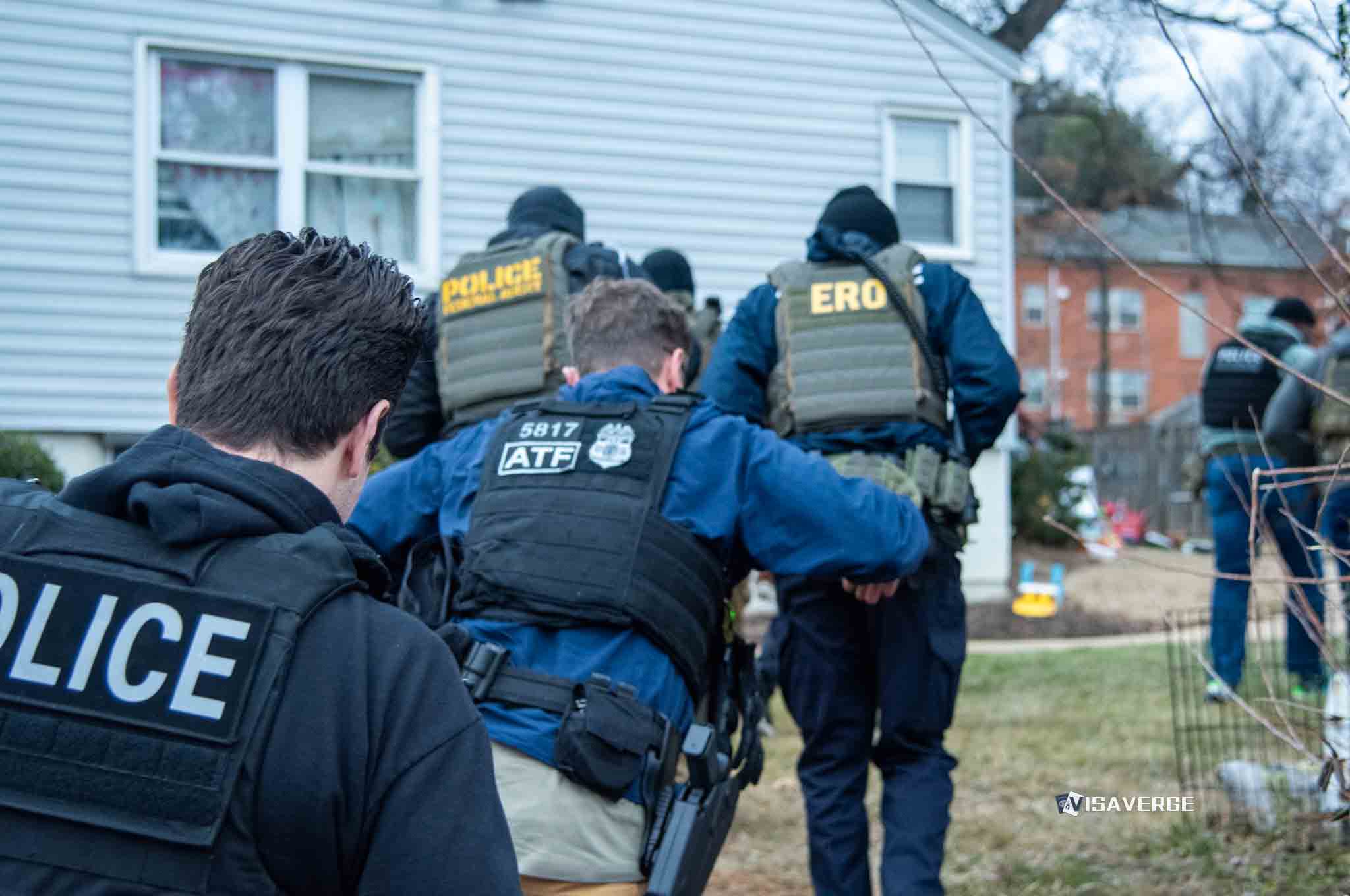
Just over a week before the ruling, ICE agents shot and wounded Oscar Belgal, 28, in the Bronx neighborhood of Marble Hill. His child was in the back of his car, and the agency detained him after the shooting.
DHS said Belgal entered the country illegally and had a prior grand larceny conviction. The department also cited multiple prior arrests for assault, robbery, drug possession and weapons possession. Those statements were DHS’s account.
Mamdani called the shooting “an incredibly serious situation.” He said he had called the president and would demand an end to ICE enforcement actions in the city.
NYPD Commissioner Jessica Tisch said at a Thursday press conference that city officers were not involved in the federal operation before the shooting. She said officers arrived afterward to preserve evidence.
The NYPD also faced criticism over its response to protests. Officers shoved Darializa Avila Chevalier, a Democratic congressional candidate, who said the conduct violated “the spirit, if not the letter” of the city’s rules.
Courts elsewhere have also rejected challenges as 287(g) expands
During the case, the city filed multiple letters pointing to dismissals of similar lawsuits in Rochester, Los Angeles, Boston, New Jersey, Minnesota and Colorado. A federal judge in Rochester, New York, dismissed a challenge involving a Western New York municipality in September 2026.
Federal courts in Los Angeles, Chicago and Minnesota have also thrown out similar lawsuits over the last two years. The decisions have come as the federal government expands 287(g) agreements, which authorize local officers to enforce federal immigration law.
New York City does not have such a contract. The ACLU has tracked the program’s expansion across the country during the second Trump administration.
Immigration advocates filed an amicus brief arguing that local restrictions serve a “trust-building function.” They said people may be more willing to apply for public benefits, visit hospitals and seek police assistance when they do not fear arrest.
This article provides general information and is not legal advice. Consult a qualified immigration attorney about your specific case.