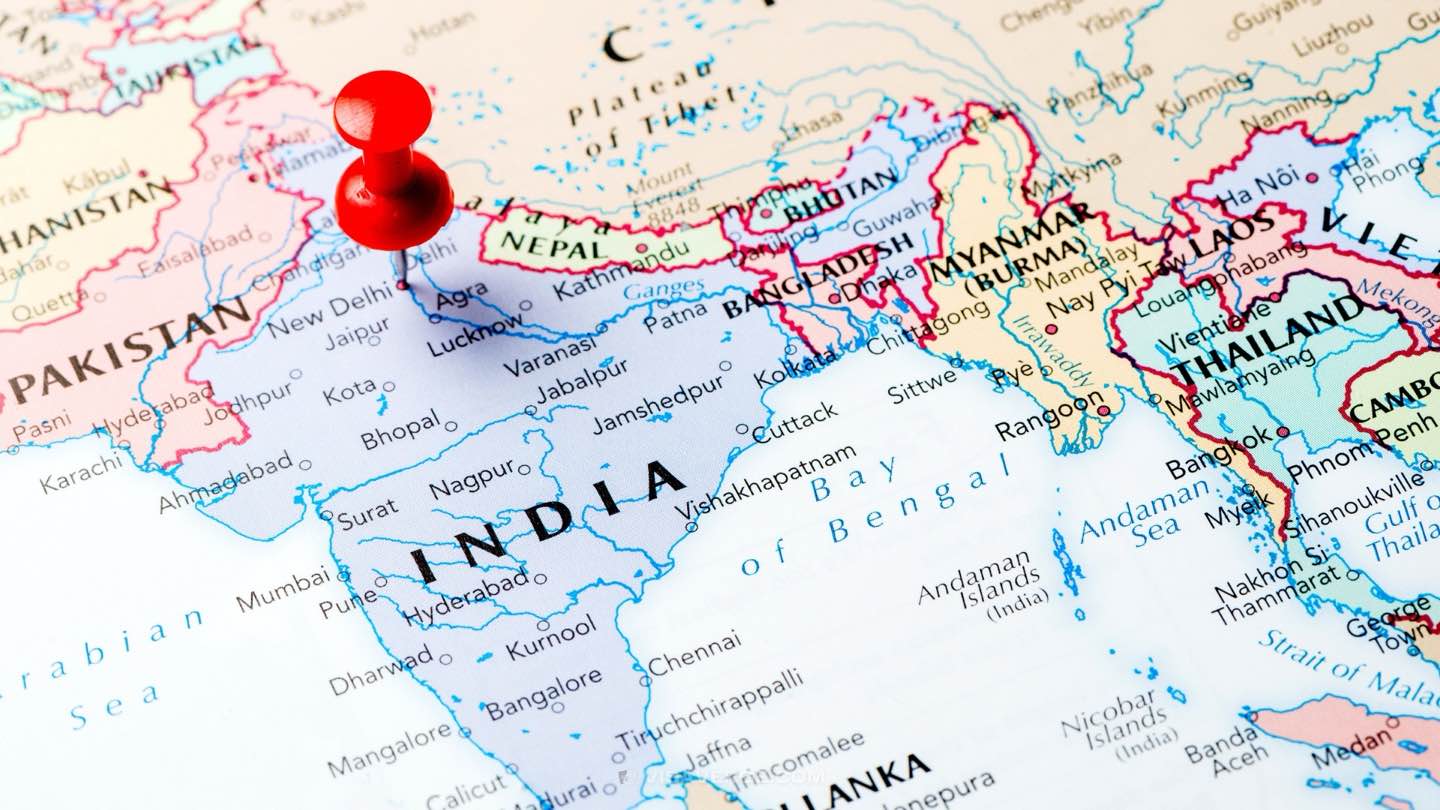
- Canada maintains a Level 2 travel advisory for India due to security, terrorism, and civil unrest risks.
- Travelers must avoid Jammu and Kashmir and areas near the Pakistan border due to military operations.
- Reduced consular services and visa backlogs in 2026 require travelers to plan 4-6 weeks in advance.
(INDIA) — The Government of Canada maintained a Level 2 travel advisory for India as of April 2026, telling travelers to “Exercise a high degree of caution due to the unpredictable security situation, terrorism, civil unrest, and kidnapping risks.”
Global Affairs Canada last updated the advisory on March 15, 2026. It applies nationwide, while warning Canadians to avoid all or non-essential travel in several higher-risk areas including Jammu and Kashmir, stretches near the Pakistan border, and parts of the northeast.
The advisory permits travel to India, but it calls for added vigilance and says conditions can change quickly, including curfews and flight disruptions. Global Affairs Canada monitors the notice continuously and tells travelers to check it weekly.
Free toolCanada Express Entry Points CalculatorCanada’s warning highlights four areas for sharper concern. Jammu and Kashmir carries an avoid-all-travel warning because of terrorism, militancy, armed clashes and civil unrest. Areas within 10 km of the India-Pakistan border in Gujarat, Punjab, Rajasthan, and Jammu also carry an avoid-all-travel warning because of landmines, cross-border firing and military operations.
Assam and Manipur are under an avoid non-essential travel warning because of ethnic violence, insurgent activity and inter-group clashes. Other northeastern states, including Nagaland and Arunachal Pradesh, remain under a high-caution warning because of occasional insurgency and border disputes with China.
In Jammu and Kashmir, the advisory cites frequent attacks on security forces, civilians and infrastructure. It points to a March 2026 grenade attack in Srinagar that injured 12.
Along the Pakistan border, Canada said risks include military operations as well as cross-border firing and landmines. The Attari-Wagah crossing remains closed indefinitely.
The broader Level 2 warning has stayed in place since early 2025. Canada tied that posture to continuing threats rather than a single incident, including heightened border tensions with Pakistan and sporadic insurgent activity.
For most Canadian travelers, that means the biggest risks vary sharply by region. Delhi, Mumbai, Bengaluru and Chennai face lower risk levels than the no-travel zones, but the advisory says those cities still see petty crime, scams and occasional protests.
Canada also warned that its consular reach inside India remains reduced. The High Commission in New Delhi provides core services, while four consulates in Chandigarh, Bengaluru, Mumbai and Chennai suspended operations in 2023.
As of March 2026, passport renewals, notarial services and emergency assistance remained available in New Delhi. Routine citizenship, marriage and adoption services outside Delhi were unavailable, and virtual options were limited.
The High Commission in New Delhi can be reached at +91-11-4178-2000 or [email protected]. Canada’s Emergency Watch and Response Centre in Ottawa can be reached at +1-613-996-8885 (collect) or [email protected].
Canada advised travelers to register in the Registration of Canadians Abroad service for real-time alerts. It also said response times in high-risk areas average 24-48 hours and that consular help in a crisis prioritizes life-threatening cases.
Visa access has become another complication for Canadians traveling to India. Canadians still need a visa, but diplomatic tensions since 2023 have disrupted services.
As of April 2026, Indian visa applications from Canada were processed online through the BLS International portal or through third-country missions such as those in the United States and the United Arab Emirates. Processing times averaged 4-6 weeks because of backlogs.
India resumed limited visa services at the Toronto BLS center for urgent humanitarian cases on February 10, 2026. Full operations remain suspended amid continuing disputes over Khalistani activism.
Canada’s advisory said e-Visas for tourism, for trips of up to 30 days, and business travel are available. Extensions require in-person applications at Foreigners Regional Registration Offices.
The notice also warns about exit rules. Overstays trigger fines of ₹500/day and can lead to detention, while travelers staying more than 180 days must register with FRRO within 14 days of arrival.
Dual Canadian-Indian citizens should carry both passports, according to the advisory. Permanent residents applying for Indian visas face extra scrutiny and should expect questions on Canadian ties.
The Canadian government’s notice identifies six broad threats across India. They include terrorism, civil unrest, crime, regional conflicts, health and sanitation risks, and natural disasters.
On terrorism, Canada said attacks can target public spaces, transport hubs and tourist sites. It also referred to intelligence warnings about ISIS-inspired plots and a January 2026 foiled bombing in Kerala.
On civil unrest, the advisory said protests tied to farmers’ issues, religious tensions and elections can turn violent. It specifically warned travelers to avoid Delhi rallies after April 2026 state polls.
Crime remains a routine concern in urban centers and tourist areas. Canada cited petty theft, scams and sexual assault, and it said women travelers report harassment.
For women traveling alone, the advisory recommends using registered taxis. More broadly, it advises avoiding crowds, avoiding night travel and staying away from isolated areas.
Regional military friction also shaped the warning. Canada said India-China border skirmishes in Ladakh persist and noted troop buildups in February 2026.
Tensions along the Pakistan border eased slightly after a November 2025 ceasefire renewal, but drone incursions continue. Airspace restrictions near border regions can still cause delays for flights.
Air travel remains the main route for Canadians heading to India. Direct flights operate from Toronto, Vancouver and Montreal on Air Canada and Air India, while domestic travel is dominated by IndiGo and SpiceJet.
The advisory said India has 20+ weekly direct services and that round-trip fares range from CAD 1,200-2,500. Delays average 20%, driven by winter fog from Dec-Feb or security concerns.
Earlier border tensions closed Amritsar-Pakistan flights in 2025. Canada said travelers should expect similar disruptions for Kashmir routes and suggested Dubai or Doha as more flexible alternatives.
Land borders with Nepal, Bhutan and Bangladesh remain open with valid visas, but Pakistan remains inaccessible. That makes route planning especially important for travelers moving across the region.
Canada’s guidance also covers practical health risks. Dengue outbreaks in 2026 affected 50,000+, and monsoon flooding raises the risk of cholera.
The advisory recommends verifying vaccinations for Hepatitis A/B, Typhoid and Rabies. It says COVID rules have been lifted.
Natural hazards also vary by geography. Canada cited earthquake risk in the Himalayas and cyclone risk along the east coast.
Travel insurance has become more important under the current warning level. Canada said policies should cover evacuation, including from places such as Jammu, and warned that claims can be denied if travelers ignore advisories.
The advisory said policies should include terrorism evacuation coverage. It put average premiums at CAD 150/week and told travelers to document their review of the advisory before departure for insurance claims.
For day-to-day safety, Canada advised using ride-hailing apps such as Uber and Ola instead of street taxis and sharing trip details through WhatsApp. It also recommended carrying photocopies of passports and visas while storing originals securely.
Digital precautions appear in the advisory as well. Canada said India monitors social media and warned travelers to avoid political posts, while recommending eSIMs for reliable connectivity and offline maps for backup.
Canada also suggested downloading translation apps and a VPN for censored sites. It encouraged travelers to build flexible itineraries before departure.
The current diplomatic strain has had wider effects on travel and migration ties. More than 1.8 million Canadian permanent residents are of Indian origin, and visa disruptions have slowed family movement between the two countries.
The advisory said 5,000+ visa applications were backlogged as of March 2026. It also said permanent resident applicants with Indian ties face extended background checks by IRCC.
Travelers with OCI cards have a different set of rules. Canada said OCI holders can enter India without a visa, but those cards must be surrendered if the holder acquires Canadian citizenship post-2015.
It also said January 2026 rule changes bar OCI multi-entry for 6 months during missionary work. That change adds another layer for members of the Indian diaspora planning frequent travel.
The warning comes as India’s tourism sector continues to recover overall. The country received 9.5 million foreign tourists in 2025, compared with a pre-COVID peak of 10.9M.
Canadian arrivals, however, dropped 15% amid the travel advisories. Hotels in Goa and Rajasthan have responded with flexible booking policies during a period of 70% occupancy.
Students and business travelers also face a more demanding environment. The advisory said 30,000+ Canadians in India should check university safety protocols, while Canadian firms reported 20% slower project timelines because of security checks.
For travelers still planning to go, Canada’s message was not to avoid India altogether, but to make region-specific decisions and prepare carefully. It said non-essential trips to high-risk areas should be postponed and pointed to southern destinations such as Kerala and Goa as lower-risk options.
That distinction now defines the advisory. India remains open to Canadian travelers under a Level 2 warning, but Canada’s notice draws sharp lines around Jammu and Kashmir, the Pakistan border and parts of the northeast, where it says the margin for error is far smaller.