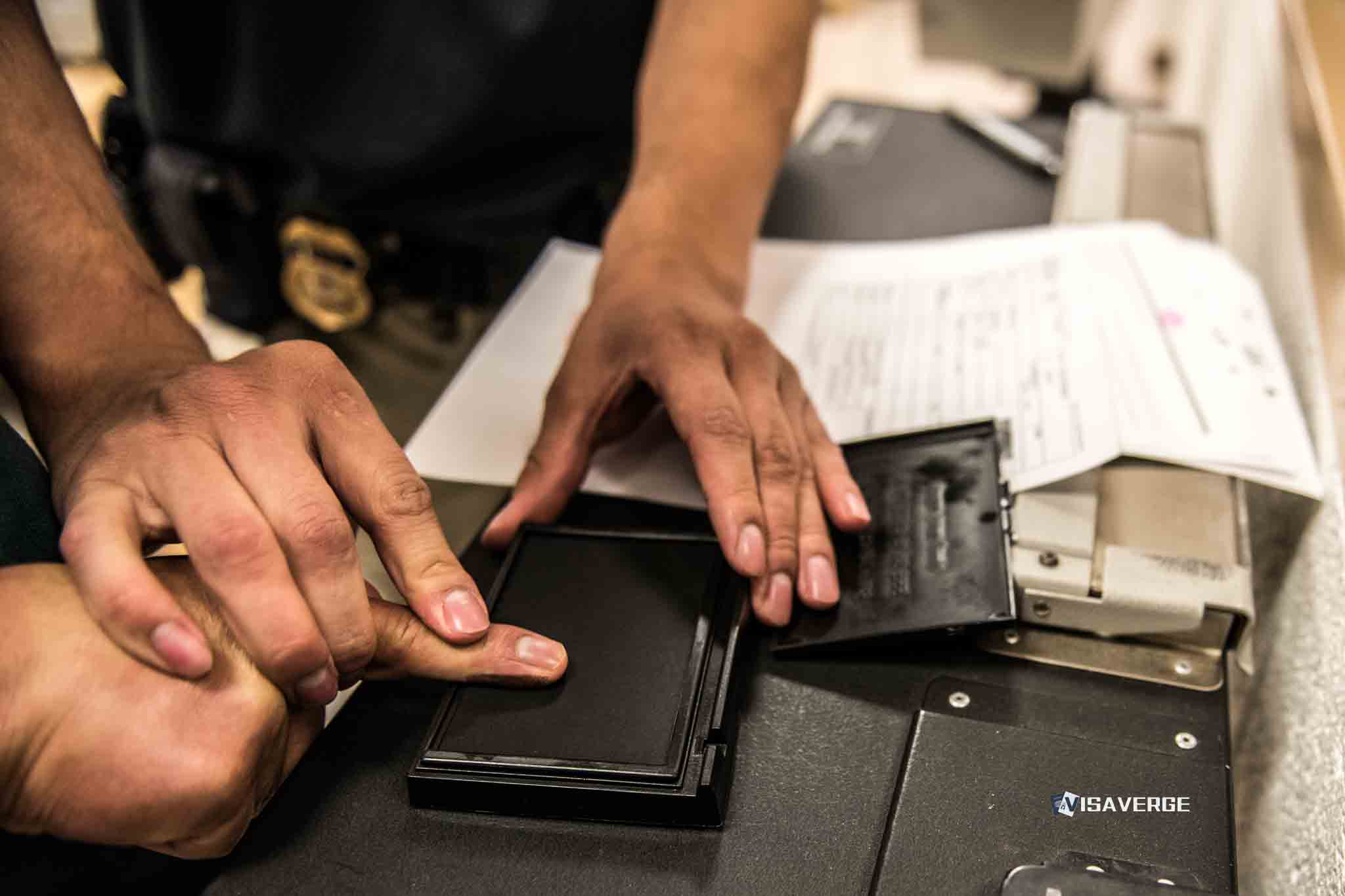
- ICE obtained direct access to Medicaid data for millions of enrollees to support deportation operations.
- A federal judge restricted data sharing in 22 states, protecting citizens and lawful residents there.
- In 28 states, ICE retains unrestricted access to personal information including names, addresses, and identifiers.
(UNITED STATES) — The Trump administration gave Immigration and Customs Enforcement direct access in July 2025 to a federal Medicaid data system holding personal information on millions of people, and a court order later limited that access in 22 states while leaving the rest of the country without the same restrictions.
The arrangement, disclosed publicly in January 2026 as part of a lawsuit by states, stems from an Information Exchange Agreement between the Centers for Medicare and Medicaid Services and ICE. Under that agreement, CMS provides immigration enforcement officials access to the T-MSIS database, the national Medicaid data system.
Free toolUSCIS Receipt Number Decoder
The records available through that system include name, address, Medicaid identification number, Social Security number, date of birth, sex, phone number, locality, ethnicity, and race. ICE employees receive access for renewable two-month periods, Monday through Friday from 9 a.m. to 5 p.m., though they cannot download the data.
Health Secretary Robert F. Kennedy Jr. ordered the transfer. On November 25, 2025, CMS issued a notice laying out plans to share Medicaid data with the Department of Homeland Security and ICE, saying ICE would seek biographical, contact, and location information, with the option to ask for additional information on a case-by-case basis.
Twenty-two states, all but one led by Democratic governors, sued in July 2025 to block the data-sharing arrangement. California Attorney General Rob Bonta led the case with 21 Democratic counterparts.
U.S. District Judge Vince Chhabria issued a preliminary injunction in December 2025 that narrowed what the federal government could share in those states. His order limited the data to six categories of “basic” personal information: citizenship, immigration status, address, phone number, date of birth, and Medicaid ID.
Chhabria also restricted ICE access in those 22 states to information only about people unlawfully in the United States. The order barred access to records on U.S. citizens and lawfully present immigrants in the states that joined the suit.
The judge separately blocked ICE and the Department of Health and Human Services from sharing personal health records and other sensitive medical information for immigration enforcement. He wrote that the agencies “did not provide a compelling reason for exchanging such information.”
Chhabria also wrote that “beyond the basic information discussed above, the policies are totally unclear and do not appear to be the product of a coherent decisionmaking process.”
Outside those plaintiff states, the limits do not apply. In the remaining 28 states, deportation officials have access to personal Medicaid information of all enrollees without the restrictions imposed by Chhabria’s order.
The split has left Medicaid enrollees under different rules depending on where they live. In the states that sued, the injunction narrowed the federal government’s reach. Elsewhere, ICE access extends across state Medicaid populations.
The agreement reaches deep into a program that covers approximately 79 million Medicaid enrollees nationally. That makes the federal health system one of the largest pools of personal data opened to immigration enforcement under President Trump’s deportation agenda.
Acting ICE Director Todd Lyons said the agency’s access to Medicaid data would help officers locate “people that have been lawfully deported” by a judge or released from sanctuary jurisdictions. His statement tied the data access to the administration’s goal of carrying out the largest deportation operation in U.S. history.
California Governor Gavin Newsom denounced the move in sharper terms. “Sharing Medicaid beneficiary information with the Department of Homeland Security – which is itself legally dubious – will jeopardize the safety, health, and security of those who will undoubtedly be targeted by this abuse, and Americans more broadly,” Newsom said.
Newsom also called the data-sharing move “legally dubious” and “an abuse.” California joined the lawsuit with other states that argued the federal government crossed legal lines by repurposing health program data for deportation enforcement.
Several of those states run Medicaid implementation programs that extend some state-funded benefits regardless of immigration status. California, Illinois, Colorado, New York, Washington, Oregon, Minnesota, and Washington, D.C., fall into that group, leaving residents there exposed to federal data access unless court protections apply.
Hospitals and state officials have also faced a practical problem: whether to warn immigrant patients that personal information they provide for coverage or care, including home addresses, could later be used in deportation efforts. The records at issue sit inside administrative systems people often encounter while seeking treatment, pregnancy care, or other basic services.
Bethany Pray, chief legal and policy officer at the Colorado Center on Law and Policy, described the pressure in blunt terms. “People should not have to choose between giving birth in a hospital and wondering if that means they risk deportation,” Pray said.
The arrangement has also raised questions about how the federal government separates the data of people covered by Chhabria’s injunction from the broader national dataset. CMS has not clarified how it ensures that information on citizens and legal residents from the 22 states is withheld from ICE.
Those questions are sharpened by the structure of the T-MSIS database itself, which compiles Medicaid information from across the country. Medicaid experts have questioned whether the agency can cleanly separate protected records from the rest, raising the risk that federal officials could run afoul of the court’s order.
The government’s original agreement gave ICE broader reach than the judge later allowed in the plaintiff states. The full list of accessible data elements included not only location and identifying information but also race and ethnicity, fields that drew attention once the agreement became public in the court case.
ICE’s access is time-limited but renewable, giving employees repeated windows into the system. The schedule set out in the agreement, weekdays from 9 a.m. to 5 p.m. for two-month periods, places the data within routine administrative reach rather than a one-time disclosure.
The administration has run into barriers in other efforts to draw on government records for deportation work. Judges blocked attempts to share taxpayer data and information on food aid recipients with immigration officials.
That left the Medicaid agreement standing out not only for the volume of records involved, but for the personal reach of the fields available to ICE. Names, phone numbers, addresses and other identifiers can help officers locate people in ways that many health advocates and Democratic-led states say will deter families from seeking care.
The dispute also exposed how unevenly federal immigration policy now falls across state lines. A resident enrolled in Medicaid in one of the 22 states that sued sits under one legal regime; a resident in one of the other 28 states sits under another.
In the plaintiff states, Chhabria’s order shut off access to records on citizens and lawfully present immigrants and barred personal health records from immigration enforcement use. In the rest of the country, the original agreement leaves deportation officials with personal Medicaid information on all enrollees, a divide that has turned a national health program into a map of two different rules.