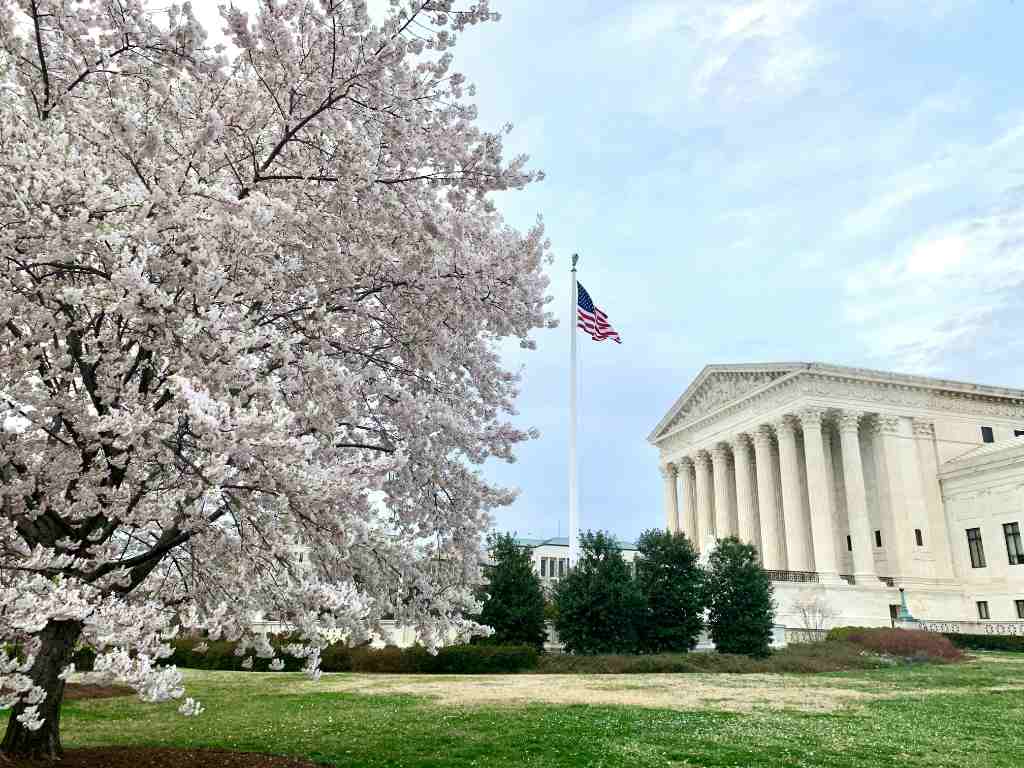
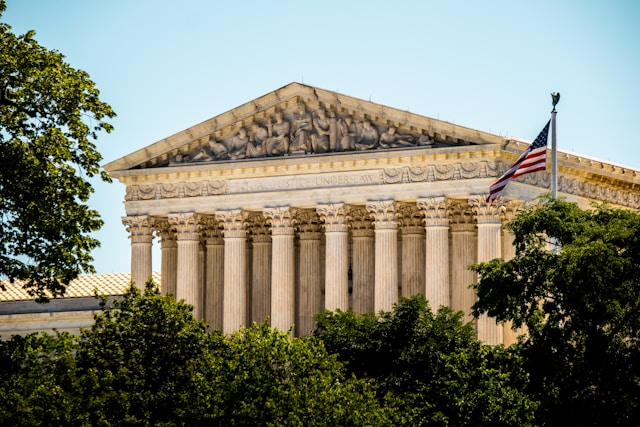
The Trump administration has asked the U.S. Supreme Court to step into a growing dispute over limits on what federal immigration judges may say in public about immigration policy, seeking to revive a Justice Department rule that requires prior approval from the Executive Office for Immigration Review (EOIR) before judges speak. In a 26-page filing submitted on Friday, U.S. Solicitor General D. John Sauer urged the Court to block a lower-court decision that sent the case back for more fact-finding in federal district court.
The EOIR speech policy and the judges’ challenge
At the center of the case is a speech policy issued by EOIR, the Justice Department agency that runs the nation’s immigration courts. The policy restricts the ability of roughly 750 immigration judges to speak publicly or give interviews about immigration matters unless they obtain advance permission from Executive Office for Immigration Review (EOIR).
The judges, represented by the National Association of Immigration Judges, argue the rule goes too far and silences them on issues that affect court backlogs, due process, and the daily operation of the immigration system.
Free toolUSCIS Receipt Number DecoderKey legal claims from the judges:
– The policy violates their First Amendment rights to free speech. They say they should be able to comment in their personal capacity on matters of public concern, especially at academic conferences, bar events, or in articles drawing on their professional experience.
– The policy is unconstitutionally vague, breaching the Fifth Amendment by failing to give clear notice of what is allowed and leaving judges unsure whether even general comments could lead to discipline.
The administration’s procedural argument
The Trump administration is not asking the Supreme Court to rule directly on whether the EOIR policy is lawful. Instead, it asks the Court to resolve a threshold jurisdictional question: whether immigration judges must first pursue an internal administrative process before taking a First Amendment challenge to federal court.
The administration’s position:
– Federal law, including the Civil Service Reform Act of 1978 (CSRA), requires judges to bring complaints to the Merit Systems Protection Board (MSPB) and exhaust that process before turning to a federal court.
– Congress designed the CSRA as the exclusive route for federal workers, including immigration judges, to challenge workplace rules and discipline.
– Allowing district-court suits now would, the administration warns, risk undermining civil service laws by enabling federal employees to bypass the CSRA when they disagree with internal policies.
“Letting this case go forward in district court… would invite similar lawsuits from other federal employees who disagree with internal policies, ‘undermining civil service laws and creating chaos in the federal workforce,’” the administration argues in its filing.
The MSPB complication and procedural history
Background on how the case became complicated:
– The district court initially dismissed the lawsuit for lack of jurisdiction, finding the judges had not exhausted MSPB remedies.
– The case became entangled in a separate dispute after President Trump removed an MSPB member without cause, leaving the board without a quorum and unable to decide appeals.
– With the MSPB effectively paralyzed, the judges argued they were stuck in a dead end and needed to proceed directly to federal court.
Subsequent developments:
– A federal appeals court disagreed with the district court’s broad dismissal and sent the case back for additional fact-finding, reopening the door for the judges’ constitutional claims.
– The Trump administration now asks the Supreme Court to reverse that appeals-court decision, warning that the lower court ruling could create a precedent allowing federal employees to bypass the CSRA whenever an administrative body is not functioning normally.
Stakes for both sides
For the administration:
– Upholding the CSRA exhaustion requirement preserves the statutory civil service framework and prevents a flood of similar suits from other federal employees.
– The government insists that limited MSPB capacity does not permit employees to ignore the statutory scheme.
For the judges and their union:
– They contend EOIR has used its speech controls to tighten political control over immigration courts, particularly as immigration is a central political issue.
– Without the ability to speak, the public loses one of the few inside perspectives on how immigration courts operate, including case backlogs and due process issues.
Broader implications and context
Institutional differences and concerns:
– Immigration judges are career civil servants within the Department of Justice, not Article III judges. They can be reassigned, evaluated, and disciplined by EOIR.
– Critics say that structure already pressures judges to align with an administration’s enforcement priorities, and strict speech rules increase that pressure by limiting outside discussion of internal problems.
Procedural significance:
– The dispute highlights how jurisdictional technicalities can shape major constitutional rights questions.
– The Supreme Court’s decision at this stage is procedural: it will decide whether an internal administrative body or a federal court gets to decide the constitutional question first.
– Analysis by VisaVerge.com notes that similar jurisdictional battles historically have delayed resolution of constitutional claims for years while employees work through administrative steps.
Track official notices from EOIR, DOJ, and MSPB for changes to speech policies or exhaustion rules; a single policy shift could alter your complaint strategy or filing deadlines.
What the Supreme Court is doing now and possible outcomes
Current status:
– The Supreme Court has paused the lower court’s ruling while it considers the government’s request, effectively freezing the judges’ lawsuit.
– The Court has not scheduled oral arguments or decided whether it will hear the case fully or resolve it through a shorter order.
Possible outcomes and consequences:
1. If the Court sides with the administration:
– Immigration judges may be forced back into the CSRA process despite MSPB’s impaired functionality.
– That could limit immediate access to federal courts for constitutional claims by these judges.
2. If the Court sides with the judges:
– It could allow more direct constitutional challenges by federal employees when administrative remedies are effectively blocked.
– It may create pathways around the CSRA in practice when administrative bodies are nonfunctional.
Why the decision matters to immigration courts
- Immigration courts are already under strain from heavy caseloads and changing enforcement policies.
- EOIR maintains that immigration judges are part of the executive branch and must follow agency rules; EOIR’s role and structure are described on the Justice Department’s official website at https://www.justice.gov/eoir.
- For judges who view themselves as neutral decision-makers, the Court’s response on speech and procedure will influence how freely they can discuss the system they administer — and how transparent immigration courts remain to the public.
Key takeaway: At stake is not only the ability of immigration judges to speak publicly, but also whether procedural barriers will determine when and where constitutional questions about government employees’ rights can be decided.
The Justice Department asked the Supreme Court to decide whether immigration judges must first pursue CSRA administrative remedies at the MSPB before bringing First Amendment challenges to federal court over an EOIR speech policy affecting about 750 judges. The MSPB’s impaired quorum complicates exhaustion. An appeals court remanded the case for further fact-finding; the Supreme Court has paused that ruling. The decision will determine procedural routes for federal employees and affect judges’ ability to speak publicly.