The Supreme Court on Tuesday, October 27, 2026, denied an emergency request to restore a regulation that let immigration judges pause some deportation proceedings. The request challenged a deportation settlement between Texas and President Donald Trump’s administration that directs the Justice Department to set aside the rule.
Background: Supreme Court Rules 6-3 in Favor of Trump on Deportation Policies
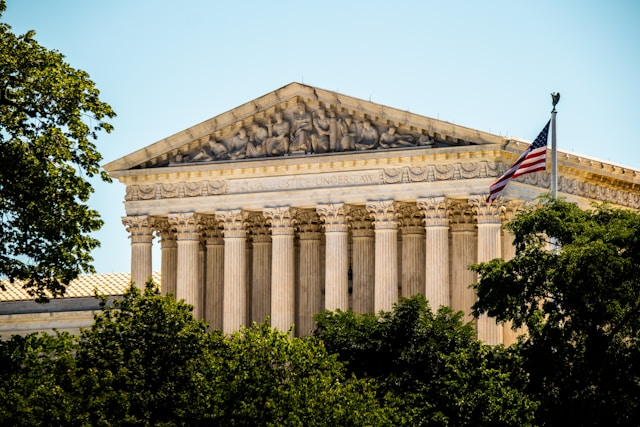
The court issued an unsigned, one-sentence order without explanation. No justice publicly dissented.
The order declined to reinstate the regulation. The challengers’ appeal over whether they may defend it continues.
O’Connor’s judgment removed the rule nationwide
Texas filed Texas v. United States in June 2026, arguing that the federal government lacked authority to adopt the administrative-closure regulation. The case went to Chief U.S. District Judge Reed O’Connor in the Wichita Falls division of the Northern District of Texas.
| India | China | ROW | |
|---|---|---|---|
| EB-1 | Feb 01, 2023 | Aug 01, 2023 ▲31d | Current |
| EB-2 | Nov 01, 2013 | Oct 01, 2021 | Apr 01, 2025 ▲90d |
| EB-3 | Jan 22, 2014 ▲21d | Jan 22, 2022 ▲14d | Jun 15, 2024 ▲31d |
| F-1 | Jan 22, 2021 ▲366d | Jan 22, 2021 ▲366d | Jan 22, 2021 ▲366d |
| F-2A | Oct 22, 2026 ▲30d | Oct 22, 2026 ▲30d | Oct 22, 2026 ▲30d |
On June 22, the state and federal government presented their agreement to O’Connor, the same day Texas filed suit. They asked him to invalidate the rule and bar the government from adopting similar protections. He approved the agreement that day.
O’Connor’s judgment eliminated the 2024 regulation nationwide and permanently restricted the federal government from adopting a similar rule. Its reach was not limited to Texas or the parties in the case.
The Justice Department’s Executive Office for Immigration Review adopted the 2024 rule. After Trump returned to office in 2025, the office announced it would not defend the regulation against a legal challenge.
The rule let judges pause cases while other matters proceeded
Administrative closure gave judges discretion to suspend a removal case in certain circumstances. A person pursuing humanitarian protections, another legal status, or a process through U.S. Citizenship and Immigration Services could seek a pause while that matter proceeded.
A separate visa petition or an appeal of a criminal conviction could also affect whether a person faced removal. Advocates said pauses helped law enforcement obtain cooperation from immigrant crime victims and witnesses.
The Biden administration said its 2024 regulation helped judges manage caseloads and treat immigrants fairly. It replaced a 2020 rule adopted during Trump’s first term that had been blocked in court.
The Trump administration said the number of removal cases closed under the rule grew from nearly 172,000 in 2013 to more than 268,000 in 2017. The cities said the policy had implications for hundreds of thousands of cases, including people eligible for lawful status.
Texas and the administration argued that long pauses could allow people without legal status to remain in the country indefinitely. Texas described the practice as effectively granting “indefinite amnesty.”
The challengers say the agreement bypassed rulemaking
Baltimore, Maryland; New Haven, Connecticut; and Columbus, Ohio, sought to join the case to defend the regulation on appeal. Centro Legal de la Raza, which provides legal services to immigrants facing removal, also sought to intervene.
O’Connor rejected their request, finding they lacked standing. He also rejected the cities’ argument that ending the rule could cost them money because taxpayers might be deported. Centro Legal de la Raza said the judgment imposed substantial legal work on the group without compensation.
The cities and the organization called the agreement “egregious collusion.” They argued that the government and Texas used the agreement to avoid public participation and the Administrative Procedure Act’s rulemaking requirements.
“The result is that a significant regulation that established certain important procedures in immigration courts was erased over the course of a single day, without meaningful judicial review, public participation or adherence to the APA's rulemaking requirements.”
Joshua Salzman, a lawyer with Democracy Forward, called the consent judgment “indefensible.” He argued that allowing it to stand could let an administration avoid repeal procedures by declining to defend a rule and accepting nationwide relief in a suit brought by a friendly party.
The challengers also argued that the government had announced in advance it would not defend the regulation, then agreed with Texas to seek broad relief. They said the approach could weaken the requirement that agencies use the same procedures to repeal a rule as they used to adopt it.
The government disputed the challengers’ right to seek relief
U.S. Solicitor General D. John Sauer told the justices that the challengers were turning a dispute over intervention into a broad attack on the consent judgment. The Justice Department argued that because O’Connor had ruled the cities and legal-services group could not defend the rule, they should not receive emergency relief before their appeal of that ruling was resolved.
“This Court should not allow applicants to put the cart before the horse,” the department argued. It also called the challengers’ estimates of how many immigrants might be affected speculative.
Texas said restoring the regulation would revive a rule O’Connor had declared unlawful and unsettle a final judgment accepted by the parties. It argued that any claimed harm to the cities depended on several later events.
Sauer said a case already administratively closed would first have to be re-calendared. The person would then have to lose the case, receive a final removal order, and face enforcement by the Department of Homeland Security. Texas described that sequence as “a cascade of discretionary and unidentified events.”
The intervention dispute remains on appeal
The 5th U.S. Circuit Court of Appeals declined to pause O’Connor’s judgment while the challengers appealed. The cities and Centro Legal de la Raza filed their emergency application on October 9, 2026. It was directed to Justice Samuel Alito, who handles emergency matters arising from Texas by default and could act alone or refer it to the full court.
A related question reached the justices in 2021: whether states could intervene to defend a federal rule after the government declined to do so. The court dismissed that case after another change in administration, without deciding the issue.
Skye Perryman, president and CEO of Democracy Forward, which represents the challengers, said the agreement put families, survivors of violence and entire communities at risk. The intervention appeal now proceeds after the emergency request was denied.
This article provides general information and is not legal advice. Consult a qualified immigration attorney about your specific case.