The Trump administration asked the Supreme Court on Sept. 21, 2026, to review whether federal courts may order Badar Khan Suri released while his immigration removal case proceeds. The petition challenges a Fourth Circuit ruling that let his detention claims proceed in federal court.
No trial has concluded. The habeas case concerns detention, while a separate removal proceeding continues in the government-run immigration court system under the Department of Justice and the attorney general. There is no deportation ruling pending after a completed trial.

The petition asks the justices to address where detention challenges can be heard, not to decide the merits of the removal proceeding. A settlement has restored Suri’s ability to work and provides for restoration of his legal status while he fights removal.
The agreement also protects his children’s status and requires the government to give notice before taking any future action.
The federal order protects Suri from detention, not from the removal case
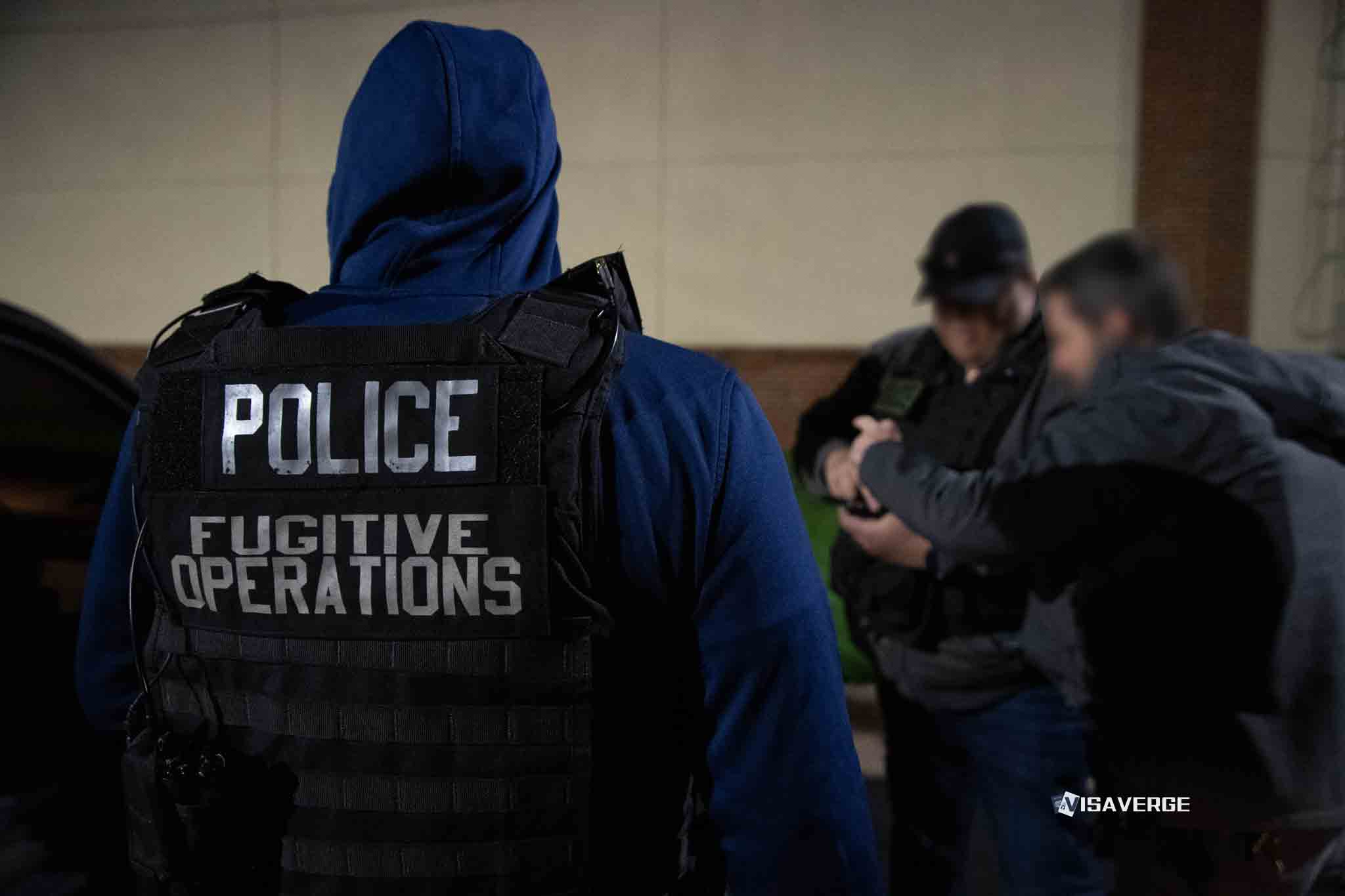
Masked Immigration and Customs Enforcement agents arrested Suri outside his northern Virginia home on the evening of March 17, 2025. The government said his visa had been revoked at the direction of Secretary of State Marco Rubio, alleging that he spread Hamas propaganda and promoted antisemitism on social media.
The agents took him to an ICE detention center in Alvarado, Texas. He remained there for two months and described the conditions as overcrowded and unsanitary.
U.S. District Judge Patricia Tolliver Giles ordered his release on May 14, 2025. She concluded that he was likely to show his arrest was retaliation for constitutionally protected speech, and said the arrest and detention violated the First Amendment.
In March 2025, Giles had also ordered that Suri “shall not be removed from the U.S unless and until the Court issues a contrary order.” She said the habeas challenge had to be heard first, but did not decide the merits of the removal case.
A 2-1 panel of the Fourth Circuit, based in Richmond, Virginia, upheld the release order in July 2026. The panel said a federal judge could hear a claim that detention was unconstitutional even while removal proceedings were pending before immigration court.
The government says the law channels these challenges through removal review
Solicitor General D. John Sauer filed the administration’s petition on behalf of President Donald Trump’s administration. He argued that the Fourth Circuit’s approach could let detainees challenge deportation outside the immigration court process and disrupt enforcement across the country.
“That is all practically disastrous,” Sauer argued.
The petition relies on INA § 1252(b)(9), which the Supreme Court described as a “zipper clause” in Nasrallah v. Barr (2020). That provision, the government argues, channels review of legal and factual questions arising from removal proceedings into review of a final removal order. The administration says INA § 1252(g) adds another bar to reviewing certain immigration decisions outside that process.
The petition states: “If an alien can raise a claim immediately in habeas that he could also raise later in a [petition for review], then this design will collapse under the weight of duplicative litigation.” It also warns that the circuit split creates “intolerable disuniformity in the administration of the INA.” The Justice Department said thousands of deportation cases could turn on the outcome.
The American Civil Liberties Union has challenged the government’s position. Noor Zafar, a senior staff attorney for the ACLU’s Immigrants’ Rights Project, said the appeals court “correctly ruled that denying judicial review of detention claims of people like Dr Badar Khan Suri's misreads Congress' statutes and undermines the protections guaranteed all persons on American soil.” She added: “Our client should never have been jailed for exercising his First Amendment rights in the first place.”
Three appellate courts have split over federal jurisdiction
The Fourth Circuit ruled that INA § 1252(g) “does not speak to detention” and that § 1252(b)(9) applies to review of a removal order. Judge J. Harvie Wilkinson III dissented, warning that “[e]very alien who is detained pending removal will now have a pathway into district” court.
The administration pointed to contrary rulings elsewhere. In January 2026, a 2-1 Third Circuit decision in Khalil v. Trump held that a district court lacked subject-matter jurisdiction over a habeas petition. In July 2026, the Second Circuit reached the same conclusion in Mahdawi v. Trump, then ordered review by the full court.
Sauer told the justices that the split supported taking up the case. The government asked the Supreme Court to consider Suri’s case alongside Khalil’s if it grants review. Khalil’s lawyers plan to seek Supreme Court review, and Khalil received permission to file a cert petition by mid-October.
A settlement restored work status while the removal fight continues
Suri is an Indian citizen who came to the United States on a J-1 visa as a postdoctoral fellow at Georgetown University’s Alwaleed Bin Talal Center for Muslim-Christian Understanding, part of the School of Foreign Service. He is married to U.S. citizen Mapheze Saleh, and they have three children. Saleh is of Palestinian descent and is the daughter of a former Hamas political adviser.
The government’s allegations against Suri included a claim that his family had ties to Hamas. The administration said the State Department used an artificial intelligence tool to review social media before flagging him. Rubio determined that Suri had “expressed support” for Hamas leadership and engaged in “antisemitic activities.” The ACLU disputed the government’s stated foreign-policy rationale and said it relied on a rarely used part of immigration law.
Before the Supreme Court petition, the government sought to move the removal case from Virginia to Texas, where Suri had been detained. Giles expressed concern that a transfer could undermine her order keeping him in the country while his First Amendment case proceeded. The ACLU called the proposed move forum shopping.
Virginia Democrat U.S. Rep. Don Beyer said Suri’s detention was “a clear violation of his constitutional rights, and he must be released.” He also called the administration’s justification “a blatant attack on the First Amendment.”
The settlement terms were the latest status update, dated October 19, 2026. The government pledged to give notice before any future action affecting Suri or his children.
This article provides general information and is not legal advice. Consult a qualified immigration attorney about your specific case.